Not just for weight loss – I did a 9-day ‘longevity’ fast at Europe’s original fasting clinic

For future-proofing your health, Buchinger Wilhelmi fasting clinic is the ultimate mind-body reset – here’s why I go every year
When everyone else is reaching for their sequins and Champagne to ring in the new year, you’ll find me packing my cosiest clothes, my journals and favourite pyjamas, to spend 11 days at the Buchinger Wilhelmi fasting clinic in southern Germany. It’s my third annual stay at Europe’s original fasting centre, founded 100 years ago. It’s part medical centre, part chic retreat and overlooks Lake Constance, with the Swiss Alps framing the view. Each time I come back refreshed, reset and ready to take on the year. People always remark that my skin looks younger and assume I’ve had another tweakment. No, this is the fasting glow.
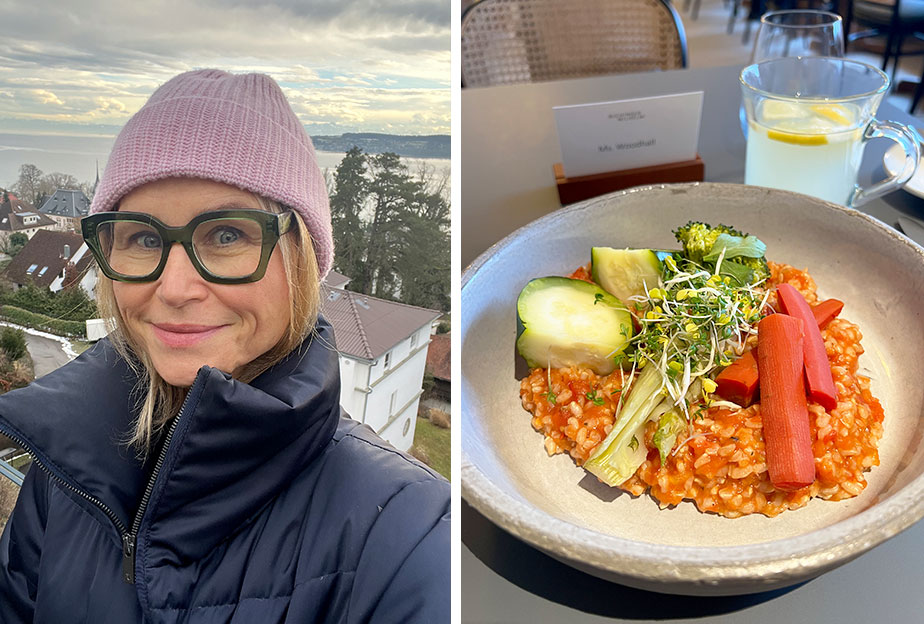
Ready to fast: Victoria Woodhall’s stay at Buchinger Wilhelmi clinic in Germany begins with a rice and veg ‘digestive rest’ day.
Normally, I fast here for six days, which is the minimum they offer in order to get the many benefits of fasting. This trip, I’m not eating for nine, and caffeine is off the menu too. Some hardy souls do as many as 40 days. This is not a monastic privation exercise, nor a punishment beating for festive excesses (although who doesn’t have that Christmas kilo?), but a medically supervised ‘long-term fast’ (as opposed to daily intermittent fasting such as 16:8) with documented longevity benefits for mind, body and soul.
A long list of ‘national treasure’ celebrities have completed the programme, although I’m not allowed to name them. However, actress Isla Fisher, who I bumped into in the dining room last year, eulogised publicly that this had been “the most incredible way to spend the new year. Therapeutic fasting, integrative medicine, inspiring treatments for the spirit and soul, ” she told her Instagram followers. “Every kind of therapy, cocooned in warmth AND care – the kindest hands. Everything you repress just comes out, all at once.” French movie star Marion Cotillard also revealed that she stayed just a few months ago to prep for a role.

@Insatgram. Actress Isla Fisher visited Buchinger Wilhemi fasting clinic in 2025. “Everything you repress just comes out, all at once.”
Because I’m a slim person with a stable weight and no health issues (apart from stress and menopause), people are baffled as to why I’d want to subject myself to such a strict regime. The reason I’m here is for the longevity benefits. I’m 58, and I want to have the best possible healthspan, not just lifespan. Fasting is anti-inflammatory, and therefore anti-inflammaeing. It puts you in a prolonged period of autophagy, the cellular clean-up that happens when insulin, the blood sugar-regulating hormone, is not present. After the fast, in the equally important ‘refeeding’ phase, dormant stem cells are activated and new structures built.
Also, I’m half German, from a family of pharmacists and a ‘Kur’ – which doesn’t readily translate into English but roughly means an organised health regimen – is part of my DNA, enemas and all. Like many Germans, my grandmother would regularly go on a ‘Kur’ of some kind. I remember her taking me swimming at one such place when I was 12, and the sight of people’s artificial limbs on the side of the pool has never left me. Buchinger, it has to be said, prizes beautiful surroundings and aesthetics over anything overtly medical-looking, while the care is second-to-none. Who has two hours with a doctor in the space of a week, back home?
As Dr Otto Buchinger remarked 100 years ago, when he founded the clinic, having cured his own rheumatoid arthritis with a 90-day fast, “when you starve the body you need to feed the soul”.
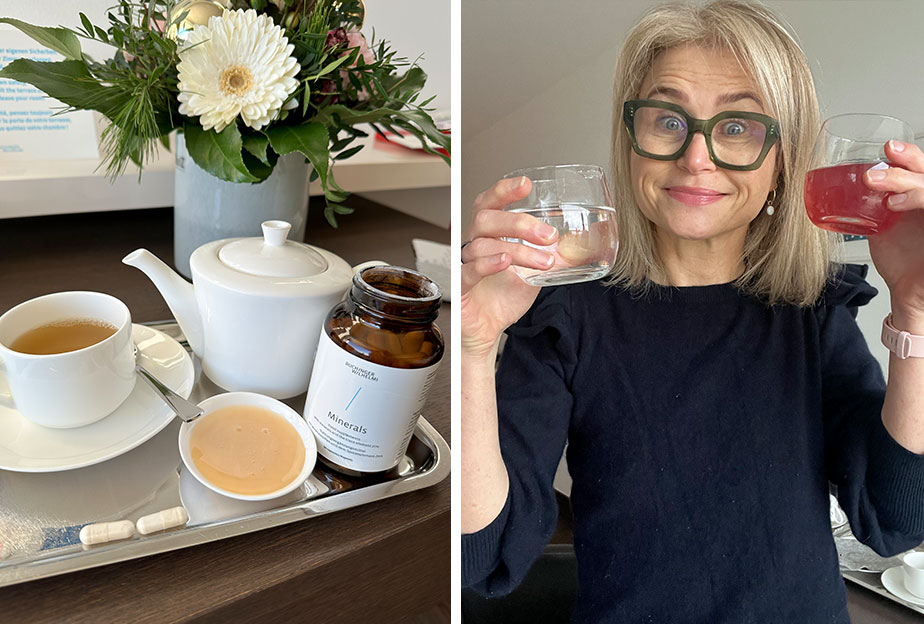
Daily fasting minerals (calcium, magnesium, zinc) and a tablespoon of honey keep you stable. Victoria downs her Day 1 salts to flush everything through
And that’s what I love about the fasting process here. A profound life reset can happen when you clean up the body and begin to listen to its whisperings away from the usual distractions of daily life. That could be a twinge in your hip, or tiredness that you’ve been suppressing, relationship thoughts or career decisions you’ve been pushing aside.
It’s a unique chance to unpack it all. I took four journals, each for a different area of my life. When you don’t have food, you realise how much time and energy you spend preparing it, eating it, digesting it and thinking about your next meal. With that ‘food noise’ out of the picture, you’re free to focus on other things and potentially life-changing insights. And that may be as simple as allowing yourself a rest, while being looked after by an army of friendly doctors, nurses and support staff checking your vitals every day, popping in with tea and a hot water bottle every few hours and tucking you up in bed like a baby. If you run a household and/or a business and looking after others is your default mode, this is a chance to unapologetically be nurtured on a deep level.

The first time I came in January 2024, my sole concern was how on earth was I going to manage without food? I’m a snacker, I get hangry, and I love chocolate and tea with milk. But the six-day minimum ‘Compact’ fast, as they call it, is structured so that everyone who is medically approved for fasting can succeed. They give you a health check when you arrive, as certain health conditions rule it out, such as type 1 diabetes, overactive thyroid, eating disorders and pregnancy mean you can’t fast, but they will offer you a tailored healthy eating stay with myriad benefits.

On arrival, your bloods are checked. Enemas in your room with a friendly nurse are encouraged to flush out any old food
Yes, but not much; everyone gets an organic juice or soup at lunchtime and a broth at dinner, plus a tablespoon of honey to dip into throughout the day in case of blood sugar or blood pressure lows. I can make that spoon last for hours! The ‘food’ is all under 250 calories to keep you in the fasted state. I got an extra natural yogurt first thing, as I didn’t want to lose too much weight.
The key to fasting is to stay under 500 calories and not have anything you can chew, as you’re switching off digestion to give your system a rest. Every molecule we eat in daily life has to be vetted by the immune system. The less it has to do on this front, the more it can focus on tackling your ‘big ticket’ health concerns. That little bit of food does help preserve muscle and keeps you in a rhythm you’re used to, as well as providing a chance to socialise in the lounge.

Fasting food around 300 calories daily to maintain ketosis and digestive rest: natural yogurt, honey and a broths or juice for lunch and dinner
During fasting, you enter a strange state of being neither hungry nor full, as blood sugar swings simply aren’t there – your body uses fat as fuel. Sometimes I had what felt like hunger pangs, but these were actually ‘head hunger’ cravings. They happened when I did bits of work, which took me out of the fasting headspace and back into my old life.
But you soon realise that pangs are essentially pointless, as there is no food around you, unless you escape to the shops. One UK guest told me that a leading ‘90s boy band member, who she met there, used to sneak off to town every day and get a black coffee. There are worse sins, I guess. If you’re hungry, you soon find other things to entertain you. I watched a lot of Netflix; it’s only a digital detox if you want it to be.

Sunset view over the Bodensee unfiltered. Fast Day 4: the energy to do some work returns
Every time you fast is different – it can depend on how you arrive. The second year, I felt more foggy and headachey. This fug took a while to shift, possibly because I hadn’t given up caffeine a few days beforehand, which is advised, and arrived quite stressed. But I felt incredible afterwards and clearer about my career.

Fasting is as much mental and emotional as physical: a time to reassess you life goals and habits
This year, I really got into my fasting groove. Nine days wasn’t hard, once I’d got past the day-three slump. Then, I felt whacked and tired, possibly because the metabolic switch into fat burning kicked in. The more you do it, the more this – buzzword alert – ‘metabolic flexibility’ improves. Soon, I started tackling the big questions: who am I right now? What do I want? How do I make it happen? If I’m strong enough to survive without something I thought essential to life (i.e. food) and draw only on my inner reserves, what else can I let go of? Being in a state without ‘needs’ is “an important psychological moment,” says Dr Francoise Wilhelmi de Toledo, whose daily videos on the Buchinger app act as a kind of fasting coach. “If I’m able to fast, then I can master other challenges as well,” she encourages.
Many people find that their thoughts and dreams develop an unusual clarity and sharpness. This is because ketone bodies, compounds produced when the metabolic switch flips to fat burning, are considered super-fuel for your brain. With ketone power on and food chatter off, my stay became a time for self-therapy. If you need an actual therapist to help you process things, they have many excellent ones on site.
As well as people like me who come for wellness, there are those with health issues who come here for support. That might be for metabolic conditions such as type 2 diabetes, high blood pressure and fatty liver, all of which fasting can reverse, or inflammatory conditions such as rheumatoid arthritis, or pain such as fibromyalgia and menopause symptoms. One lady, who I’ve bumped into three years in a row, does around 40 days of fasting, having had several breast cancer surgeries and to help heal arthritis. Those with fertility issues can often see benefits too, and there are many ‘Buchinger babies’ to tell the tale, apparently.

Medical Director Dr Verena Buchinger cured her PCOS with fasting. Top osteopath Siegfried Kaiser-Schröpfer is much sought-after
This year, their scientific department, which has published dozens of medical studies on long-term fasting in top journals, is researching the as-yet-unstudied effects of fasting on women (there are small studies on intermittent fasting) with a view to learning how it can help conditions such as endometriosis, PCOS and menopause. Dr Verena Buchinger, the medical director, told me she reversed her own PCOS over five years with the help of regular fasting. “I was told it would be very difficult for me to have children,” she says. “Now I have three.”
Everyone wants to know, of course, how much weight you can lose. I shed about four kilos every time, which puts me about two kgs below my normal weight. The initial weight loss is rapid, but it’s largely water weight (goodbye bloating and puffiness) as you are not consuming water-retaining salt. It slows considerably as you go on, with an average of 200-300g of fat loss per day. It doesn’t sound much, but it’s the equivalent to block of butter. “Fat isn’t that heavy,” explains Dr Wilhelmi de Toledo, “but it takes up a great deal of volume, so you look and feel thinner.”
Some of the pounds go back on when I start to eat again, and my system fills up with food and holds water. None of the weight loss is muscle loss, as they proved recently in an MRI study, so long as you do gentle exercise while you are fasting.

Movement, such as swimming and gentle gym work, is vital during fasting to preserve muscle
But weight loss really depends on your starting point and how much you have to shed. A pre-diabetic, overweight man who took part in a French TV documentary about fasting last year lost 11kg after a 21-day fast at Buchinger Wilhelmi.
The good news is that ‘visceral’ fat around the organs is the first to go. “The body is programmed to lose that fat, because it’s not supposed to be there,” says scientific director Dr Robin Mesnage. You can be slim and still carry visceral fat. I remember the late Michael Mosley, a fasting pioneer, telling me that he had this phenomenon and was ‘TOFI’ (Thin Outside, Fat Inside).
Dr Mesnage points out that only creatures such as birds are designed to have visceral fat because they need extra stores for long migrations (indeed, fat wings would not be helpful). Visceral fat is inflammatory and has been linked to killer diseases such as type 2 diabetes and cardiovascular disease, so it’s very much an unwanted guest.
Prices start at around 430 Euros (around £370) per night for a basic room, and, yes, that does sound a lot. But there’s a great deal included. A ‘Compact’ 10-day stay (six days fasting) comes with three doctor consultations, blood tests, three therapies such as massage, as well as all food before, during and after the fast.

Daily hikes of all levels are included. Victoria Woodhall and Scientific Director Dr Robin Mesnage, who leads Buchinger Wilhelmi’s clinical trials on the benefits of long-term fasting
The cost also includes the full programme of activities, talks (I went on a workshop with a visiting positive psychology coach), cooking demos, nutrition talks, hikes, yoga, a heated outdoor pool (I loved my moonlight swims), a very well-equipped gym with personal trainers and physios, and a brand new infra-red sauna overlooking the lake. The therapists are world-class. One of Germany’s leading osteopaths practises there – Buchinger attracts many top therapists – and his healing hands worked magic on my long-ago damaged coccyx. The doctor gave me healing clay tablets to sort out my annoying menopausal reflux. Here, the medics practice ‘integrative medicine’, drawing on scientific and holistic knowledge.

Saunas help with the detox process. Moonlight swims in the heated pool
I did a quick bit of maths comparing it to medical weight loss GLP-1 jabs, which cost in the UK between £150 and £300 per month. A 10-night stay at Buchinger Wilhelmi is the equivalent of one-to-two years of weight loss medication. But unlike Ozempic, Wegovy and Mounjaro, long-term fasting has no known side effects (the only one I had was smelly armpits). It’s totally safe and provides a sustainable solution because you learn how to eat for health, not just how to fast. Meanwhile, new research published in the British Medical Journal reveals that people coming off weight loss jabs regain weight up to four times as fast as those coming off conventional diets.
Beyond physical weight loss, fasting helps you lose the weight of the mind and address the behaviours which may have led to weight gain in the first place. Each time I go, it’s like I’ve excavated another layer of myself and found some buried treasure.

Refeeding begins after the fast starting slow with grain coffee and muesli. A wide variety of plants helps rebuild a diverse microbiome
You leave Buchinger having done two days of gradual ‘refeeding’, where you build up the complexity and calorie count of your meals, from 500 to 1200. The all-organic food is largely plant-based and organic, with some dairy and egg. Here, you are building up your gut garden of good microbes and so want to give them the best possible fuel. What you eat in the two weeks (longer if you can) after you come back is vital for the success of the whole programme, and there’s lots of advice on this. They recommend avoiding meat, as it’s inflammatory and needless to say, sugar and alcohol are off the menu in that period. In the first few days after fasting, you are still feeling the effects of ketosis, and Dr Mesnage tells me it affords a unique window for building muscle, as it’s anabolic – so keep up the exercise.

People often ask me, can I do this at home, and while there is a Buchinger 5-Day Fasting Box, which sadly doesn’t ship outside the EU (try the similar Prolon Fast Mimicking Diet five-day box, £169), this is not something I’d personally be able to do at home, with a fridge to stare mournfully at and a job that requires a lot of physical and mental energy, unless I could take dedicated the time out.
If you do want to fast at home, Dr Mesnage advises the intermittent approach as the most effective, such as 16:8, ideally not skipping breakfast and eating your last meal earlier, as this is marginally more effective. Depending on where you are in your cycle, or how you feel anyway, you might want to change those proportions, says Dr Buchinger.
In the follicular phase (first two weeks), you might have more energy and can fast for 14-16 hours. In the luteal phase (second two weeks), you may have less energy and be more prone to blood sugar imbalances, so 12 hours of fasting (considered the minimum) may be enough.
A 10-night fasting stay at Buchinger Wilhelmi, Uberlingen, Germany, costs from €4,272. Three treatments, three doctor consultations, blood tests and all classes and activities included. The nearest airport is Zurich, 90 minutes away.