Exhausted, gaining weight, thinning hair, but your thyroid test came back normal. Here’s are the often-missed signs of low thyroid

Underactive thyroid is so often missed, says functional hormone nutritionist Pippa Campbell, yet it’s one of the most common issues she sees
If your GP says your thyroid tests are normal, but you still feeling fatigued after a full night’s sleep, your weight gain won’t budge, your hair is thinning, you often feel cold, and your mood is flat. It may be time to deep dive into your thyroid hormones, deeper than your GP test will go.
After more than 20 years as a functional hormone nutritionist, low thyroid function — often missed by GP testing — is one of the most common issues we see in clinic. Approximately eighty-five per cent of clients present with markers of low thyroid.
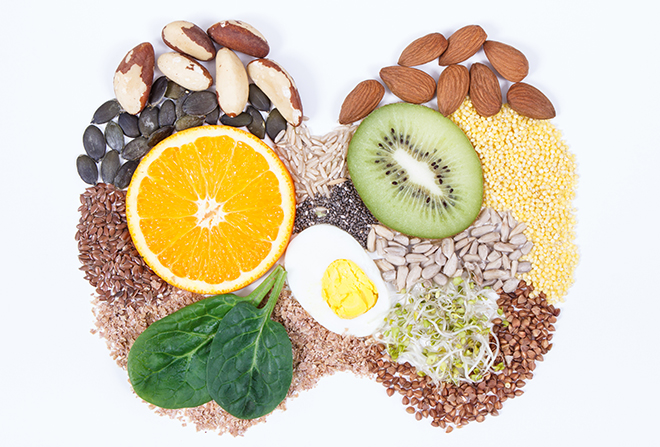
And as the thyroid is a key part or your metabolism — this butterfly-shaped gland in your throat is in charge of how quickly or slowly your cells use energy — it can affect everything from your body temperature, digestion, energy levels, cognition and ability to lose weight.
Symptoms are wide-ranging, although not everyone will get every symptom.
The symptoms of low thyroid are wide-ranging, which is partly why it is so often missed. In clinic, we look at everything together rather than any single sign, but here are the top 20 signs I see:
1. Constant exhaustion that a full night’s sleep doesn’t fix
2. Always feeling chilly, particularly in your hands and feet
3. Weight that creeps up and won’t shift, however you adjust your diet
4. Needing far more sleep than usual just to get through the day
5. Struggling with exercise and taking a long time to bounce back
6. Sweating less than you used to
7. Foggy thinking, trouble focusing and a patchy memory
8. A slow, heavy mind where thoughts feel hard to pull together
9. Feeling flat, low or unmotivated
10. Drowsiness during the day
11. Hair that is thinning or falling out across the whole scalp
12. Eyebrows that lose the outer third (a classic clinical clue)
13. Skin that feels dry, coarse or rough
14. Cuts, spots and bruises that take longer than they should to heal
15. A puffy look around the eyes and face
16. Swollen legs and less defined waist
17. Constipation and a digestive system that moves slowly
18. Periods that are heavy, unpredictable or stop altogether
19. Difficult PMS and trouble conceiving
20. Low progesterone, because T3 helps trigger its release from the ovaries, so when T3 drops, progesterone falls with it
The reason why low thyroid function is often missed is that a standard NHS thyroid test usually measures one thing: TSH, thyroid stimulating hormone. This is simply the signal your brain sends to your thyroid asking it to produce hormones. It doesn’t tell you how much active thyroid hormone is actually reaching your cells. For that, you need to test for Free T4 and Free T3 too.

Image: Unsplash
T4 is the hormone your thyroid produces in the greatest amount, but it’s largely inactive. Some GP tests will measure his too, but still it tells an incomplete story. It has to be converted into T3, the active hormone that tour body can use to fuel your metabolism, energy, brain function and every cell in your body.
The interesting part? Around 80 percent of that conversion happens outside the thyroid, mainly in the liver and gut — and these need to be working well too.
Stress, inflammation, nutrient deficiencies and poor gut health can all reduce this conversion, leaving you with all the symptoms of an underactive thyroid, even when your TSH appears normal.
Good question and the NHS has a standard reference range for TSH of 0.27 to 4.2 mIU/L. High TSH indicates an underactive thyroid. As a functional hormone nutritionist I work to an optimal level TSH of under 1.2 mIU/L.
According to prominent thyroid specialist Dr Thierry Hertoghe, between 50 and 80 per cent of people could have suboptimal thyroid function when ‘optimal’ health ranges instead of standard laboratory baselines are used. My client base bears this out.
We look for Free T4 mid to high end of range, where the standard range is between 10.0 and 22.0 pmol/L.
Free T3: high end of range, where the range is 3.1 to 6.8 pmol/L.
Thyroid dysfunction is ten times more common in women than men. It very often develops — or gets worse — in perimenopause. You’re most likely to be diagnosed between the ages of 30 and 50.
At the start of perimenopause, the drop in progesterone can trigger underactive thyroid. What’s more, perimenopause and an underactive thyroid share many of the same symptoms, which makes them easy to confuse. Tiredness, weight gain, foggy thinking, poor sleep, low mood and hair loss can all come from either one. As a result, thyroid problems are often dismissed as “just the menopause” and go undiagnosed.
The numbers back this up. Research suggests around 18 percent of perimenopausal women screened have subclinical hypothyroidism, and roughly 26 percent of women going through perimenopause or menopause are found to have some form of thyroid disease.
Small dietary changes can have a real impact on thyroid hormone production and that all-important conversion of thyroid hormone T4 to active T3.
High GL foods such as white carbs and sugary foods can lead to insulin resistance, which makes the symptoms of low thyroid worse. Build your plate from foods that keep your blood sugar stable, so that the total effect of your whole meal doesn’t raise your blood sugar rapidly. Include protein and healthy fats, plus fibre in the form of vegetables and some slow-release carbs.
An underactive thyroid needs support to help it function — this is not the time to cut off its energy supply by doing a keto eating plan, following a very low calorie diet, skipping meals or fasting (although you can still stick to an overnight fast of 12 to 14 hours). Cutting carbs and fasting can slow the conversion of T4 to T3 even more, making symptoms worse. If you’re trying to lose weight, stick to carbs in the evening only, and eat carbs such as butternut squash, parsnip, pumpkin, swede or sweet potato.
Find out more, take Pippa Campbell’s quiz: What is your metabolic type?

Randox Health Thyroid Function Quick Draw at-home measures TSH, Free T3 and Free T4, £46
Pippa Campbell At-Home Advanced Thyroid Test. This finger-prick blood test, covers TSH, Free T4, Free T3, thyroid antibodies, vitamin D, active B12, hs-CRP and ferritin, plus a 30-minute Zoom consultation a Pippa Campbell Method practitioners.
Find out more about how to work with Pippa Campbell via The Gloss Book now