‘I’m a women’s health osteopath — and these are the 5 surprising ways I can help you’


You might think osteopathy is all bones and bad backs, but it can be your secret weapon for anxiety, painful periods and much more, according to ‘body whisperer’ Ayshe Ibrahim
Feeling disconnected from your body, unsure of what feels ‘normal’ and as though you have zero control? It might surprise you to learn that an osteopath can help you not just realign your spine, but to get back to you, to rejoin the dots and feel more like yourself.
Ayshe Ibrahim, a women’s health osteopath and ‘body whisperer’, explains that osteopathy is not all bones and bad backs. There is a whole host of surprising health issues that an osteopath — a practitioner who works with the musculoskeletal and nervous systems through movement, stretching and hands-on techniques — can help with.
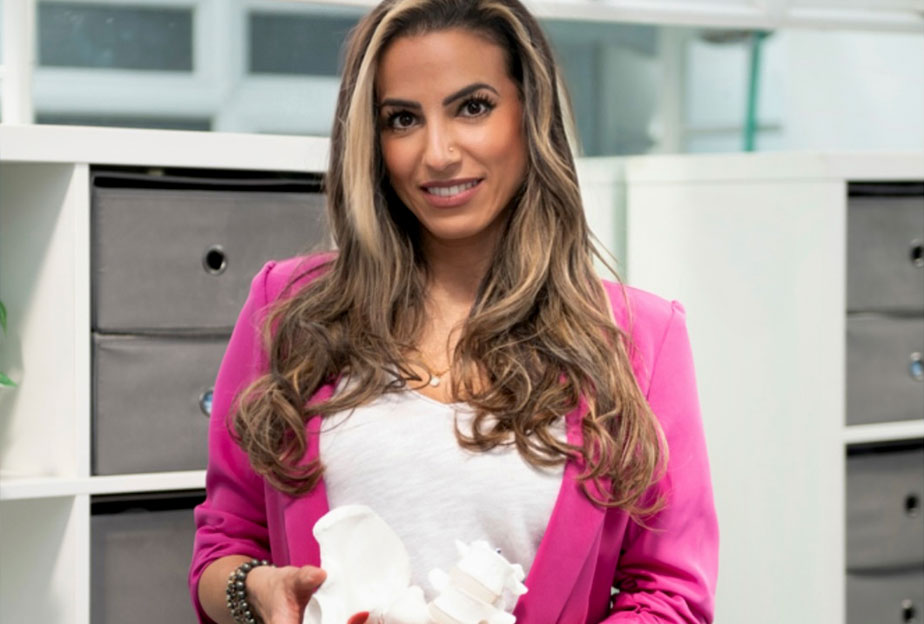
From bloating to painful periods, pregnancy and post-partum support to menopause, Ayshe takes a holistic view of your health at her North London clinic, The Backbone Osteopathic Practice. As well as being structurally realigned, clients experience nervous system regulation from her hands-on techniques.
“Many women have areas in their lives where they feel that they have completely lost control,” she says. “But, over time, my clients find that their energy levels rise, they have less stiffness and tension in the body, and their digestion improves. All of this helps with how they feel emotionally — it is so empowering to work with your body.”
“There are lots of tears in my treatments,” she adds. “Often people say, ‘I don’t know why I’m crying.’ But it’s common for stressed-out women trying to hold it all together at home and work to have an emotional release when they’re being held in that safe space.”
It was her own diagnosis of fibroids (growths in the uterus wall) at 26, after years of unexplained heavy, painful periods, difficulty conceiving, panic attacks and fertility issues, which inspired her to move into women’s health.
Using her osteopathy know-how to manage her gynaecological symptoms, she saw an unexpected improvement in her mental health from this bodywork. “I used the body to manage what was going on in the head,” she says, as opposed to the traditional talking therapy route of “top down.”
But what does any of this have to do with osteopathy? Ayshe says, “We’re like detectives creating a puzzle of the person. Typically, in medicine, people have different specialities, but none are connected. We look at how the body functions as a whole and piece it together.”
While a chiropractor looks at the nerves and spine and a physiotherapist can help with exercise-based rehab, an osteopath looks at the fuller picture: from the spine to organs, muscles, joints, alignment, circulation and lymphatic drainage, as well as health conditions and medication, including stress, sleep and anything going on at home and in work life that might be impacting you.
Osteopathy works under the premise that the body can heal itself in the right environment, and the practice aims to create that state through hands-on techniques such as massage and manual stretching, says Ayshe. She combines different types of osteopathy — structural (treating problems within the body’s musculoskeletal system), cranial (focusing on the head and spine) and visceral (internal organs) — alongside training in yoga therapy, neuro linguistic programming (NLP), breath work to calm anxiety, Reiki and energy healing. Drawing also on her Sufi practices – a holistic approach to healing based in Islamic spiritual tradition — she supports the mind–body connection not only through physical alignment but a deeper awareness of energy, presence and healing.
Her healing hands came to our attention after Get the Gloss creative director Victoria Ireland raved about how Ayshe has helped her over the past decade. “Initially, it was to treat back pain that was so bad I couldn’t walk,” she says. “But she also helped me manage chronically painful periods, when I was diagnosed with adenomyosis, (a condition where the womb’s inner lining grows into the muscular wall of the womb),” says Victoria, who now wouldn’t be without her monthly session.
Many people feel that their symptoms are down to getting older, but pain, imbalance or a difficult menopause are not something we should simply have to put up with. “People come in at 40 and blame their problems on age,” says Ayshe. “But I have patients in their 60s who have been putting the work in via regular treatments and are functioning better than someone in their 30s! Just like a classic car, if you look after it well, it can keep running beautifully for a long time. It’s worth investing in.”
“The most common way to address anxiety is a ‘top down’ approach, through psychotherapy or CBT. However, because the mind and body are so interconnected when it comes to stress, we can work with the body to calm the mind.
“When we feel stressed, the brain sends fight or flight signals to various muscles, particularly the hip flexors, to gear them into action. These are the muscles that join the hips to the thighs, and are the powerful ‘running away’ muscles. Even if you’re not actually fleeing, your body doesn’t know the difference between a physical and a mental stress.
“For that reason, it is said we hold stress in our hips. An osteopath can help to open up and stretch out the hips to release this tension in the body, and this can relax tension in the mind.
“Through massage, we can also work on the fluid and circulation, to boost lymphatic drainage and blood flow, and help the body get rid of cortisol quicker.
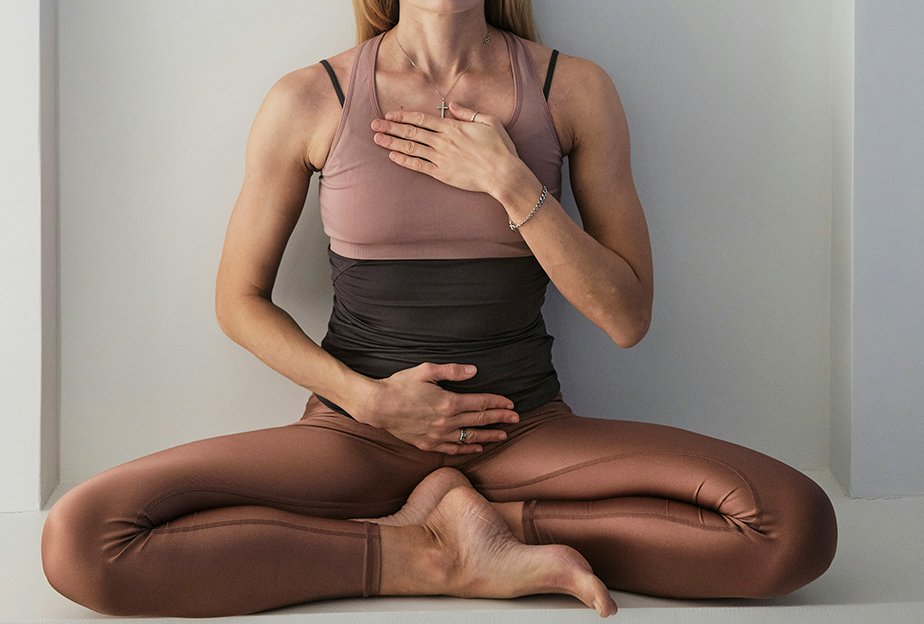
“I teach clients diaphragmatic breathing — a relaxation technique, where you use the diaphragm muscle below the rib cage to take slower, deeper breaths — to send de-stressing signals to the brain. It helped me personally with panic attacks. Place one hand on your chest and the other on your tummy. Visualise a small ball of light sitting at your lower rib cage. As you inhale, watch it expand, the rib cage opening with it — front, back and sides — like a radiant sphere of light. As you exhale, see it softly contract into a smaller glow, the rib cage drawing inward with your breath.”
“If you go to a doctor with back pain, you’ll usually be prescribed painkillers or exercises. But an experienced osteopath is trained to see the difference between structural back pain and something else going on inside.
“Many patients come in thinking they have a spine issue, but I find that it’s coming from the pelvis. Then, through follow-up scans — which they’ve subsequently requested through their doctor — they’ve discovered that they have PCOS, fibroids or endometriosis, which is causing their pain.
“Women hold a lot of tension in their pelvic floor, either from stress, and especially if they have conditions such as endometriosis, which can affect the blood flow inside the pelvis. The nerve supply in this area comes from the lower back, which is also why we tend to have back pain during a period.
“These gynaecological issues cause inflammation, so everything can become more compressed around the uterus, bladder and gut. There is a lot an osteopath can do to help reduce inflammation and improve pelvic alignment to create more space in these areas, and can also work on the nerves and blood supply in this area and support lymphatic drainage, to relieve tension and manage the pain.
“It’s the same with men: one client came in with lower back pain, I found that everything looked OK structurally, so I suggested he get it checked, and they caught his prostate cancer early on.”
“With period pain, we don’t speak enough about what is normal. But an average cycle is 21-28 days with about seven days on your period, during which you’d have up to three days of heavy bleeding (changing tampons or pads every three to four hours). If it’s a more extreme period lasting longer, or the bleed is heavier or more erratic than that, this isn’t normal.
“Our periods are the gauge of how well we’ve taken care of ourselves this month. Stress can lead to heavier periods, and poor posture can affect the amount of pain we experience. If you sit down a lot, this can create tightness in the pelvis by shortening and overstimulating the pelvic floor muscles and restricting blood flow to the area.
“I see this particularly with young girls who are struggling with painful periods and taking time off school: this can also be due to poor stress management, and teens tend to slouch. It’s important to sit upright with your hips higher than your knees, and your tailbone in a neutral position. Through improved awareness, making postural changes, better managing stress and diet, I’ve seen young patients return to a normal school life without going on the Pill, which is commonly prescribed for pain and heavy bleeding.”
“Poor digestion can be a taboo, but those women suffering with IBS, and stress can be as much of a trigger as intolerance to certain food groups. When we’re feeling anxious, our digestive system slows down. Hence, many of my patients tell me their IBS symptoms ease when they’re relaxed on holiday.
“An osteopath can help to regulate digestion by working with the body’s structure — releasing tension, improving circulation, lymphatic flow, gut mobility and supporting the nervous system — through a combination of hands-on techniques such as stretching, massage and gentle pressure points.
“Through these gentle manual and visceral techniques, we can also stimulate sluggish bowels by improving the mobility of digestive organs like the stomach and intestines, boosting circulation of blood flow and easing muscle tension in this area.
“You can further reduce bloating through self-massage at home: for example, try making small, circular clockwise movements from the belly button, out and in, for ten minutes a few hours before and after a meal.
“Posture tweaks can help with gut issues, too. If you slouch at the dinner table, you compress your abdominal organs, so the food can’t flow through as efficiently. So, make sure you’re sitting upright, with your shoulders back and chest open, to create space for digestion.”
“The menopause doesn’t have to be a struggle: some women go through it with few symptoms. But it can be more challenging if you’ve already had a dysregulated cycle before this.
“There is a lot of preventative work we can do as osteopaths to help regulate your body — and therefore your cycle — ahead of the menopause. Through gentle manipulation, massage and stretching, we can improve blood flow and lymphatic drainage in the pelvic area to reduce inflammation, ease muscle tension to relax the nervous system and restore optimal joint and tissue function.
“It’s never too late to start rebalancing the body so that everything is functioning smoothly as a whole. During menopause, we can support your body to manage symptoms. For example, hot flushes can be triggered by anxiety, so anything that works to calm the nervous system and boost circulation to support the drainage of cortisol can help with this.
“It’s not a quick fix: it can take years to unravel a lifetime of dysregulation, but it is possible.”
Find out how you can work with Ayshe Ibrahim via The Gloss Book.