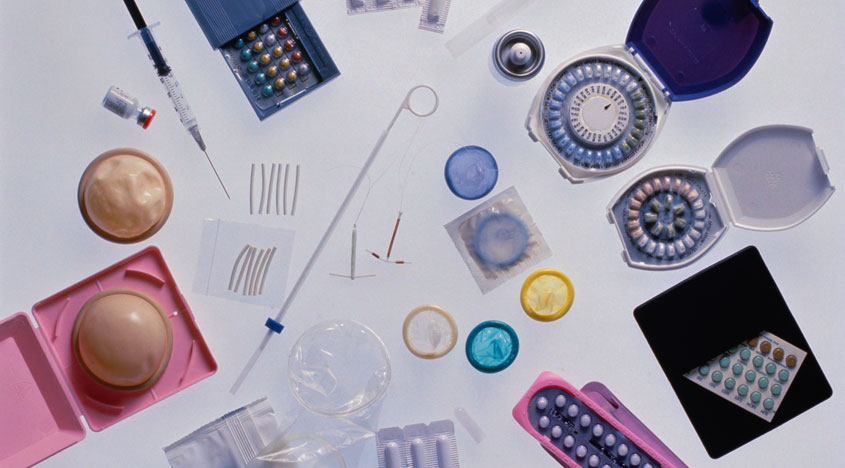
The pill continues to be the most popular form of contraception in the UK despite the myriad of other potentially more successful options available – is it about time you thought about switching up your safety?
There are currently two methods of contraception available for men and 13 for women. However, despite this wide variety the pill continues to reign supreme. Year-on-year data from the Office for National Statistics shows that the percentage of women taking the pill barely waivers. Indeed, of women using at least one form of contraception, more than a third take a pill – 34%, while the IUD, IUS, injections and implant come in at just 7%, 2%, 4% and 2% respectively.
Experts suggest this unfailing popularity for the pill is largely born out of a lack of information combined with myths and misconceptions regarding other forms of contraception. “A lot of women have the idea that IUD, IUS and also injectables can affect future fertility in the long term, and there is really no evidence for that” says Dr Cynthia Graham, senior lecturer in health psychology at the University of Southampton.
When picking contraception a much more rounded approach should be encouraged. “Each method of contraception has pros and cons,” says GP Dr Caroline Robertson. “There’s not one form that is the gold standard. Ultimately, it depends on the person’s age, if they’re sexually active, how many partners they have, if they’re breastfeeding etc. A method that is convenient and effective for somebody in their 20s won’t necessarily be a good form of contraception for somebody later in life. You need the whole picture before you can make a fully informed decision.
“What is possible though is to do some research into the variety of methods available and assess beforehand what might work best for your lifestyle. For example, the pill might be the most common form of contraception taken in the UK, but essentially its effectiveness is entirely reliant upon a person taking it regularly – so if you’re forgetful or disorganised it’s probably not the best option for you.”
When deciding upon what contraception might work best for you there are a number of things to keep in mind:
To help give you a more complete perspective we’ve rounded up the most commonly used contraceptive methods available and broken down the facts and figures to bring you an essential cheat sheet of information. So, read up and choose wisely.
Contraceptive injection
Best suited to: Young women who don’t want to have to remember to take contraception. It’s also good if you’re breastfeeding.
Effectiveness: Over 99%. Less than one woman in 100 will get pregnant in a year.
How it works: The injection releases the hormone progestogen which stops ovulation, thickens cervical mucus to prevent sperm reaching an egg, and thins the lining of the uterus (womb) to prevent a fertilised egg implanting.
Advantages:
Disadvantages
Implant
Best suited to: Young women who don’t want to have to remember to take contraception.
Effectiveness: Over 99%. Less than one woman in 1,000 will get pregnant over three years.
How it works: A small flexible rod is put under the skin of the upper arm, which releases hormone progestogen. It stops ovulation, thickens cervical mucus to prevent sperm reaching an egg, and thins the lining of the uterus to prevent a fertilised egg implanting.
Advantages
Disadvantages
MORE GLOSS: Fertility Facts: 15 things you need need to know about getting pregnant
Intrauterine System (IUS)
Best for: Women who are looking to space babies, those who suffer from difficult periods. Also a useful method for those later in life – IUS can be used right up until menopause.
Effectiveness: Over 99%. Less than one woman in 100 will get pregnant over five years.
How it works: a small T-shaped plastic device, which slowly releases the hormone progestogen, is put into the uterus. This thickens the cervical mucus to prevent sperm reaching an egg, which thins the lining of the uterus to prevent a fertilised egg implanting and may stop ovulation.
Advantages
Disadvantages
Diaphragm/cap with spermicide
Best for: People who aren’t too worried about getting pregnant or those who have infrequent sex.
Effectiveness: Latex types are 92-96% effective if used correctly. Between four and eight women in 100 will get pregnant in a year. Silicone caps are less effective.
How it works: A flexible latex or silicone device, used with spermicide, is put into the vagina to cover the cervix. This stops the sperm from entering the uterus and meeting an egg.
Advantages
Disadvantages
Intrauterine Device (IUD)
Best for: Women who are established with partner with periods that are easily managed.
Effectiveness: Over 99%. Less than one woman in 100 will get pregnant in a year. Older IUDs have less copper and are less effective.
How it works: A small plastic and copper device is put into the uterus. It stops sperm reaching an egg, and may also stop a fertilised egg implanting into the uterus.
Advantages
Disadvantages
Combined Pill
Best for: People who are organised, those who want to regulate periods and also beneficial for some people with acne.
Effectiveness: Over 99% if taken according to instructions. Less than one woman in 100 will get pregnant in a year.
How it works: It contains two hormones – estrogen and progestogen. It stops ovulation, thickens cervical mucus to prevent the sperm reaching an egg and thins the lining of the uterus to prevent a fertilised egg implanting.
Advantages
Disadvantages
Progestogen-only Pill
Best for: Women who can’t take pill and women who are postnatal or breastfeeding.
Effectiveness: Over 99% effective if taken according to instructions.
How it works: Contains the hormone progestogen, which thickens the cervical mucus to prevent sperm reaching an egg and thins the lining of the uterus to prevent a fertilised egg implanting. In some cycles it stops ovulation.
Advantages
Disadvantages
Male Condom
Best for: Helping with STI’s, but they are recommended to be used alongside additional contraception such as the pill.
Effectiveness: 98% if used according to the instructions. Two women in 100 will get pregnant in a year.
How it works: Made of very thin latex (rubber) or polyurethane (plastic). It is put over the erect penis and stops sperm from entering the vagina.
Advantages
Disadvantages
Like this? Sign up for our newsletters to receive similar content to your inbox