Hair Sculpt – how a modern keratin treatment finally made my frizzy hair behave

Glossier, more volume, salon-style waves and an easier life? Welcome to the hair treatment of dreams
Six months ago, you couldn’t have paid me to have a keratin ‘chemical straightening’ hair treatment. I’d had it twice before a decade ago, both times disastrous. My unruly brown waves turned into a limp yellow helmet of poker straight strands. The noxious chemicals – so pongy I needed to be in a specially ventilated room – drew out most of the colour and the endless ironing dried my hair to a crisp. It took me months to get the condition back. It was as though I’d been wig-snatched.
Keratin treatments of yore brooked no middle ground between ironed flat and frizzball. They were one-size-fits-all. Toxic formaldehyde was routine (now banned) and you couldn’t wash your hair for days while the chemicals bedded in.
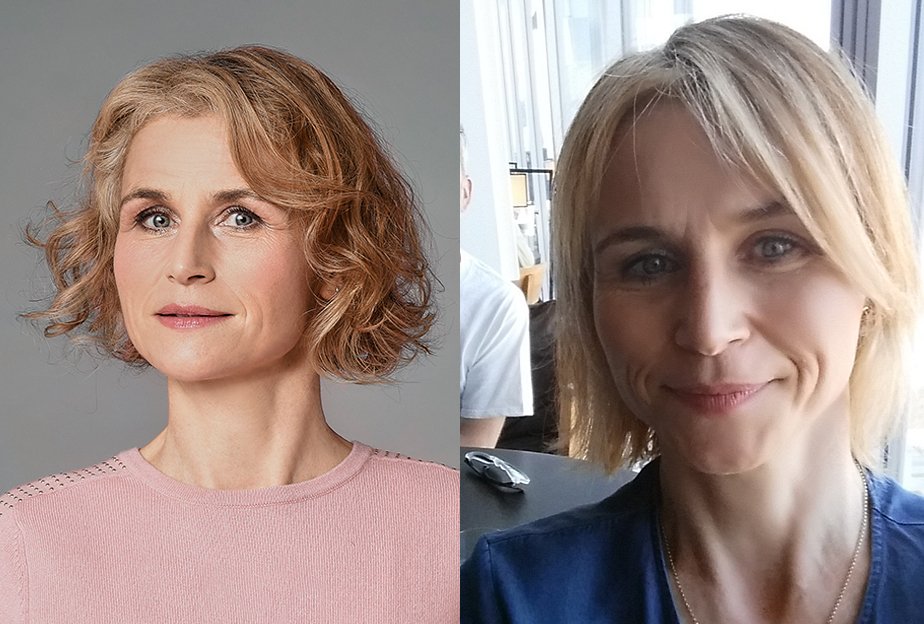
Hair nightmare: Victoria’s natural colour and curls (left) without keratin, and (right) after an old-style keratin treatment in 2015.
So when my beloved hairdresser Gustav Fouche (who’d hitherto been on the money nurturing my thinning hair back to thickness with treatments such as the 3D dry cut and deep conditioning Hair Botox) suggested his special keratin called ‘Hair Sculpt’, I politely declined. “Oh, but you’ll love it,” he implored. It would actually improve the condition, I’d need to style it much less, I’d have less breakage, and I wouldn’t lose my curls – they’d magically morph into glossy beach waves, he said.
Keratin has come a long way since my Lego hair moment. Since 2016, when formaldehyde was classed by the UK government as a class 1B carcinogen, manufacturers have had to rethink their ingredients. Gustav had been casting around for years for a formula that could work as well, but also fit into his ethos of avoiding heat damage or using drying silicones. He found one that was gaining traction in Brazil, the home of chemical straightening (he believes he is the only UK salon importing it). It was non-toxic and could be tailored to the client’s hair, allowing for straighter and wavier areas where desired. He spent the past two years experimenting with it on various hair types before launching it as Hair Sculpt this year.
I trusted him, but still went for the most conservative treatment option. I loved it so much I went back three months later when it had worn off, for a stronger one. It did indeed give me those beachy waves, it smoothed out the ‘pubey’ bits around my hairline, I could sail through hot yoga or a rain shower without looking like I’d had a ‘witch-over’. And despite my average blow-dry skills, I could create a salon-level zhuzh in minutes. Far from being flat, my hair had more volume and stayed in better condition. Everything on my wish list had been ticked – and that, says Gustav, is the same for every client, as it’s utterly customisable.
Unkempt before Hair Sculpt. Victoria takes her unstyled frizzy mop to Gustav Fouche at his London salon for a modern keratin treatment
It’s a straightening and conditioning treatment that is bespoke, depending on how long the product is left on wet hair, what percentage is rinsed off before it’s blow-dried, whether it’s straightened afterwards, and if so, the number of passes with the irons (anything from two to 15 times). The less that is rinsed out and the more heat applied, the stronger the effect. There are so many variables you can play with, which makes it completely customisable. “What’s lovely is that you can add more control, where you need it and go lighter where you want to keep some of your natural texture,” says Gustav.
The whole thing takes about 90 minutes. You can wash your hair straight after if you wish.
Because I needed more straightening help around my hairline, Gustav rinsed less off there and went over it more with straighteners. He straightened my roots and ends and kept the heat off the mid-lengths so that my natural curls could still form, albeit in a more pulled-together way. Note that you may leave the salon with poker straight hair if it’s been ironed all over. You can wash it afterwards and your new texture will appear.
Think of this less as straightening, more of smoothing, taming and conditioning treatment that eliminates any rogue elements caused by humidity, thinning, greying (grey hair has a wirier texture) or a random curl pattern. It works with the natural quirks of your hair, so you still look like you, only significantly better coiffed every day.
“It will add volume, it will add shine,” says Gustav. Dyed blondes, who struggle with dullness, will benefit because it flattens their more open cuticle, adding more of a gleam. It protects colour and prevents further heat and stress damage as you simply don’t have to style it as much. You can curl your hair too, as it still holds a curl.
It’s for you if you want to spend less time styling, to be less at the mercy of humidity, have more manageable waves and bring over-processed hair back to health.

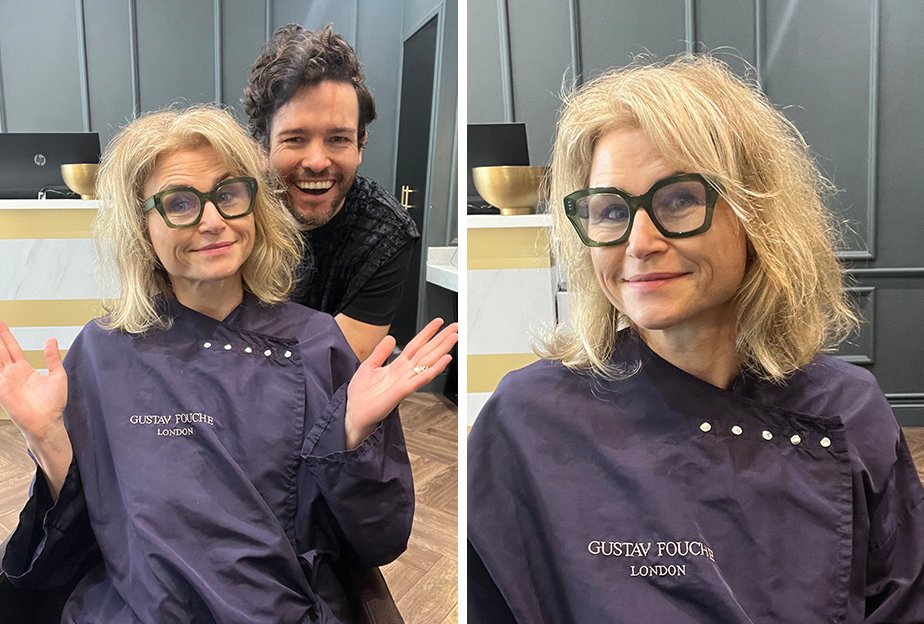
Left: Victoria with Gustav Fouche immediately after her first Hair Sculpt keratin. Right: low-maintenance beach waves after keratin treatment.
My first treatment lasted around 10 weeks, as I wanted the lowest level possible and to see how my hair responded before I went bigger. The first couple of treatments are about establishing a protocol that works for you, where you need more, where you might need less. Thereafter, you can top up around every four to six months, treating the roots in between if you think your regrowth needs it.
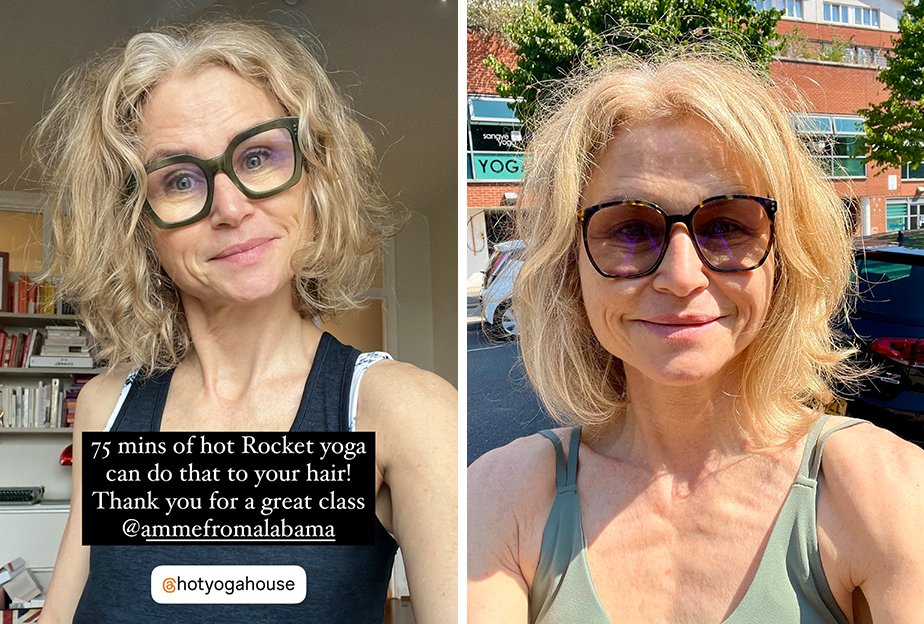
The ultimate humidity test: hot yoga. Left, curls before keratin. Right, humidity has less of an impact, even three months after treatment.
Now, I can’t live without my Hair Sculpt. It saves me so much styling time, I wake up in the morning and don’t scare myself with my witchy hair, I can leave my hair to air dry and it still looks half decent, and I’m no longer that person who has a cashmere beanie in her bag even during a heatwave in case of unexpected, hair-mangling rain showers. I have more volume because I don’t have to straighten the life out of my hair to tame it. Even Gustav does a double-take when I come in for my regular cut.

Blow-dried three months after a second slightly stronger Hair Sculpt treatment
This type of treatment is only as good as the person whose hands it is in. It needs someone who really understands the way your hair falls when it’s dry and who can work with the many variables of the treatment to get the best result. And results are cumulative.
Having ‘dry cut’ my hair for two years and really worked to bring back the condition, before attempting keratin, Gustav knew my hair and was confident he could deliver transformative results. No wonder people travel from all over the UK for this.
Hair Sculpt costs from £300 at gustavfouche.com.