‘I tried the vagus nerve stimulator that’s trending – but what does this longevity-boosting gadget actually do?’

Sales of this £240 stress-busting device have rocketed thanks to a new Netflix documentary about a notorious biohacker. Naturally, we gave it a go – here’s what happened
Infamous biohacking obsessive and tech bro Bryan Johnson – aka the man who wants to live forever and spends £2m per year on longevity-boosting protocols in an attempt to do so – sports an eye-catching accessory called a Pulsetto in Don’t Die, the fascinating Netflix documentary about his bizarre lifestyle (do watch it).
The 47-year-old has become notorious for his extreme commitment to reversing ageing, even undergoing plasma transfusions from his teenage son (poor lad) to rewind his biological clock. The Silicon Valley entrepreneur’s doc chronicles all the frankly gruelling ways he staves off ageing – including no less than 88 daily supplements (!) – but it was the wellness tech he wears every day that really caught my eye.
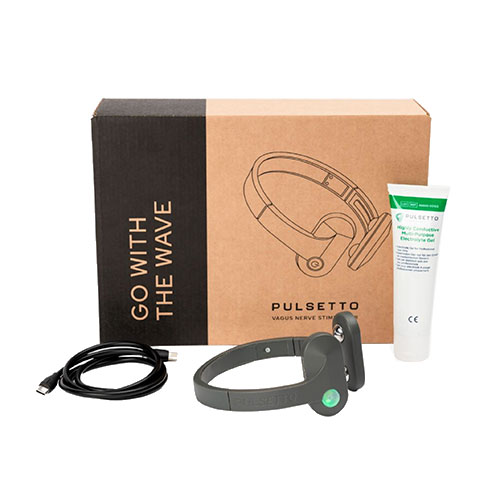
The Pulsetto, which costs £240.99, looks like a pair of sleek headphones, but it’s actually a vagus nerve stimulator that you wear around your neck in an effort to relieve stress and boost longevity.
How does a vagus nerve stimulator actually work, you ask?
It’s a device that “directly communicates with the body’s ‘master controller’ of the nervous system: the vagus nerve, which plays a critical role in controlling involuntary functions like heart rate, breathing, and digestion,” explains NHS GP and ITV This Morning’s doctor, Dr Zoe Williams. Dr Williams is an ambassador for another trending vagus nerve device called yōjō, which includes face-scanning feedback and personalised coaching to maximise the wellness benefits.
While there are natural ways to stimulate our vagus nerve, such as meditation and being out in nature, our busy modern-day lives often get in the way, which is where these vagus nerve devices come in. “By delivering gentle, low-level electrical impulses, we effectively send a ‘calm down’ signal to the brain,” reveals Dr Williams. “This stimulation activates the parasympathetic nervous system, which is the body’s natural ‘rest-and-digest’ state. In simple terms, it’s a low effort, non-invasive way to manually shift your body out of the ‘fight-or-flight’ stress response, promoting whole-body relaxation and anti-inflammatory processes.”
When the Bryan Johnson documentary aired, sales of the Pulsetto Vagus Nerve Stimulator – the device that Johnson was wearing – skyrocketed by 300% on online wellbeing retailer Healf.

Bryan Johnson wearing the Pulsetto in the Netflix documentary Don’t Die. Yes, he does look a bit silly, doesn’t he
Various Get The Gloss experts are also on board with the benefits of a vagus nerve stimulator, so there’s a growing number of trusted fans.
Our editorial director Victoria Woodhall has tried the Sensate vagus nerve stimulator to help her sleep, and the registered psychiatrist and aesthetic doctor Dr Galyna Selezneva has introduced the Nurosym device, £599, to her Biohacking Bar at AllBright in London. Dr Sophie Shotter also swears by Nurosym for managing stress and the leading aesthetic doctor even dedicated an episode of her Age Well podcast to the technology.
Be warned though, they don’t come cheap – the devices range from around £200-£600.
Originally developed as a medical treatment for epilepsy and depression, vagus nerve stimulators claim to:
“My patients have reported reduced stress, improved sleep quality, increased mental clarity, and a calmer overall state,” reveals Dr Galyna. “People with severe symptoms experience rapid effects within one to three days, while healthy people may experience the effects after 30 days.”
Most vagus nerve stimulators are worn behind the ear or around the neck, where they can transmit electrical impulses through the skin at regular intervals. You can typically control these pulses through an app on your phone.
“You do have to wear them consistently to achieve results,” warns Dr Galyna. “However, when I tell my patients all the benefits of vagus nerve stimulation, especially mentioning appetite suppression (think no-needle Ozempic), they do tend to do so!”
Best of all, you supposedly only need to wear them for a few minutes a day to see the benefits. No tricky meditation, invasive medical procedures or even walks in nature required. Fair to say, I was intrigued.
I put the Pulsetto to the test. It looks a bit like thin headphones, and it’s worn like a choker, with two silver diodes on each side that are placed in contact with your neck.
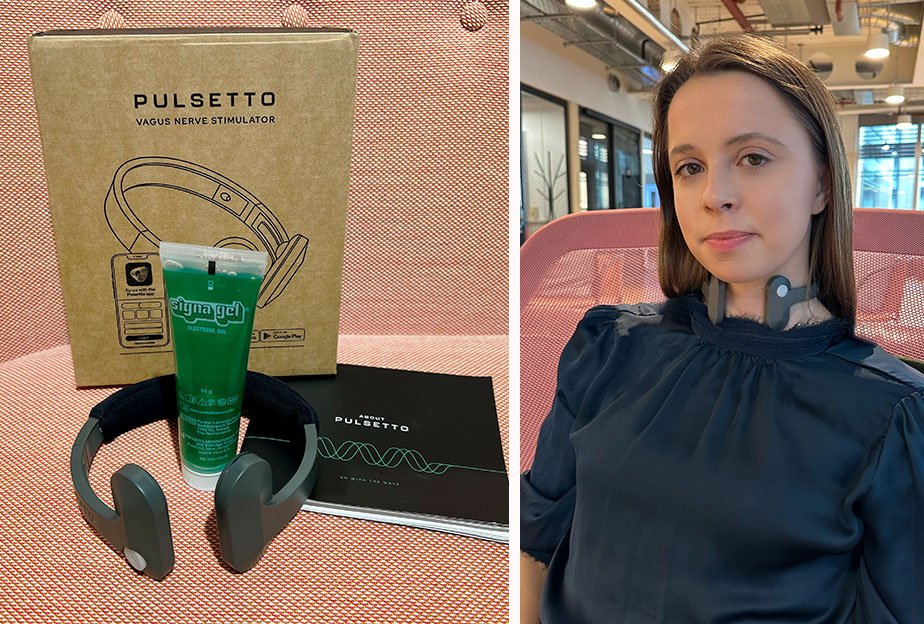
GTG’s Becki rocking the Pulsetto vagus nerve stimulator in the office
Before you pop it on, you need to apply some conductive gel to your neck to facilitate the electrical impulses. Then, once set up on the app and having answered a questionnaire about your current wellbeing and what you are hoping to achieve, you are ready to start your sessions. For me, it recommended beginning with four minutes, twice daily. I chose stress relief, but there are options for sleep and managing pain too.
At first, I couldn’t feel a thing. Then, I was aware of a slight buzzing sensation – although less aggressive than your electric toothbrush – followed by subtle neck contractions.
While I wasn’t immediately transported to a realm of zen, wearing it did have the instant side effect of making me more aware of my breathing. The app’s sound therapy was a nice touch too, especially for relaxing my rather high shoulders.
I’ve not been using it long enough to know if it’s going to suppress my stress long-term, but it’s certainly easy enough to slot into your daily wellness routine. And you don’t look silly (unlike, say, when wearing an LED mask) so you can get away with wearing it in the office. If it can help me get a little less overwhelmed by a big deadline, I’m certainly willing to keep trying.
Three other vagus nerve stimulating gadgets to try:
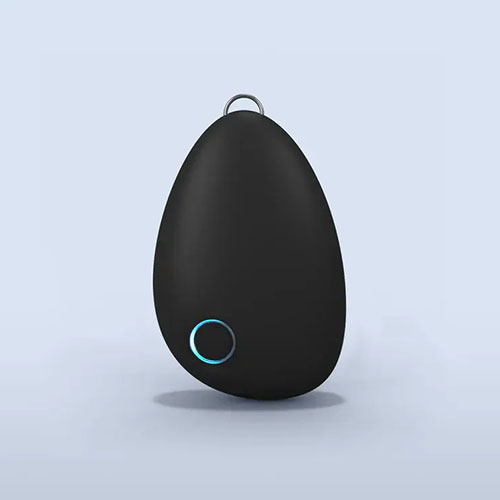
Tested by Victoria, our editorial director, Sensate is a pebble-like device, designed to be worn around the neck on a lanyard. It delivers soft, cat purr-like vibrations to the centre of your chest, accompanied by soothing sounds through the app. That makes it great for helping calm your mind, while soothing you to a more relaxed sleep.
Buy Now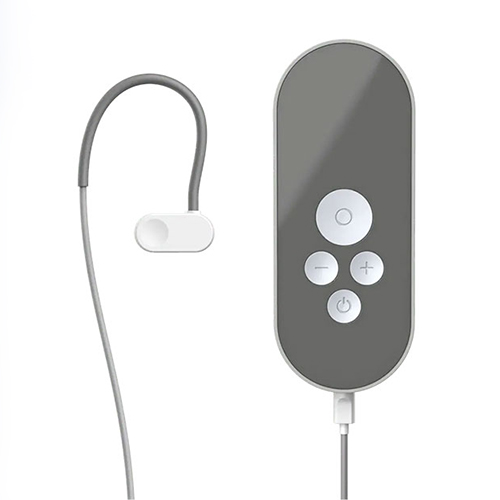
Nurosym is arguably the most scientifically backed device. “I like Nurosym because it has randomised controlled studies behind it with leading institutions,” Dr Sophie explains. “I tracked my heart rate variability for one month while using it daily and my HRV more than doubled.” That is linked to long-term improvements in energy, mood, and pain management.
Buy Nowyōjō, £399 for annual subscription

When you join yōjō you don’t just get your hands on a vagus nerve stimulator to clip onto your ear for a daily 30-minute body reset. You also benefit from a companion app that gives you real-time biofeedback, including heart rate variability and stress index reports. Wellness coaches are on hand too, to help you build a plan that address the root cause of your stress, not just the symptoms.