How working your fascia can boost your fitness, skin and mood

You may not have even heard of it but taking care of your fascia – the body’s web of connective tissue – can reap physical and mental rewards. Here’s how
Suddenly, it seems like everyone is talking about fascia, from bodywork community and “global fascia movement” @humangarage (1.3 million Instagram followers) to facial massage expert @anastasiabeautyfascia (2.5 million). They tell us it’s a key element of fitness, beauty, and even emotional wellbeing – yet it’s something that most of us never even think about. Or indeed know exactly what it is.
“Fascia is a continuous network of connective tissue that wraps around and supports every muscle, bone, organ and nerve in the body,” says Laura Wilson, musculoskeletal physiotherapist, Gloss Book expert and director of The Swiss Touch clinic. Think of the thin webbing you might see around a chicken fillet. Wait, come back! “It’s a dynamic system involved in movement, stability and even how we experience pain,” says Wilson. So although the squeamish might shudder to imagine it, fascia (it’s pronounced fay-shee-uh, by the way) is very important.
There are different layers of fascia: superficial, just beneath the skin; deep, encasing muscles; visceral, which supports organs and parietal, lining cavity walls. Fascia has a high density of nerve fibres and an excellent blood supply, “which is why restrictions or tension in fascia can affect everything from mobility to stress levels,” adds Wilson.
The short answer is yes. “Fascia plays a key role in functional movement, load transfer and postural control,” says Wilson. “Healthy fascia supports mobility, stability and efficient recovery. When restricted, it contributes to poor movement patterns, compensation and discomfort. Unlike isolated muscle training, fascia-focused movement supports whole-body efficiency which is key for injury prevention, performance, and long-term physical resilience.”
That sounds great. But what exactly are “fascia-focused movements”? “Practices like yin yoga and long-held stretches restore tissue glide,” she explains. In normal, healthy movements, your soft tissues pass easily over each other – this is tissue glide. “Multi-directional, functional movement such as Pilates helps keep fascia responsive and coordinated. Eccentric strength training – ie the controlled lowering of a weight – helps stimulate collagen production, and fascia is largely made from collagen. Meanwhile, foam rolling and other self-release techniques can ease tension and promote circulation.”
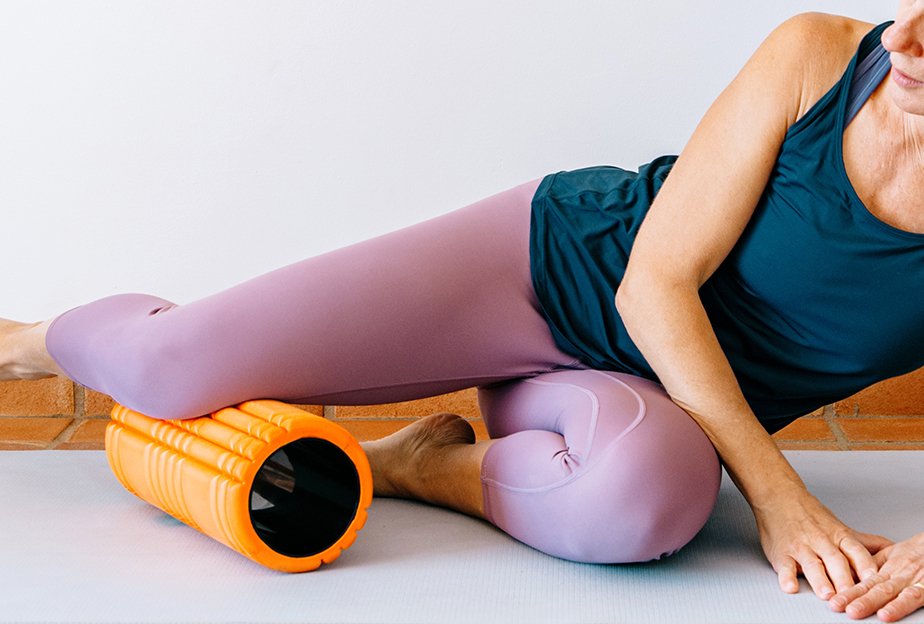
You’ve gotta roll with it: using a foam roller can help work your fascia
The other side of the story is the aesthetic benefits. From improving cellulite on your thighs to firming up your face, there are beauty-based reasons to focus on fascia.
Holistic health expert and acupuncturist Sarah Bradden is known for The Bradden Method, the treatment to which many celebrities and in-the-know editors credit their glowing skin. But to call it a facial would be like calling Taylor Swift a jobbing singer. It combines acupuncture with reiki, reflexology, light therapy and other tools to support overall energy and wellbeing – not just your skin (but of course, they are all connected).
“When it’s healthy, fascia is supple and fluid, allowing movement, circulation and communication between all the body’s systems,” explains Bradden. “When it becomes tight or dehydrated, it can restrict mobility, affect posture, create pain and even influence how we feel emotionally. In many ways, fascia is the fabric that holds us together, it is where structure, function and feeling meet.”
View this post on Instagram
Wilson agrees. “The superficial fascia just beneath the skin affects how smooth or toned the surface looks,” she adds. “Restrictions or adhesions in this layer can contribute to the dimpled appearance of cellulite. In the face, fascial layers influence tone, puffiness and lymphatic flow. Techniques like gua sha or facial massage can enhance skin vitality, especially when done regularly and gently.”
Having studied Traditional Chinese Medicine while training in acupuncture and energy healing, Bradden knows all about the connection between our fascia and how we feel. “In Chinese Medicine, fascia is deeply connected to the meridian pathways; the channels through which qi, or vital energy, flows,” she says. “If fascia is supple and open, qi moves freely, supporting physical health and emotional balance. When fascia is constricted, qi stagnates, which can manifest as pain, tension or even long-held emotional patterns. Fascia holds our experiences, whether stress, grief, trauma or joy, and that’s why releasing it can feel so transformative – not just physically but emotionally too.”
If you’ve had any kind of surgery, from an appendectomy to a C-section, you may be wondering how snipping through one part of this vitally important, interconnected webbing will impact the rest of your body. And you’d be right to be concerned.
Emma Holly is a specialist scar therapist and founder of Restore Scar Therapy. “Traditionally, the word fascia was used by surgeons to describe the tissue encasing organs, muscles and bones, often discarded within medical dissections as it was not deemed important,” she says. “More recently, the importance of fascia as a functional organ has been widely accepted.”
Any type of surgery will disrupt the layers of skin and fascia. They repair over time, of course, but it’s not always straightforward. “Layers can become stuck together with scar adhesions, which can change the shape of the way your skin sits, such as creating a fold, pulling or puckering,” she explains. “Movement can also be impacted, but daily massage will help to reduce the impact of surgery on the fascia. Even historic scars can benefit, as the skin and fascia renew all the time.”
You might have seen “fascia blaster” tools promoted on social media, which apply deep pressure to manipulate the fascia – and promise to banish cellulite and scarring. But Holly insists that gentle treatments are far more powerful. “Fascia requires slow stretching rather than forceful, quick movements that may cause it to tighten or tear,” she says. “Slow stretches allow the connective tissue to release, promoting pliability, reducing stiffness and increasing range of motion by enabling the fascia to gradually lengthen and recover to a healthy, hydrated state. Holding a stretch for longer can trigger cells called fibroblasts to activate and generate repair.”
It’s not only slicing through fascia during surgery that can cause issues. “Fascia can become tight or restricted for many reasons including repetitive movement, injury, stress, dehydration, or being sedentary for long periods,” says Bradden. “On an emotional level, unprocessed feelings can also leave their imprint.” The good news is that small daily actions are simple but powerful. “Hydration, gentle stretching, mindful movement such as yoga or Pilates, and conscious breathing all help keep fascia supple,” she says. “Regular touch therapies such as acupuncture, massage or gua sha also nourish and wake up the fascia.”
While the dream would be to regularly see an expert to release the tension in our fascia, the reality is that most of us have budgets that will stretch to a DIY approach, with professional treatments as an occasional treat. “I recommend simple, consistent tools rather than aggressive ones,” says Bradden. “Dry brushing, foam rolling, gua sha and cupping are wonderful for stimulating circulation through the fascia and helping it stay elastic and hydrated. Acupuncture is also an incredible way of releasing fascial tension at a deeper level, as it connects to the meridians as well as the tissue itself.” Whichever method you choose, just remember to keep it gentle and do it consistently.