What you need to know about your hormones at every life stage – by women’s health expert Dr Louise Newson

It’s great that everyone’s now talking about menopause, says GP and hormone expert Dr Louise Newson, but let’s empower women to navigate hormonal shifts through every decade of their lives
As a hormone expert, I’m often asked to talk about perimenopause and menopause. While it’s great (and long overdue) that this is widely acknowledged and understood, I want women of all ages to understand the importance of their hormones, throughout every stage of their life.
When I was growing up, women didn’t talk as freely as they do today about periods, sex and menopause – let alone hormones. I am so glad that younger generations (my three daughters included) are growing up having these open conversations but I do wonder why hormones aren’t talked about in the same way.
Recognising the impact of hormones throughout their lifespan can help women to understand what’s going on in their body during every decade of their life. I have shared my expertise with my three daughters who are now empowered to understand and manage their own hormonal health. Let me break it down for you too…
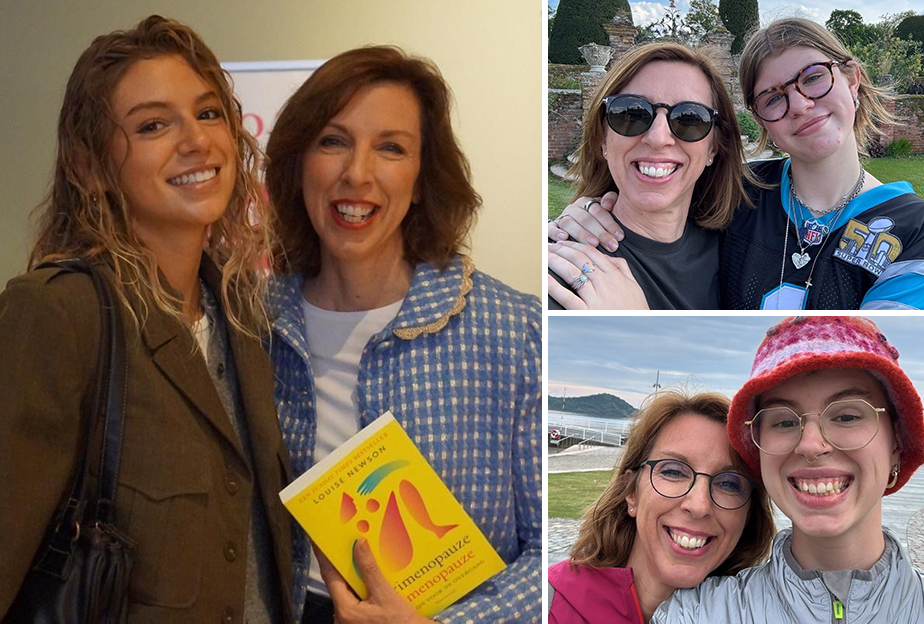
Sharing the knowledge: Louise Newson with her daughters
Most women become aware of their hormones during puberty when they start their periods. PMS and PMDD (a severe form of PMS) cover a wide range of symptoms that occur before your periods, including mood swings, feeling low or irritable, difficulties sleeping, bloating, breast tenderness, headaches and skin breakouts. These symptoms are usually due to changing hormone levels. While common, these symptoms don’t have to be endured – it is worth seeing a healthcare professional to discuss treatment options.
Many women in their 20s take a form of hormonal contraceptive such as the pill, injection, implant, patch or coil (intrauterine device). All of these contain synthetic hormones, which have different chemical structures compared to your natural hormones, inevitably impacting your hormone health.
It’s important to know this so that you can understand the potential side effects of hormonal contraception – like headache, weight gain, acne, mood changes and nausea – so you can make an informed choice but also be in tune with your body. The combined pill can also reduce your testosterone level, causing low libido. This is often dismissed by doctors, but it shouldn’t be – why shouldn’t women in their 20s enjoy a healthy libido?
Zoely is a combined oral contraceptive that contains body identical estradiol (estrogen) and a newer type of progestogen, nomegestrol acetate (NOMAC), but not all women know about it. The hormones in Zoely are associated with lower risks than other synthetic formulations. Of course, condoms prevent STIs as well as pregnancies, are cheap and have no risks to health or side effects so can be a great option for women in their 20s.
Women can become aware of common hormonal conditions in their 20s, although often the road to diagnosis is long and difficult. Endometriosis, for example, affects at least 10% of women and the average diagnosis time in the UK is nine years. Similarly, polycystic ovary syndrome (PCOS) affects 10% of women and many of these will have hormonal changes, especially low progesterone. Awareness of hormones is key.
Many women start to consider their fertility in their 30s. Premature ovarian insufficiency (POI) is when your ovaries no longer work properly when you are under the age of 40 years, and it affects about four in 100 women in the UK in this age group. Many women have POI without realising so it is really important that if you have irregular periods or your periods have stopped in your 30s that you talk to your doctor about the possibility of POI.
In most women with POI, the ovaries do not completely fail – their function can fluctuate over time, occasionally resulting in a period, ovulation or even pregnancy, sometimes several years after diagnosis.
Levels of testosterone in women gradually decline as you enter your 30s too. When your levels of testosterone reduce, you may find that you desire sex less often and when you do have sex, it’s not as enjoyable as it used to be. Other symptoms of lower testosterone include dysphoric mood (anxiety, irritability, depression), lack of wellbeing, physical fatigue, bone loss, muscle loss, changes in cognition, memory loss, insomnia, hot flashes, joint pains and urinary complaints including incontinence.
A low testosterone level alone does not necessarily mean replacement testosterone is needed but if you are experiencing symptoms, you should seek advice from a healthcare professional who is experienced in female hormones.
The average age a woman in the UK experiences menopause is 51 but it’s common to go through it earlier than this. Menopause is defined as a year after your last period, and it is described as early if it occurs before you are 45.
Perimenopause, when levels of estradiol and progesterone fluctuate and then fall, can begin many years before menopause. Often women start to experience symptoms, which can include brain fog, memory problems, low mood, poor sleep, joint pain, headaches, frequently passing urine, changing periods and heart palpitations, when they are in their early 40s.
Even if you are experiencing symptoms of perimenopause, it’s important to continue using contraception if you don’t want to get pregnant. Women in their 40s may be advised to use a different form of contraceptive because of increased age-related health risks such as cardiovascular disease and breast cancer.
Some women consider switching forms of contraception as the pill, for example, can mask symptoms of perimenopause. Hormonal contraception has more side effects and risks than body identical hormones.

Menopause can cause significant changes in your 50s. Key things women need to understand about the hormones in this decade is the impact of their mental health. Symptoms of menopause and clinical depression can be similar, and many menopausal women are prescribed antidepressants. However, if your low mood is predominantly caused by low hormones, which occurs during perimenopause and menopause, the NICE menopause guidelines state that HRT is the first-line treatment.
Women in their 50s are often leading full lives, and can be working and shouldering caring responsibilities. At first, they may not notice the impact of low hormones and start to think that feeling tired, overwhelmed and a bit flat is just a normal part of ageing. Others may realise their symptoms are due to low hormones but think they’re not suffering “enough” to seek help.
There is no need for any woman to suffer because of her low hormones. HRT is an effective and safe treatment, and for many women the results can be transformational. The type of hormones you need and the dose you will be given varies between each woman – it is not a “one type fits all” prescription. HRT will usually contain estradiol, progesterone and testosterone and these hormones are usually prescribed separately. When women are given the right hormones in the right doses, some can get relief from their symptoms quite quickly – flushes can resolve within a week or two, for example.
Your 60s are your chance to put yourself first and protect your long-term health. You may not have taken HRT in your 50s – many women aren’t offered HRT when they first develop symptoms of menopause, or put up with menopausal symptoms. Yet, most women who are otherwise fit and well do still gain benefits from taking HRT even if it has been more than 10 years since their menopause. It is worth remembering that you are never “through” menopause – your hormone levels will remain low for ever.
There are long-term risks associated with low levels of hormones that occur during menopause such as the increased risk of cardiovascular disease and osteoporosis (bone weakening disease), as well as diabetes, dementia, cancers, autoimmune diseases, and depression. HRT helps with improving symptoms and it also has long-term health benefits as it reduces risk of these important diseases.
Half of women not taking HRT over the age of 50 will experience a fragility fracture in their lifetime. Osteoporosis develops slowly over several years – it is often only diagnosed once a low impact fall causes a bone to break. HRT can help prevent and repair bone loss and reduce the risk of fracture. Testosterone also plays an important role in maintaining bone mineral density.
Rebalancing and optimising your hormones during your 60s can have both immediate and long-term benefits, and will help to allow you to continue to live a full and active life.
Dr Louise Newson’s new live show Breaking The Cycle: The Power Of Hormones runs 14 April – 11 June in theatres across the UK. Plus she features in new documentary series Balance: A Perimenopause Journey, which drops on Apple TV+ and Amazon on 30 January