8 ways to eat yourself happier – starting with Tim Spector’s blueberry yoghurt cake recipe

Bad mood? The delicious new cookbook from the gut health expert Prof Tim Spector can help with that
“Until recently I hadn’t appreciated how deep the connection is between what we eat and our mental and brain health,” says Professor Tim Spector, genetic epidemiology professor, one of the world’s most cited scientists and co-founder of the Zoe nutrition company.
You will have definitely heard Spector talking about the importance of gut health, urging us to nurture our gut microbiomes, through diet, to benefit our general health. But what’s becoming clearer as our understanding of the science evolves, is just how much impact the foods we choose can also have on our mood, mental health and cognitive reserves as we get older.
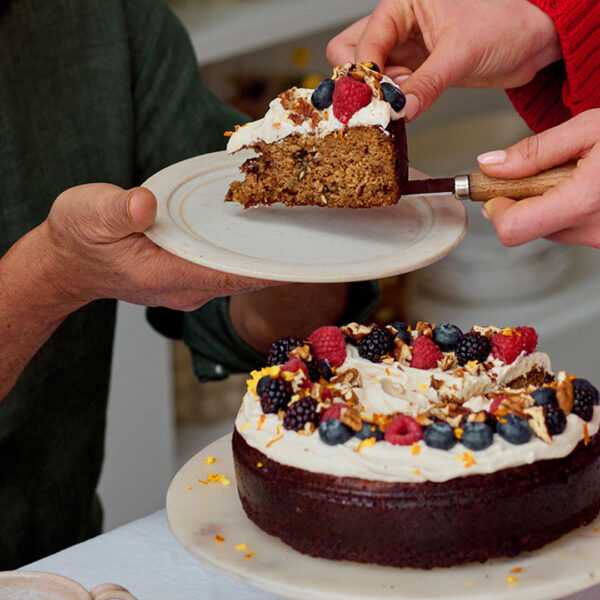
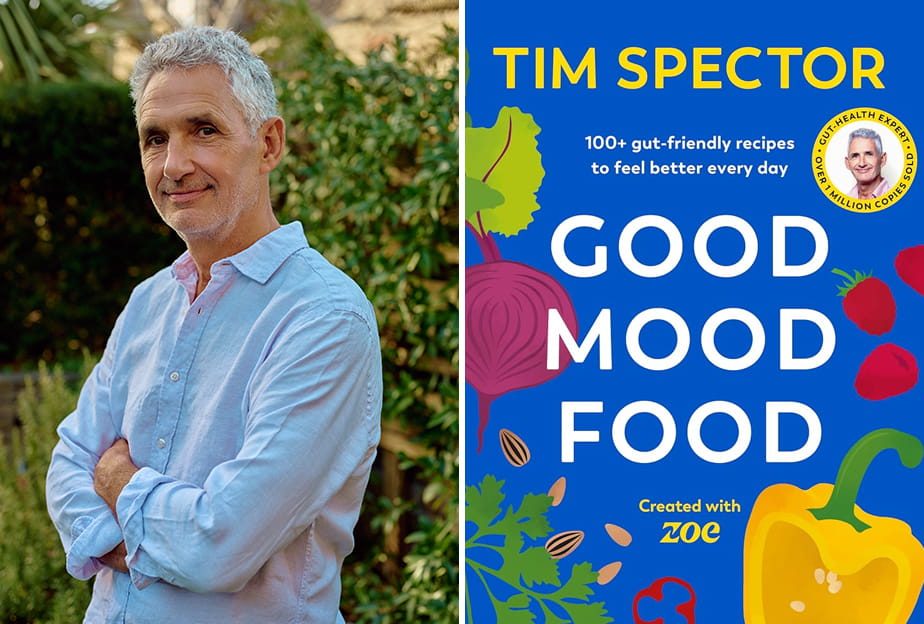
It’s the subject of Spector’s new cookbook Good Mood Food, which is packed with 100 recipes to feed both your gut and your brain. One of which is a delicious blueberry yoghurt cake – scroll down to bake that one. We all know that eating cake makes us happy but now it’s scientifically proven: consuming more fermented foods like yoghurt can help with depression and the polyphenols in blueberries have been shown to boost cognition. So best have another slice, right?
First though, here are Spector’s 8 easy ways to eat yourself to a better and mood and healthier brain.
Whatever food is good for one part of the body is good for the whole, it’s all connected. Our body and brain share the same immune system and nervous system, and are in constant dialogue. Here are my eight principles, which apply equally to brain health and gut health:
This means not eating without thinking, on the sofa or in front of the TV. It means stopping, thinking about what is in the food that you are about to cook or eat and considering what effect that food is likely to have you on, physically and mentally. This knowledge is your superpower to fight the food companies, who want to hook you into bad habits.
Diversity is key. Every plant contains its own unique cocktail of thousands of compounds, many of which support health. But, more importantly, fibre, which is exclusively found in plants, feeds your gut microbiome. Recent evidence suggests that a high-fibre diet may protect against depression in adults, adolescents and children. Because only 1 in 20 of us consumes the recommended 30g of fibre per day, fibre deficiency is by far the most common nutrient deficiency in the West.
The colour of fruits and vegetables comes from bioactive plant compounds, such as polyphenols or carotenoids. Your gut microbes use them for fuel and your body then benefits from their antioxidant and anti-inflammatory effects. Different microbes feed on different polyphenols, so keeping your diet varied ensures you feed as many species as possible and reap more of the bioactive benefits. Research shows that polyphenol intake supports cognitive function and may slow brain ageing.
Although ‘high protein’ highly processed foods are all the rage, it might surprise you to know that 90 per cent of already eat enough protein. Another surprise to most people is that all plants contain protein and the latest evidence shows that the priority should be eating a wide range of plants. A recent study of gut health on over 21,000 Zoe participants showed that on average vegans did better than vegetarians, who did better than meat eaters. But the very top percentage with the best microbiomes ate small amounts of meat and fish, and tons of plants. Big meat eater? There is some evidence that swapping animal protein for plant protein may reduce mental health risk, but more research is needed.
Many of us assume that if a food label says ‘low calorie’ it must be good for us. As ever, when it comes to Big Food’s marketing techniques, the opposite is more likely to be true. There is absolutely no evidence that calorie counting works for the vast majority of people looking to lose weight in the long term. Rather than focusing on calories, focus on food quality, which usually means eating mainly whole foods.
Ultra-processed foods (UPFs) – defined as fake foods that you couldn’t make yourself – will damage not only your physical health, but your mood and mental health. Research shows that higher intakes of UPFs are associated with an increased risk of gaining weight, experiencing a mental health condition and developing dementia. Instead, focus on minimally processed and whole foods where you can.
Fermented foods were designed by our ancestors to ensure they had food to eat during leaner times. Research shows that foods like yoghurt, cheese, kefir, sauerkraut, kimchi, kombucha and miso support gut health. There’s also growing evidence that upping your intake of ferments could support brain health. In a recent Zoe study, we asked 6,500 participants to eat three extra portions of ferments each day for two weeks. Over 50 per cent reported near immediate benefits on mood, energy and reduced hunger – all brain symptoms. Other studies have concluded that increased intake of fermented foods may protect against social anxiety and depression. The latest research suggests fermented foods might provide rapid benefits to brain health by reducing inflammation in the blood within a few days.
Try to leave a substantial portion of time without eating. Like you, your gut microbes need a break. As you sleep, the night-shift microbes come out, clearing up rubbish from the day before. But if your gut is still full, they can’t go about their usual business, and the rubbish remains. As a starting point, try to fast for 12–14 hours overnight. This is also the easiest time – if you’re asleep the temptation to snack is taken away. One of Zoe’s studies on snacking showed that late-night snacking is associated with poorer health markers; very often you wake up hungrier and in a worse mood. So, give your microbes room to breathe and time to relax, and have a good night’s sleep.
Contains 4 plants and 5g fibre per serving, serves 8-10
“Possibly the world’s simplest baking recipe, this cake is super simple to make once you have the ingredients ready. You ideally need a 500g pot of Greek yoghurt to start with, then you use this 500g pot as your measuring tool to speed up the process. This cake is delicious served warm, drizzled with kefir and honey, and is surprisingly healthy as the main ingredients are nuts, seeds and yoghurt.”

Extracted from Good Mood Food by Tim Spector (Jonathan Cape, £30)