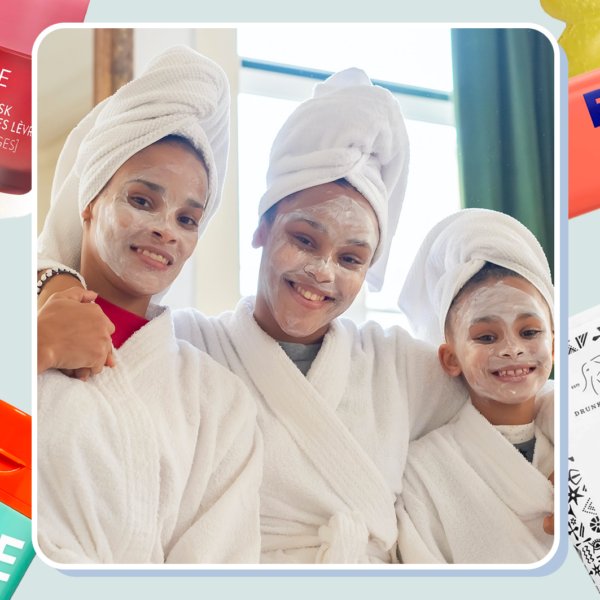
What is the best skincare for teens?

Dedicated teen skincare brands promise to take the guesswork out of choosing the best buys for young people. Are they the answer for fussy kids and cynical parents?
There doesn’t seem to be any slowing down of brands being launched specifically for teens and tweens. And as far as many switched-on, social media-savvy young people (and their parents) are concerned, thank goodness.
Like all of us, “teens hear about great products all the time but struggle with misinformation and confusion”, says Reena Hammer, co-founder and CEO of teen cosmetics brand Indu. “They have barely any way of knowing whether these products are actually suitable for them, and they want products that openly say they’re formulated for teen skin.”
She would say that, of course, but her brand is built on the feedback of over 150 adolescents from a wide variety of backgrounds, who also taught her that strong sustainability values and the endorsement of authentic teen voices, among other things, are key for the teen skincare consumer.
Dermatologists such as Dr Alexis Granite can see the point of teen-specific skin ranges too: “They will be accessible and very clear in their messaging,” she says. “It’s no bad thing for teens to have that reassurance that a product is appropriate for their skin. In my practice, I see how these kids are drawn to brands such as Drunk Elephant and while that’s not a bad brand, plenty of their formulations should not be used on teen skin. Dedicated ranges with teen appeal will help them make the right choices.”
And now the shelves are crowded with teen-focused skincare in appealing colours, with fun and fancy packaging, catchy product names and glossy ad campaigns with celebrities and influencers that appeal to that generation. In not entirely surprising news, Harper Beckham, 14, is getting in on the act. She’s set to launch her own beauty brand, Hiku, starting with a range of Korean-inspired skincare products, later this summer. This is a brand that has been a few years in the making according to her mum, Victoria Beckham, who spoke about Harper’s idea for her first business venture on Emma Grede’s podcast, Aspire.
Brands shouldn’t “patronise and try to be cool,” says Sam Farmer, creator of Samfarmer professional skin, hair and body care for teenagers. “Teens will find you.” His focus is firmly on “solving issues they are having to contend with for the first time: oily skin and spots, body odour and greasy hair”.
Charlotte-Anne Fidler, founder of teen and tween skin, hair and bath brand Spots & Stripes, agrees: “Gen Z and Gen Alphas who use our products can spot a brand that’s faking ‘cool’ a mile off. It needs to look good and fun, and smell great. For girls who want a skincare ‘routine’, it needs to fulfil that ritual. For boys, who often really can’t be bothered, it needs to be quick and simple. And it needs to work fast.” And she says these kids are magpies who love fun packaging and are turned off by “boring white tubes”.
Hammer emphasises the importance of the ‘experience’ of a product for teens, “and that includes smell. Without it, you lose a key factor and some emotional and psychological connections,” she says. But her teen focus group was also aware that some perfumes have allergens, so those are best avoided.
The other experiential key is texture: “Teens want to avoid anything oily,” says Hammer. Products, she says, need to absorb quickly without residue or stickiness. And adolescents appear to be just as swayed by sophisticated textures as grown-ups: “They are very into ‘whipped’ or silky textures.”
Trust, quality and safety are key for parents, as is price: “Most baulk at a £20 cleanser or a £30 moisturiser for a teen,” says Fidler.
She adds: “The new generation of parents are veering toward natural and safe products, because that’s what they like for themselves.” For her brand and for a number of other teen brands, that includes “no ‘nasties’: parabens and phthalates act as endocrine disruptors which you don’t need for teen bodies that are already a total maelstrom of hormones.”
Farmer, however, disagrees: “All cosmetic products reach exactly the same safety standard in the UK,” he says. “Using terms such as ‘nasties’ or ‘toxic’ is a marketing strategy and not based in the scientific facts.”
Parents also want to know that the brand’s messaging hits the right note too: supportive and not undermining their teen’s confidence. Indu has a psychologist on board to help. Lush, which almost all children under ten fall in love with during their ‘bath bomb’ years, has even taken itself off social media platforms entirely “until they provide a safer environment for users”.
Hammer emphasises the importance of normalising real skin: “Teen skin is perfect as it is, but life throws challenges at it and the message is that we have ways to keep it in balance.”
That means being responsible with your visuals: “Seeing images of perfect skin online only perpetuates the cycle of feeling inferior,” says Dermalogica education manager Victoria Evans. “When marketing to teens, it’s important to show how the product works on real skin, so they can understand what realistic results look like.”
“Healthier skin is going to be better for teens’ confidence and well-being, and that’s super-important when you look at the levels of depression and anxiety in this age-group,” says Fidler.
Most experts and founders agree that teens aged 13 to 17 need just three essentials: cleanser twice a day, moisturiser and sunscreen. Although the latter may be a stretch for teens, say Farmer: “The issue for them is to actually remember to apply a sunscreen. Just getting out the door can be a major achievement.” He lists deodorant as another key area for kids newly grappling with body odour (if you are looking for the best natural deodorants , our 16-year-old male tester swears by Akt London).
“Cleansers and other products need to focus on anti-bacterial and anti-inflammatory ingredients: they have to be incredibly gentle so as to leave the skin balanced but not stripped,” says Fidler. “It’s the opposite of the spot-blasting, alcohol-laden ‘old-school’ teen brands: hello, Clean & Clear!”
An efficacious yet gentle cleanser will remove sebum, sweat, dirt, make-up and pollution while adding some hydration, Fidler says. “It’s hard to do all this if the cleanser foams, so in my opinion a lotion cleanser or cream or milk is best.” Very gentle milk-to-foam cleansers, which are a relatively new texture, are a good option as well.
Dr Granite points out that light, oil-free moisturisers or gels will be the right option for most teens, but to not cut out hydration altogether, even if skin is oily. Fidler disagrees: “If their cleanser isn’t stripping the skin, they might not need a moisturiser at all until they start wearing makeup or shaving, which can dry skin out,” she says. A hydrating mist would be a good alternative, she says.
Daily sunscreen is important habit to instill and some teen brands offer their own. But experts like Dr Granite and Farmer are not fussed about selecting a ‘teen’ one. “There are plenty of great broad-spectrum sun protection products already on the market,” says Farmer. Granite agrees and recommends Ultra Violette’s Queen Screen SPF50+ Luminising Serum Sunscreen, £36. If they are buying from their allowance, Bondi Sands Sunscreen Lotion SPF50 comes in at £6.99 at Sephora.
Beyond the three absolute basics, the later teenage years may require treatment for intermittent breakouts or acne. “A 2 percent salicylic acid serum, gel or cleanser is the effective gold standard for keeping pores purified and blemishes under control,” says Granite. Dermalogica’s Victoria Evans also points to niacinamide and ingredients to soothe and balance the microbiome.
Somewhat controversially (as our other experts say it’s ‘too much’), Dr Granite says that retinol can also be a good option if acne is persistent. “As long as it’s formulated for blemish-prone, not ageing, skin,” she says, recommending Cerave resurfacing Retinol Serum for Blemish-Prone Skin, £21. If the issue is serious, seek the help of a dermatologist, though.
A milder (non-teen-specific) spot-busting option, recommended by Dr Marine Vincent of The French Pharmacy, is Gallinee Vinegar Gelee Anti-Blemish Serum, £35
Pre-teens or tweens, between the ages of nine and 12, need an even more basic skincare approach than teens. “Acne will in most cases not yet be an issue, and building hygiene practices is all they really need,” says Dr Granite.
“From a young age, you want to educate kids on personal hygiene and help them be confident and feel good about themselves. It’s not a game, it’s important,” says Farmer. And how are you meant to know when your child should start using skincare? Caroline Hirons advises that skincare should be introduced when they start to smell, as body odour is an indicator of changes in hormones.
So what does teen skin definitely NOT need?
Most teen brands are for boys as well as girls and therefore ‘genderless’. That’s not so much to make a statement, but rather because their creators feel kids just want to buy products that work and aren’t particularly interested in gender-specific packaging or marketing.
“There are definitely products that are more likely to be used by either girls or boys, but our focus group never expressed ‘we need a boy and girl version’”, says Hammer. “We just create products for all teens, taking everyone’s needs into account.”
Farmer, for his part, feels it doesn’t make sense when creating formulations based on cosmetic science to segregate them into ‘boy’ and ‘girl’ products. “I solve needs based on skin and hair issues, not gender divisions – that’s just marketing,” he says.
Here are the brands we rate – and our pick of their best buys for teens.
Bubble is the skincare brand that tweens and teens go crazy for. And it’s easy to see why. The packaging is bright and colourful, and the moisturisers come with a pump-down dose applicator that makes the cream look like a flower when it’s dispensed. But this is more than style over substance; it’s well-formulated, and most of the range is suitable for young, delicate skin. Just steer clear of the vitamin C, eye creams (no young person needs an eye cream) and the exfoliating AHA and PHA mask.
Glow Hub understands how challenging it can be for parents to find the right buys for their children. With clear age markers on every product page and a dedicated “Skincare for Kids” section on their site. The brand is known for its irresistibly cute packaging and wearable accessories, including their best-selling hand sanitiser, which comes with a clip for attaching to school backpacks and customisable stickers.
With everything priced at under £13, M&S has created an eight-piece affordable skincare range that parents can feel happy adding to their trolley and kids will want to use too. The packaging is bright and appealing and the ingredients are pH-balanced and perfect for young skin.
Created with a panel of teens to hit the spot for kids, but of a quality that’ll reassure their parents, these buys are refillable and reasonably priced. It’s not a huge range, so you can navigate it without feeling overwhelmed. In addition to skincare products and some well-curated sets (to make putting a routine together easier), there are a few no-makeup makeup items.
A range created by Charlotte-Anne Fidler, a mum and former glossy magazine beauty director who had a tween who didn’t want to use gentle products targeted at very young children. The emphasis is on gentle, natural ingredients, with no parabens or sodium lauryl sulfate, which can often cause irritation. This was the brand that persuaded one Get The Gloss staffer’s reluctant 13-year-old boy to take an interest in grooming and self-care.
Byoma is another brand with hordes of kids gathering around their display section in Boots. Everything contains their proprietary tri-ceramide complex, to repair and strengthen the skin barrier – an essential for young, sensitive and spot-prone skin.
The messaging is easy to understand, clearly stating what the product does, what it contains and what it’s good for. And it’s affordable enough to be bought with pocket money.
Not a dedicated tween or teen skincare brand, but a brilliant choice nonetheless. Especially for those who aren’t into fancy packaging but just want a product that’ll keep their skin clean, soft and healthy. Cerave is famous for its unique blend of ceramides, but also incorporate hyaluronic acid and niacinamide, which are gentle and suitable for young skin. Everything is fragrance-free and non-comedogenic.
This is a problem-solving range specifically for teens from skincare experts Dermalogica. There are moisturisers that keep oil levels balanced, treatments and masks to declog pores, blemish treatments and oil-free and lightweight SPFs that mattify.
Formulated by a cosmetic scientist with first-hand knowledge of the skin and hair issues teens struggle with (he created the products for his own teenage son and daughter), if ever there was a brand that you can entrust your child’s delicate skin to, it’s Sam Farmer. It’s fragrance-free, designed not to clog pores and everything is presented in straight-talking, no-nonsense packaging. A gimmick-free solution for teen skin’s problems.