Dr Zoe Williams: One minute I was on a beach with my friends, the next I was writing my will in hospital

There are few doctors fitter than the 44-year-old former Gladiator and This Morning’s medic. But after a terrifying collapse, she wants every woman to know these heart health tips
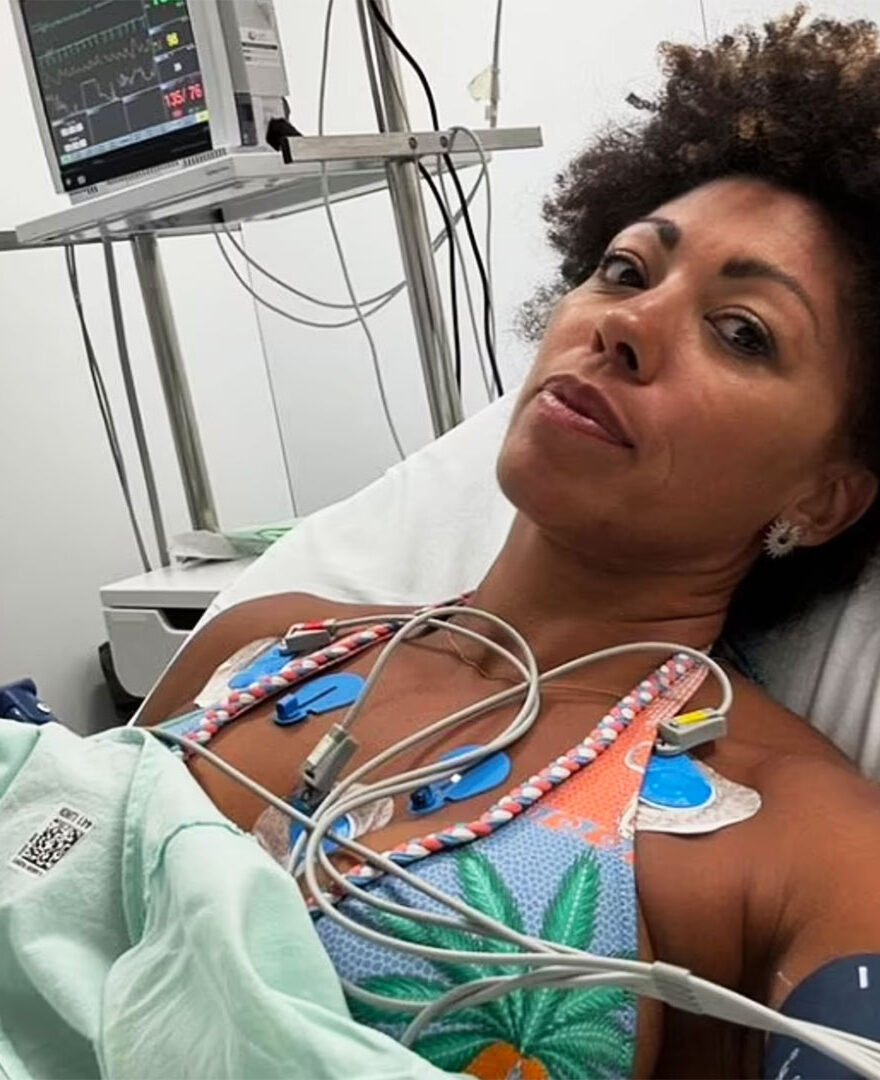
I would never have guessed that my girls’ minibreak to Barcelona last summer would end like it did – with me lying in a Spanish hospital bed, hastily scribbling my will onto a This Morning cue card that I’d found in my handbag. I’d been rushed to hospital with a crazily spiking heart rate after I’d swum in the sea. I also made a video message for my partner Stuart and son Lisbon, just in case I didn’t make it home – I’ve never been able to look back at it to this day. I was very calm – doctors are of course trained to stay calm in a crisis – but for the first time in my life, I seriously considered my own mortality.
Just a few hours earlier, I’d been in my bikini, relaxing on the beach and basking in the sunshine. I was with three female friends, all of whom were fellow TV Gladiators [Zoe starred in the fitness game show in her twenties]. We’d swum a bit further than I was expecting and a strong tide was against us as we came back to shore. When we got back to our sun loungers, I felt more tired than usual and assumed I’d over-exerted myself. At 44, I’m very fit, I go to the gym a lot, I’m the kind of person who can run a half marathon without training. But my heart was beating abnormally fast and wasn’t settling down. And when I tried to lie down, it felt very uncomfortable. When I took my pulse, I knew it wasn’t normal.

Zoe Williams (far left) and her Gladiators castmates (from left) Jenny Pacey, Caroline Pearce, and Amy Blake Thomas on the beach in Barcelona, shortly before Zoe’s heart scare.
Instead of telling my friends what was wrong, I decided to fix it myself (that’s what we doctors do) by doing the Valsalva manoeuvre, pinching my nose and exhaling – what you do to clear the pressure from your ears on an aeroplane. The aim was to put my heart back into a normal rhythm but I suddenly felt awful, like I was going to pass out.
Even in that state, the doctor in me was still very much dominating my actions so I asked my friends if any of them were trained in CPR, in case my heart stopped. Jenny is a PT and had just done a refresher course, and all the girls are super-strong so I knew I’d be in safe hands if they needed to carry me off the sand. I also scanned the beach for the nearest lifeguard station as they often have defibrillators, and clocked one close by. I thought, If I do pass out and my heart stops beating, there’s a good chance I will survive.
After about ten minutes, my heart rate came enough for me to feel a bit better, although it was still too fast. Of course, being a woman as well as a doctor, I didn’t want to make a fuss. I said no to an ambulance being called and convinced my friends that I’d be fine with some time to recover. We sat on the beach for a few hours, until early evening – it was still lovely and warm so I was still in my bikini. But when I stood up to get dressed, I had another ‘attack’ and I knew then I needed to go to hospital.
This time, I did let my friends call an ambulance. At the hospital, an ECG scan confirmed that I had an ‘atrial flutter’. There are some risk factors that can make this more likely – heart disease and previous heart attacks. But I have no history of this and all the tests I then had showed I had a very healthy heart. Basically it was just one of those things.
Atrial flutter is rare in young, healthy people but a cardiologist told me that when they do see it, it’s often in athletes, so people who are fitter than average. They don’t know why this is. I specifically asked if it could be caused by Covid or the vaccines – as people asked this question a lot on my social media channels – and was reassured that was not the case and that the occurrence rate has not gone up since the pandemic.
In that Spanish hospital, there was one moment when I felt really scared. I had another attack in the early hours and they wanted to use the electric paddles to shock my heart back into a normal rhythm. It’s an emergency procedure and there were a lot of people in the room, gearing up for it. I was attached to several machines, I was covered in stickers and I had my boobs out so they could access my chest. An anaesthetist said to me, “I’m going to put a needle in your hand and sedate you”. And I thought, I can’t believe this is happening to me. They’re about to electrocute me! But just before she put the sedation in, the doctor told everyone to stand back because my heart had, thankfully, settled down to a stable rate.
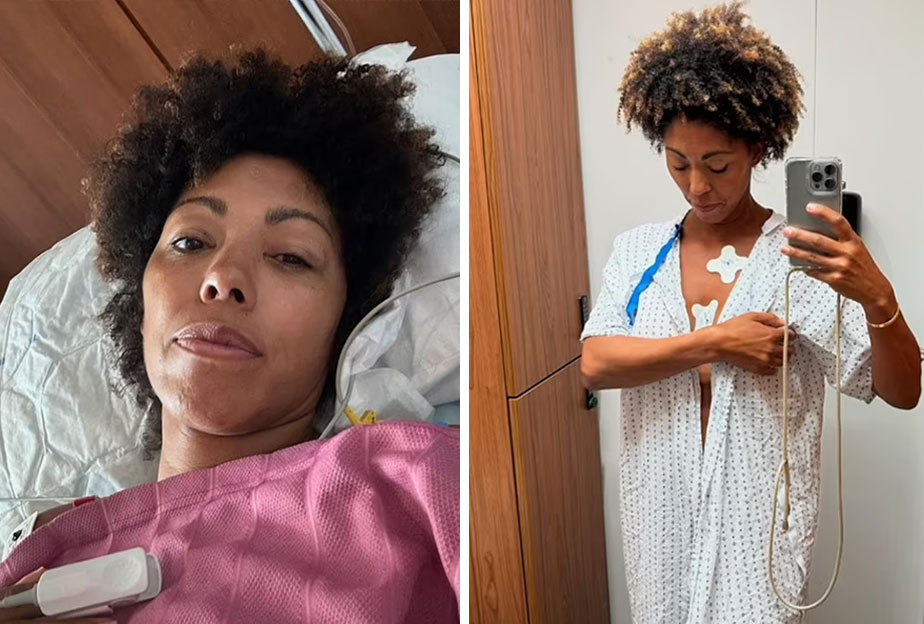
The holiday from hell: Dr Zoe Williams in a Spanish hospital, where she hastily wrote her will.
To my huge relief, my heart returned to a normal rhythm the following morning (and has been so ever since), and I was able to fly home later that day. When I was reunited with my family, I didn’t cry but I definitely hugged them tighter than usual. In that moment I realised how much you take for granted in life and became crystal clear on the things that are actually important.
My heart scare gave me a whole new level of my respect for my body and health. I now drink more mindfully – before I have a glass of wine I think, Do I really want this or am I having it because everyone else is? I’m making sure I get enough sleep – and not letting bad habits like scrolling get in the way of that. And I’m more focused on the spiritual side of my health – gratitude, for example.
I’m now acutely aware that we women need to consider our heart health, especially as we approach perimenopause and menopause – something which, as a 44-year-old, is very much on my radar. Having had one scare, I really don’t want anything else going wrong with my heart.
Heart disease is one of the leading causes of death in women, and the risk increases significantly after menopause. In fact, women are twice as likely to die of coronary heart disease, the main cause of heart attack, as breast cancer in the UK.
Yet it is still not always seen as a woman’s problem and this is a huge issue because it means that women are less likely to spot a heart attack, less likely to have it diagnosed by a doctor and less likely to receive the best treatment.
Shockingly, women in the UK are twice as likely to die from a heart attack than men. The British Heart Foundation estimated that over a decade, the lives of at least 8,000 women in England and Wales who died as a result of a heart attack could potentially have been saved if they had received the same standard of care as men. It is crucial that we know how to recognise the symptoms of a heart attack, and call 999 immediately if we ever suspect one.
Firstly, we all have an increase in risk as we get older, irrespective of sex. Secondly, for women, the loss of oestrogen associated with menopause increases the risk of heart disease both directly and indirectly.
Oestrogen is a ‘cardioprotective’ hormone, which simply means that it protects the heart, and it is thought that this is one of the main reasons why women are less likely to have a heart attack than men are of a similar age. For women, cardiovascular disease tends to come around ten years later than in men, with one important factor being the exposure to oestrogen prior to the menopause. If you have early menopause (before the age of 45) you have a higher risk of coronary heart disease. This is because there’s less oestrogen in your body from an earlier age – and this is one of the reasons that HRT is important in early menopause.
Menopause can also indirectly increase the risk of heart disease because it can alter the body in lots of other ways that can also increase the risk of heart disease. Examples include loss of muscle mass and increased body fat in the abdomen, increased cholesterol, poorer blood glucose control, and symptoms of menopause itself such as sleep disturbance and stress can also impact the heart negatively.
The key thing to remember though is that none of this is inevitable, and it’s why it is so important that during and after menopause transition women must focus on their own health and wellbeing.
Cardiovascular disease often has no symptoms at all – and the first symptom can be a heart attack or stroke. So it’s important to be vigilant about your health. The NHS offers a free health check every five years from the age of 40 and I highly recommend taking up this offer. If you have any known risk factors such as a strong family history of heart disease, you’re of Black or South Asian heritage, have obesity, you smoke, are inactive or have an inflammatory health condition, then you should be checking from a younger age and more frequently.
It can feel daunting to make lifestyle changes in midlife but getting support from other women who are experiencing menopause – such as at online menopause hub Issviva – can be hugely helpful.
I encourage women to take control of their own health where possible and educate themselves about common risks that could be a threat to their long-term health. The more information we’re armed with, the more control we have over our future and our health.”
Dr Zoe Williams is an ambassador for the menopause platform Issviva.co.uk, a place to learn about menopause, share experiences with others and buy products that have been designed specifically for menopausal women