‘I’m a holistic dietitian and these are 5 medical conditions I help women with’

Whether you have PCOS, endometriosis or IBS, or you’re curious about weight loss jabs or ‘menopause middle’, registered dietitian Clementine Vaughan helps women of all life stages switch up their diet and mindset — with life-changing results
Dietitian, nutritionist, naturopath — if you’re looking for nutritional support, who do you turn to? All the professions have their different methods, but if you have a medical diagnosis, whether that’s IBS, an autoimmune condition, PCOS, or are going through medicalised weight loss with drugs such as Ozempic, a dietitian is uniquely qualified to help.
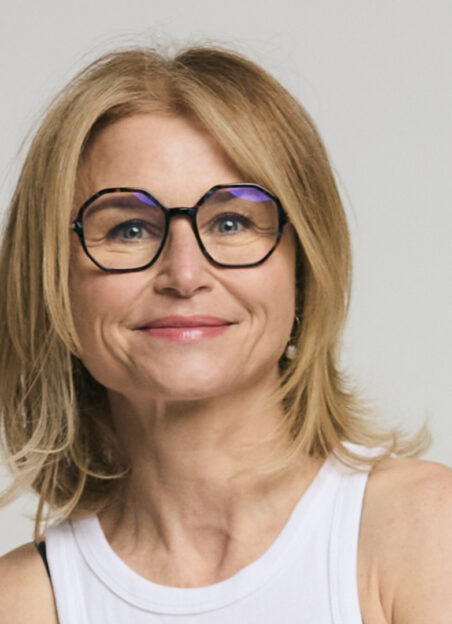
Clementine Vaughan is a holistic dietitian, whose London and online practice Third Sister specialises in health conditions affecting women, such as endometriosis, menopause and IBS. She explains that, unlike a nutritionist or naturopath, a dietitian can work with the ‘multi-disciplinary team’ of doctors and other health professionals involved in someone’s care. “It’s a guaranteed quality of knowledge,” says Vaughan. All dietitians are clinically trained in the NHS and regulated by the HCPC (Health and Care Professions Council), the same board that holds nurses accountable.
A dietitian won’t just look at your food macros, but your habits too. For example, a client might be on Ozempic, but “without support, once they stop, they typically go back to their original weight within six to 12 months,” says Vaughan. “So, unless you’re changing your behaviour, weight loss drugs are not a long-term cure.”
Cognitive Behavioural Therapy is a core part of a dietitian’s training and their practice, and this helps them work with clients to create habits that are more likely to stick. “50 per cent is the food,” says Vaughan, “but 50 per cent is the behaviour. If you don’t address behaviour, then you’re never going to get the results.”

IBS, for instance, can have a strong mental health component. “IBS is so multi-factorial, and I’ll always ask ‘what are your symptoms on holiday versus when you’re at work? If they are the same, then the IBS is probably food-led. But if people tell me ‘when I’m on holiday, everything’s fine, I’m not getting constipated, I’m not bloated,’ that gives me an indication that there’s also something psychological going on,” says Vaughan, who might suggest exercise or a CBT app for IBS such as Nerva as part of her IBS toolbox.
Her clients fall into two main camps: firstly, those with a new medical diagnosis requiring a change in eating habits, which leaves them overwhelmed and stuck. “You might have this diagnosis and have no idea how to approach it, or you’ve tried by yourself and you’re not able to get your head around it. It’s a lot to take on,” she reflects, “especially conditions like endometriosis, like PCOS, IBD, IBS. These are highly complex, multifactorial issues. PCOS, for example, is actually a metabolic condition. And with IBS, yes, it’s the nutrients, but it’s also the mind.”
And then there are clients, mostly with stomach or gut issues (bloating is the number one complaint), who simply don’t know what’s wrong with them — the ‘I don’t know what I’ve got but I need help’ brigade. “They’ll say, ‘I’ve seen all the doctors, typically with gastrointestinal problems, and no one can tell me what I’ve got’. So then we go down the investigative route, where we trial different things using food diaries. I do a lot of analysis and data collection that allows me to take an outside view into what their diet looks like and how that could impact their health.”
She won’t throw a barrage of costly supplements or health tests at you either. “As dietitians, we can’t promote supplements in a commercial sense.” What she can do is recommend the dosage and perhaps other nutrients to pair it with, but not a specific brand.
Nutrition support “can be life-changing,” says Vaughan, and that’s not an idle boast, from someone who adds ‘holistic’ to her job title. “I have several messages from clients with PCOS, where they tell me about feeling better in their minds. It’s not just about the facial hair, it’s also about the gut-brain connection. If you have a healthy gut, likely that’s going to improve your mood, sleep and anxiety.”
Polycystic Ovarian Syndrome or PCOS is a metabolic disorder, sometimes called the diabetes of the ovaries. It deregulates your hormones, with testosterone being the main cause of the side effects.
What people come with: Everything from weight gain to facial hair, brain fog, acne, irregular periods, and so many other varied symptoms. It’s common for women to say, ‘I’ve been diagnosed with PCOS and I’m at my wits’ end, I don’t know what I’m doing wrong.’ They are trying many things at the same time, but not seeing benefits. There’s a lot of chaos within their eating patterns and in their minds.
How a dietitian can help: Bringing your diet back to whole foods and high fibre is a good foundational starting point, including limiting anything that is more processed than a loaf of homemade bread. Look at the back of the pack: anything with E numbers is likely not going to have a good impact on your PCOS symptoms and metabolism. Stick to whole proteins, whole veg, whole grains, plus pulses and beans for fibre.

Endometriosis and adenomyosis are inflammatory conditions where part of your womb lining, or endometrium, migrates outside of the uterus (endo-), or into the muscle wall of the uterus (adeno-). Fibroids are growths made of muscle and fibrous tissue that can be found anywhere within the uterus. There are similarities and symptoms — aggressive pain and very heavy periods.
What people come with: Typically, they will have a lot of pain and have seen a lot of doctors, who rebuffed them and told them that it’s just normal period pain, there’s nothing wrong with them and ‘it’ll pass’, or that they just need to go on the pill. Often, we’re talking years of gaslighting from the medical community. So if they’ve finally had a diagnosis, there’s an element of relief, but they’re also asking, ‘What I can do to help my body be less inflamed?’
How a dietitian can help: We look at reducing that whole-body inflammation, favouring whole foods, high fibre and limiting processed foods. Having such heavy periods means you’re losing a lot of blood, so there’s a high risk of anaemia, and I might check iron levels with a blood test. The most bioavailable iron is in red meat, which is in itself quite inflammatory, and increasingly, women in my practice are not wanting to eat it. We’d prioritise dark, leafy green veg, instead, with added vitamin C such as lemon to increase the absorption, remembering not to have caffeine or calcium within a three to four-hour window because that inhibits iron absorption — similarly, if you’re taking an iron supplement. Gluten and lactose can be really triggering, but not for everyone, so we’d monitor symptoms.
Irritable bowel syndrome, or IBS is bloating that’s not linked to another medical condition, and can be constipation, diarrhoea, or mixed IBS. Inflammatory Bowel Disease (IBD) is an inflammatory autoimmune disease encompassing Crohn’s disease or ulcerative colitis. There are painful flare-ups and remission phases, depending on how well you manage your diet.
What people come with: “With IBD, they may come with painful flare-ups and even blood in the stool or an urgency to go to the bathroom immediately after eating. Gluten and lactose intolerance are common. IBS can be agonising to the extent that you can’t bend over. It can be linked to specific foods, anxiety or both.
How a dietitian can help: IBD needs a really good handle on your diet, understanding via a food diary what your food triggers might be (alcohol, lactose, chilli are common triggers), noticing the warning signs like being drained or tired, avoiding alcohol and smoking, and keeping inflammation down (as above).
From that, we can build a personalised routine and avoid unnecessarily excluding foods, which is a common problem with IBD patients as they become afraid of food and what it might trigger. Socialising can become tough if we have to cut out triggers such as spicy foods, so we have to manage the mental load too.
For IBS, the first line of defence is to cut out common irritants like alcohol, sodas, high sugar foods, high fat foods, and xylitol (which you find mainly in sugar-free gum). If someone is still having bad symptoms, we’d try the low FODMAP diet, where you restrict certain fermentable carbohydrates (FODMAPs) to give the digestive system a rest and help determine which foods trigger symptoms. That’s something you have to do with a dietitian, because it’s so restrictive, and only ever short-term.
If stress is a trigger, I might recommend counselling, an online CBT programme, meditation or exercise. If you’re starting to get bloated, try a 20-minute walk!”

When it comes to prescribed weight loss drugs such as Mounjaro, Wegovy and Ozempic to lose weight, I would only look at the higher end of overweight, because although these seem like wonder drugs, they’re not for the faint-hearted with side-effects such as nausea, constipation, diarrhoea, bloating and reflux.
What people come with: Some people have tried every diet under the sun, nothing has worked, and they wonder if they’re a suitable candidate. Or they may be on weight loss drugs and need support to get enough nutrition with a loss of appetite, especially protein. Eating fewer calories often leaves them tired and so they turn to high sugar foods and skip the gym.
How a dietitian can help: If I think someone is a suitable candidate, I would refer them to a doctor to prescribe. For those already on medication, it’s very unlikely that they will be able to meet all of their nutritional requirements on such low-calorie food intake, so there’s a real risk of malnutrition. We work on getting enough protein, fibre and complex carbs as well as adding supplements, then we focus on habit change, so they don’t put the weight back on afterwards.
We have oestrogen receptors in every cell, so the reduction of oestrogen in menopause has the potential to affect every system in your body, including your gut.”
What people come with: It’s often weight gain, especially belly fat, that leads menopausal women to my practice, and they tell me they struggle to keep the weight off. Then, when we dig further, there are suddenly lots of other gastrointestinal symptoms that come up. Most women going through perimenopause have GI symptoms, and it’s usually never talked about as relating to menopause.
How a dietitian can help: “My menopausal ladies are often really motivated and eager to take on board changes. I explain that menopausal weight gain happens because the metabolism slows down. There is also weight redistribution with increased ‘visceral’ fat around the middle. This more dangerous kind of fat sticks to your organs and increases your chances of type two diabetes and cardiovascular disease.
I find that many perimenopausal women are not having that much protein in their diet, and many no longer eat meat, so I’m constantly just telling them to have a little bit more by doing things like blending silken tofu into soup or a smoothie. It makes it creamy, and it’s also a complete protein. Women at this life stage require more protein to maintain their muscle mass. Muscle is important as it’s metabolically active tissue and uses up more energy than fat, and it also protects bones from fractures if they have a fall.”
Find out how to book in with Clementine Vaughan and Third Sister, in-person in London or online. Her new podcast, Dis(h) Information, is out now.