‘From couch to half marathon in 2 months – and it’s transformed my mental health’
Despite finding running for a bus problematic, Isla signed up for a half marathon on a whim and found her mental health improved as much as her physical fitness. Here’s what she learned
“How the heck did we just do that?” I gasped to my running buddy, as we shared a sweaty high-five at the finish line, at the exact moment my watch logged 21.1km. The moment I realised I’d somehow become the type of person who willingly runs half-marathons.
Two months ago, I could barely run for the bus and I certainly couldn’t run more than a kilometre. A 5k felt unachievable and 21? Laughable – a distance reserved for ‘real runners’. I’d decided long ago that running was a genetic gift I simply hadn’t received. But when my housemate Hannah – who I spend most of my spare time with – started training for a half-marathon and asked me to join her, I worried I’d get FOMO and end up bored if I said no. Plus, it cost me nothing to try and I figured I could always quit if I hated it. What was the worst that could happen?
Growing up, people assumed I was naturally athletic, purely because I have long legs. In reality, I spent most PE lessons ‘forgetting’ my trainers and coming up with increasingly dramatic excuses to avoid cross country. That assumption followed me into this running journey too – that long legs somehow make it easier. I can confidently say they don’t.
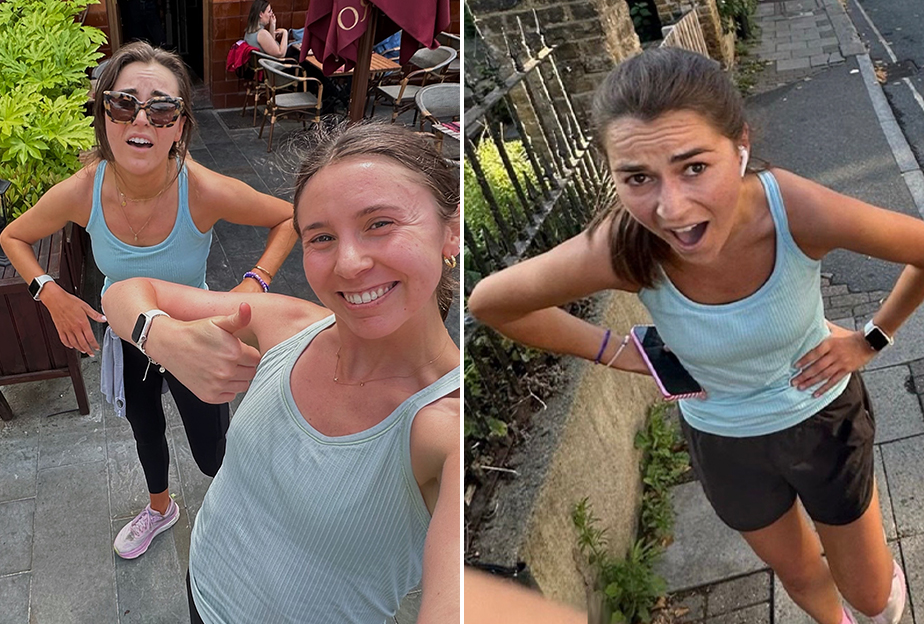
Why am I doing this again?! Isla (left) after her first ever 1km run
And interestingly the biggest transformation I experienced as I headed towards the half wasn’t physical at all. It was the impact running had on my mental health. Here’s what I learned as I pounded the pavements.
I felt slightly embarrassed that I was seemingly the only Gen Z in London who didn’t run. In a world shaped by social media, it’s easy to get sucked into the unrealistic expectations surrounding pace, expensive gear, and the pressure to upload every distance to Strava. For me, the online running culture became yet another reason to feel anxious about starting. But as a friend put it: “What’s embarrassing about giving something a go that most people don’t even try, despite what Instagram would have you believe?” Fair play.
View this post on Instagram
At first I made the mistake of running too fast – mostly because I was worried about looking slow if people I knew saw me. I’d end up exhausted, miserable and hating it.
“Slow down and then slow down some more,” advises Sabrina Pace-Humphreys, ultra-runner, running coach and author of Start Where You Are: The Beginner’s 5k Running Guide for Women, £16.99, a book I found really useful. “That’s my secret to falling in love with running in the beginning. If it feels hard, just slow down, even if it feels like you could walk faster. Run with your head held high and proud. You are amazing.” That’s the encouragement I needed!
And running with Hannah, who was at the same fitness level as me, made it feel less intimidating. We started with just 1km, following a structured plan (there are loads online) of three runs a week – combining easy runs, intervals, tempo sessions and a longer weekend run. Gradually increasing the distance by 2kms at a time made the impossible feel achievable.
Faced with a few major life changes recently, running became more than a fitness goal. Due to visa restrictions, I’m preparing to leave both my dream job and the life I’ve built in London to return to my New Zealand homeland, with no clear idea of what comes next. The uncertainty pushed my anxiety to a point where it was affecting my sleep and overall health.
Running soon became a form of free therapy – uninterrupted time where the only focus was putting one foot in front of the other. Hannah and I put our headphones in and don’t chat, giving ourselves space to switch off and be present. I’d leave the house overwhelmed and full of chaotic energy, returning calmer, clearer and able to think more rationally. There’s something about the combination of fresh air, movement and disconnecting from constant notifications that shrinks your problems – or at least reminds you that they’re rarely as catastrophic as they seem in your head.
As Pace-Humphreys puts it: “You will feel stronger; your mind will be clearer. The endorphins won’t necessarily ‘fix’ any mental health problems, but they will help you to cope.”
Running is such a mental game. The first few kilometres – before I settle into what I call ‘flow state’ – are always the hardest, usually spent battling my own thoughts about turning around and going home. But over time, I developed the mindset that if I could push through something difficult before 8am, whatever the day threw at me would feel more manageable. That internal grit and post-run feeling of accomplishment becomes strangely addictive. Now, as someone who used to hate running, finishing a half-marathon feels like tangible proof I’m capable of far more than I thought.
I genuinely thought ‘runner’s high’ was a myth fitness influencers loved banging on about. But turns out it’s a very real, euphoric feeling – one I ended up craving. While every run was still challenging, somewhere near the end of a shorter session or halfway through a long one, I’d hit this unexpected sense of calm and contentment. My brain felt quieter and less anxious. It was a strange contradiction, because even though my body was under physical pressure, my mind felt completely zen.
“Join a run club, it’s so much fun,” people kept urging me. Sure – if you’re already a confident runner. For me, the prospect of trying to keep up with people who looked like they hadn’t even broken a sweat felt more intimidating than motivating. They can be a great source of community and support, but don’t feel pressured into joining one if it doesn’t appeal to you. Especially as a beginner, that added anxiety can easily put you off entirely. That said, having support in some form does make a difference. I found that via my housemates and friends, who hyped me up with supportive comments on Strava posts and showed genuine interest, regularly asking about my runs and how I was getting on.
Long distances can drag. Having a curated playlist or gripping podcast is the easiest way to trick your brain, distract your thoughts and make the time pass faster. However, don’t take this as permission to start watching TikToks mid-run – unless you fancy ending up face-down on the pavement outside the London Eye as I did.
Another lesson learned the hard way: always carry wired headphones as backup. Nothing humbles you faster than your AirPods going flat 10 minutes in, forcing you to listen to the unfiltered sound of your own heavy breathing for the next ninety.
I found a 5km loop around my busy local common – dodging groups of people, loose dogs and rogue prams – felt harder than 18km through the city centre. At the beginning, quieter areas were best for building confidence. But as the distances grew, weaving through central London became part of the fun. Romanticising the city’s iconic landmarks and window shopping past bougie stores became a pleasing visual distraction.
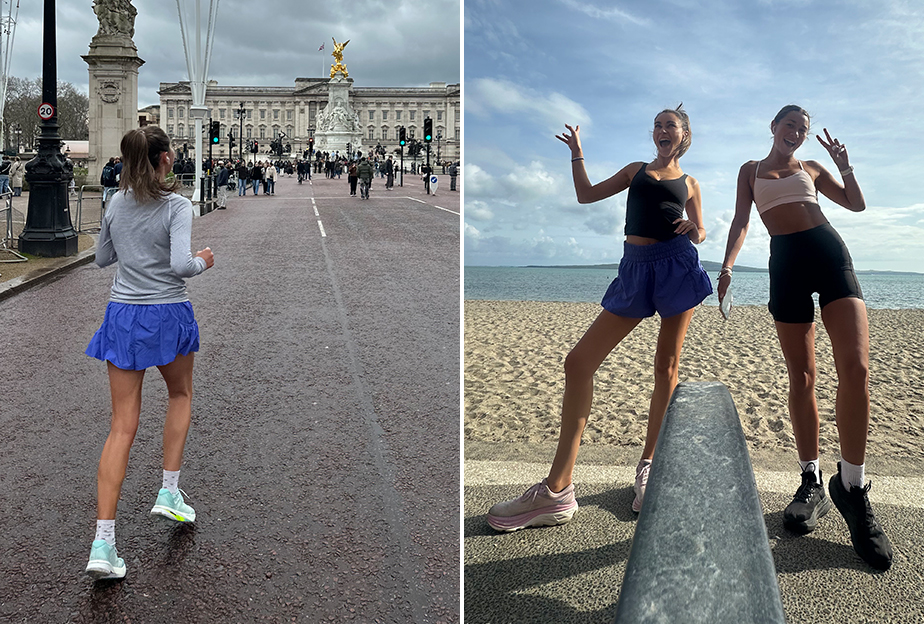
Isla taking in the sights running up London’s Pall Mall and (right) a beach jog back in her hometown Auckland
While I didn’t become a complete running bore and abandon every social plan, training definitely forced me into a more disciplined routine. It meant earlier nights (goodbye 11pm TikTok scroll), scheduling runs around work, and cutting back on pub drinks if I wanted to feel remotely human during a Sunday long run. “Your journey to learn to run needs to work for you and suit the life demands that you have” says Pace-Humphreys. She’s right – everyone’s routine looks different. And if it doesn’t fit your lifestyle, it won’t be sustainable. Be realistic about when you can fit it in.
My training was guided by the Runna app, £15.99 per month. As someone with absolutely no clue where to start, it acted as my virtual PT, building a personalised plan based on my initial fitness level, target distance and goal date.
Having the guesswork removed from my mornings saved me from decision fatigue and held me accountable, instead of overthinking what I should be doing – just open the app and run.
My beat-up Apple Watch also became an unexpected hero. By tracking pace, distance and time, it offered tangible proof of my progress week by week. It wasn’t the flashiest bit of kit, but it did exactly what I needed it to.

Recovery is non-negotiable – I learned that the hard way. After neglecting stretching and proper warm-downs, I’m currently on an enforced ‘running hiatus’ (aka injured). Fresh off my first half-marathon, I got carried away chasing the next high and somehow squeezed two 10kms and another half-marathon into the same week. Unsurprisingly, my body said no.
Strength training has never really been my thing, but as Pace-Humphreys explains, “strong muscles can help your body absorb force that can damage your joints,” reducing the risk of overuse injuries. Cue my IT band syndrome, caused by weak muscles and increasing distances too quickly.
Consequently, recovery and strength work are now my priority. Thankfully, that doesn’t require hours in an intimidating gym – the exercises I’m following from Sabrina’s book only use my body weight and can be done on my bedroom floor.
So, while my running journey might be on pause for now, it’s not over. Someday soon I’ll be easing shorter runs back into my routine – not just for fitness, but for the mental clarity that comes with it. And if you’re reading this convinced you could never be a runner either, take this as your sign to start. Because if a lazy PE-dodger like me can do it, you’re probably far more capable than you give yourself credit for.