Topical or oral minoxidil for female pattern hair loss? A top trichologist explains

Thinning hair? Trichologist Anabel Kingsley’s top treatment is minoxidil. Here are the dose, side effects, and results what to expect
“The most recommended treatment for Female Pattern Hair Loss (FPHL) and the one I rate the most, is minoxidil,” says the world renowned trichologist Anabel Kingsley, the woman who beauty editors with shedding and thinning trust with their hair.
I count myself among them, and as an initially reluctant user of minoxidil for perimenopausal thinning, fearing that my hair would fall out if I stopped, I’m so glad I made the leap under Anabel’s guidance at the Phillip Kingsley Clinic in London.
She put me on Phillip Kingsley 3M Drops two years ago, and my hair has never looked thicker – a colleague even asked me if I’d had extensions!

Victoria with Anabel Kingsley at the Philip Kingsley Clinic in London
I take HRT every day, with no plans to stop, so why not daily drops for my hair too, I figured. The effects last 24 hours so you do need to use it daily. “Minoxidil is likely most effective when compounded with other hair-supportive actives, such as hormones, anti-androgens and antioxidants,” says Anabel, in her new book Haircare – The Ultimate Guide, £14.99 which has an entire chapter devoted to female pattern hair loss and is written in Anabel’s clear, supportive and funny style (highly recommended!).
The 3M Drops combine three percent minoxidil – a low dose, you can always go up to five percent – with hormones and growth boosters so female pattern hair loss is truly supported, and they haven’t made my hair greasy at all. Minoxidil can be applied topically to the scalp or taken orally.
“Out of all treatments, minoxidil has the highest level of evidence for its efficacy in treating FPH,” Anabel says. “I recommend it as a ‘base treatment’ for anyone with FPHL – provided you tolerate it, and its use isn’t contraindicated.”
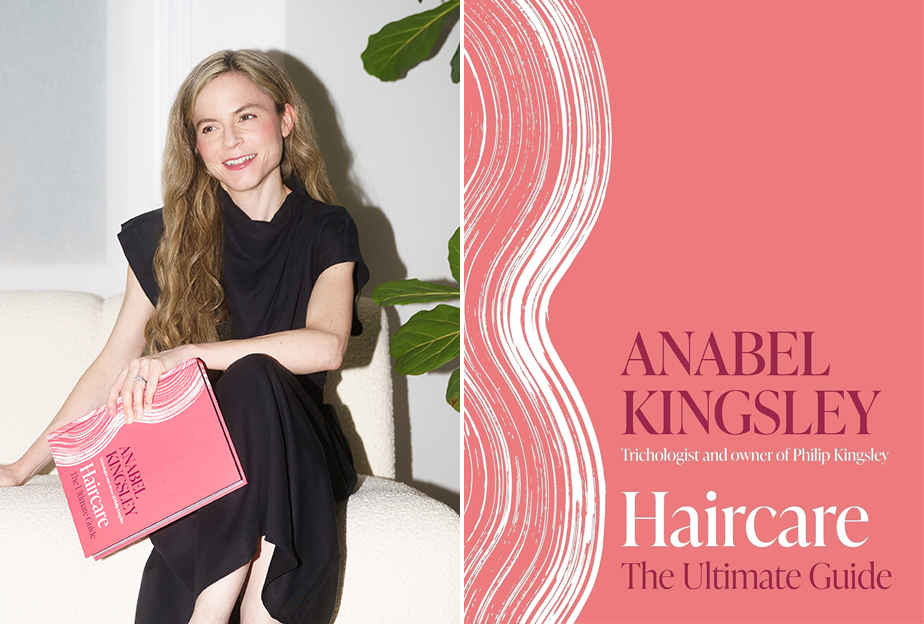
Images: Trichologist Annabel Kingsley with her new book Haircare: The Ultimate Guide and the full cover
You don’t have to, says Anabel (although don’t use in pregnancy) but your hair density will return to the baseline of when you started, “so you won’t be any worse off”. But it will continue to deteriorate as minoxidil is not a ‘cure’ for FPHL, it just pauses it for the duration of use. “Think of it this way, you brush your teeth every day to prevent cavities. Try to think of topical treatments in the same way,“ she advises.
There may be an initial shed (called the ‘dread shed’) in the first two months, but that’s a sign that minoxidil working. Why? Because telogen-phase hairs that may have snoozed for a couple of months and not yet shed are woken up, whereupon they shed and return to their growth phase. “Monodixil does not cause hairs in the growth phase to fall out,” Anabel emphasises.
View this post on Instagram
Here in an extract from Haircare, Anabel answers more common minoxidil questions.
“Minoxidil prolongs the growth (anagen) phase of the hair growth cycle, slowing miniaturisation. It can also increase hair diameter and re-awaken dormant and empty (kenogen) hair follicles in some people. You have to use minoxidil every day for it to work, so I suggest ‘habit stacking’ – that is, working it into a routine. For example, apply it after brushing your teeth at night.”
“You will need to wait at least three months, ideally six, to start seeing changes. Best results will be seen at the 12-18-month mark.”
“No. Minoxidil is a ‘pro drug’, meaning it has to be converted by the body into its active form, minoxidil sulphate, to exert maximum effect. If you do not respond to topical minoxidil, this may mean that it’s not being converted properly. You could speak to your doctor about an oral prescription instead. Some studies suggest that using topical minoxidil in conjunction with tretinoin can help. I do not recommend this as a first-line treatment, because the combination commonly causes scalp irritation.”
“It boils down to what you find the most convenient and what you’re comfortable using.
“I prefer a topical treatment, since it is delivered where you need it and there’s a lower risk of side effects. Topicals can also be compounded with other hair supportive actives, like hormones, anti-inflammatory ingredients and anti-androgens, which wouldn’t necessarily be suitable when taken orally. If you have a cat or dog and wish to use topical minoxidil, make sure it dries before lying on your pillow: it is toxic to pets.
“Topical minoxidil comes in liquid and drops. Both work equally well so it depends what you like! I prefer drops: they easily spread over the scalp and you don’t have to rub them in. Foam has a tendency to get wasted on your roots and make your hair feel sticky. If you have shorter hair, you may not mind this.
“Oral minoxidil is prescription-only. While it is not FDA-approved and its long term effectiveness hasn’t been studied as much as the topical form, it can be more convenient, especially if you have a chronic scalp condition. It may also work better for people who have not responded to topical minoxidil due to low sulfotransferase activity – the enzyme needed to convert minoxidil to its active form”.
“The most common side effect of topical minoxidil is scalp irritation. In many instances, people are sensitive to propylene glycol (one of the common solution ingredients), not to minoxidil itself, so it’s a good idea to find out what you’re reacting to before giving up. Certain brands make propylene glycol-free drops and foams.”
“Minoxidil can also cause facial hair growth, especially when taken orally, or used at a higher topical percentage. I wouldn’t let facial hair discourage you. It’s much easier to remove hair than it is to grow it once it has miniaturised. You can help minimise facial hair growth with minoxidil by:
Extracted from Haircare: The Ultimate Guide by Anabel Kingsley, £25