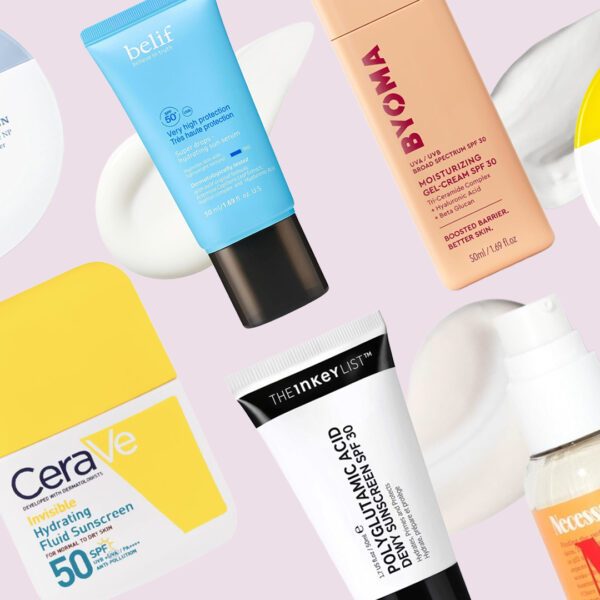
15 best new body SPFs for all skin types and budgets

Now that (quite a lot) of warmer days have nudged out the cold, grey, wet ones, it’s only natural we start filling our ASOS baskets with bikinis, booking summer holidays, and investing in sun loungers for the garden. But (not to be a Debbie Downer), it’s also the time we should be checking in on our SPF collection, binning any bottles that have passed their best before, and investing in some impressive new sun-protection technology.
With every generation comes a greater understanding of the damaging (and potentially dangerous) effects of the sun, and the importance of applying SPF to exposed areas of skin ( face and body), daily. “The skin is our largest and most visible organ and is dramatically affected by environmental factors such as UV radiation,” confirms consultant dermatologist Dr Maryam Zamani. “Ultraviolet radiation causes inflammation, physical changes to the skin, impaired wound healing, and most importantly, DNA damage that can lead to skin cancer. UV exposure accounts for the majority of visible signs of ageing – wrinkles, fine lines, pigmentation, and loss of skin elasticity.”
In theory, yes. Generally suncream has a shelf life of up to three years but products also carry an expiry date on them – a symbol that looks like a pot with a number in it – which tells you, in months, how long that product lasts from when opened. However, there are other factors that can degrade the effectiveness of your suncream such as if the bottle has got hot or been kept in the sun. So our advice is its best to use up your suntan lotion on holiday or throughout the summer and then start afresh the following year.
Most skin experts agree you should reach for a broad-spectrum sunscreen (one that offers protection against both UVA and UVB rays), with an SPF30 or above. “Chemical sunscreens need to be applied at least twenty minutes before going outdoors,” says consultant dermatologist and author of The Skincare Bible, Dr Anjali Mahto. “Mineral sunscreens containing titanium dioxide and zinc oxide work as soon as they are applied.” She goes on to advise reapplication every ninety minutes to get the stated protection factor on the bottle, plus reapplying after swimming and sweating.
“I often get asked if it is necessary to wear sunscreen every day, including the winter months,” she adds. “It is true that there is less UVB radiation in the winter in the UK, the main ray that can cause burning. However, as many skin cancers develop due to cumulative UV exposure, it’s worthwhile getting into the habit of wearing sunscreen on exposed sites daily.” If you consider that UVA rays, which are present all year round (even when you can’t see the sun), attack skin cells’ DNA to cause mutations that result in signs of ageing and cancer, you’ll realise how important this advice is.
Sunscreen needs to be used on all areas not covered by clothing and as a rough guide, about a teaspoon per body area (one teaspoon for your face, head, and neck, one for each arm, one for each leg, one for your chest and abdomen and one for your back and the back of the neck). “About one-shot-glass-full should be about right for an average-sized adult,” says Mahto. “Don’t forget your ears and the tops of your feet – these are commonly missed sites.”
Chemical sunscreens work by converting UV light energy into heat energy and absorbing it, while mineral sun creams (AKA physical) use titanium dioxide, zinc oxide, and iron oxide to reflect rays away from the skin. Historically, chemical formulas have been preferred for their easily-absorbed, lightweight textures. Mineral formulas, however, are less irritating for people with sensitive skin prone to acne or eczema – the trade-off was the chalky residue they tended to leave behind. Luckily, SPF technology has advanced and formulations improved, meaning many mineral SPFs are now rivalling their chemical counterparts when it comes to their invisible filters (case in point: Dr Sam and Green People, below).
Typically, chemical formulas use filters such as oxybenzone and octinoxate to absorb UV rays. But environmental studies suggest these two filters could be harmful to marine life and coral reefs. The list has since been extended to feature eight chemical filters in total; if you’re interested in exactly which, have a look below.
Holland & Barrett is the first retailer to ban chemical sunscreen in their stores, and suncare brands are now busy adding reef-safe formulas to their collections. But be careful before you jump on the bandwagon. There are plenty of chemical filters that have not been found to cause major issues, and mineral filters aren’t actually free from suspicion either, with titanium oxide in particular having been found in a 2014 study to damage marine organisms.
The truth is, nobody is 100 per cent sure whether there are any sun filters that cause no damage at all to the very sensitive coral reefs and other marine life, making ‘reef-safe’ claims more of a marketing gimmick than anything else. ‘Reef-friendly’ can in some cases be closer to the truth; at this point, ‘reef-safe doesn’t actually exist.
If you feel passionate about the subject, do your own research and study ingredient lists independently – or (impractical advice coming up) wear protective swimwear in the sea instead of sunscreen
Best for smelling like holiday:
Clarins Youth-Protecting Body Sunscreen SPF50+, £29
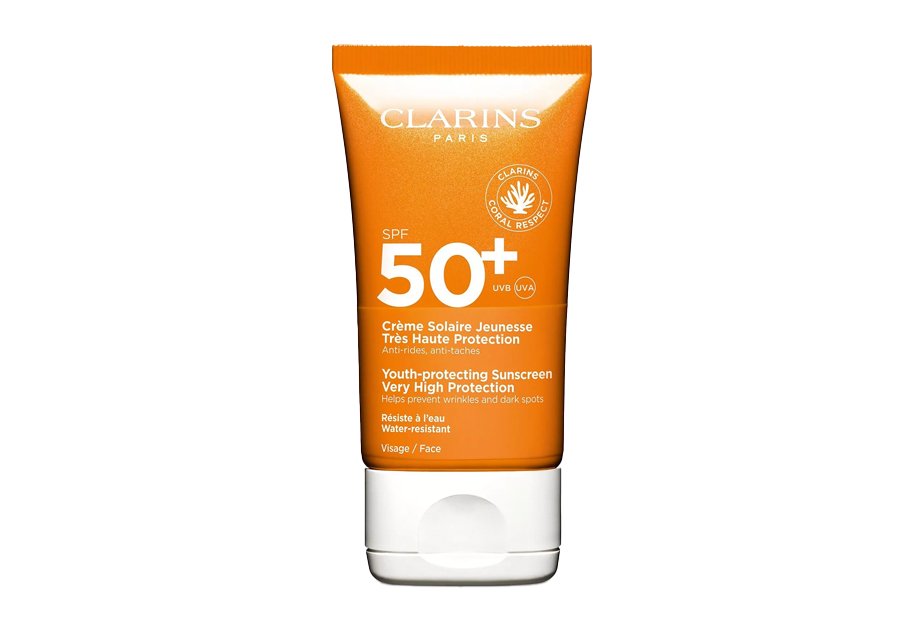
Whether you’re slathering this on in a far-flung destination or your local park, the scent alone will make you happy thanks to smelling like summer holidays in a tube. It has a light texture that sinks into the skin without feeling greasy or leaving a residue, and thanks to the inclusion of vitamin E, aloe vera, and Argan oil will moisturise your skin as well as protect it.
Buy NowBest for the whole family:
Ultrasun Family Wet Skin Protection Spray SPF50, £32
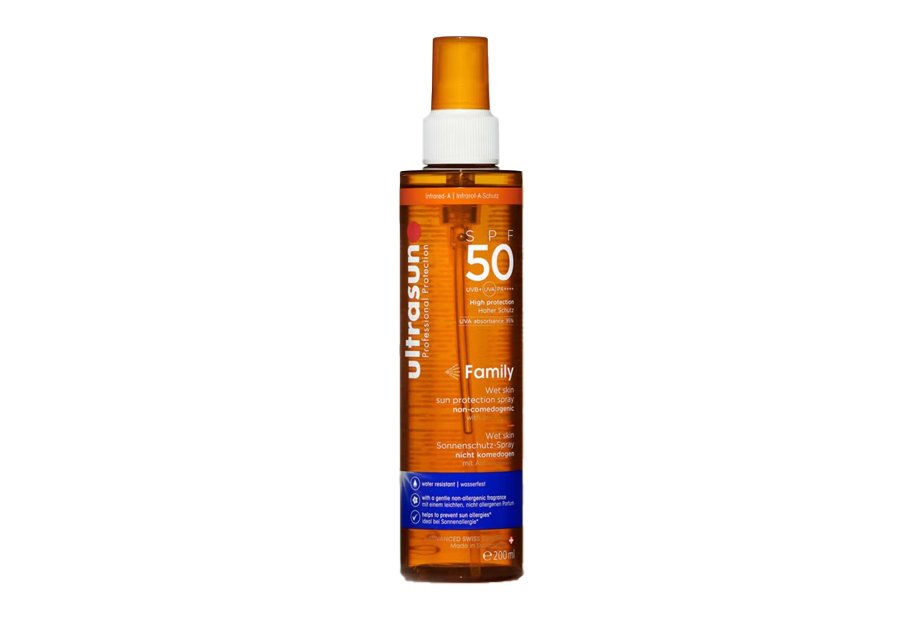
If you spend an inordinate amount of time wrestling suncream on children, then this is a great option. It’s a non-greasy spray oil which makes getting it on speedy and efficient. It smells slightly like baby lotion, which is very comforting and they will like, but most handily, it can be applied on both wet and dry skin, which makes reapplying it less frustrating for the kids and easier for you.
Buy NowBest non-sensitising SPF for body and face:
SOS Serum SPF50 Sun Cream, £38
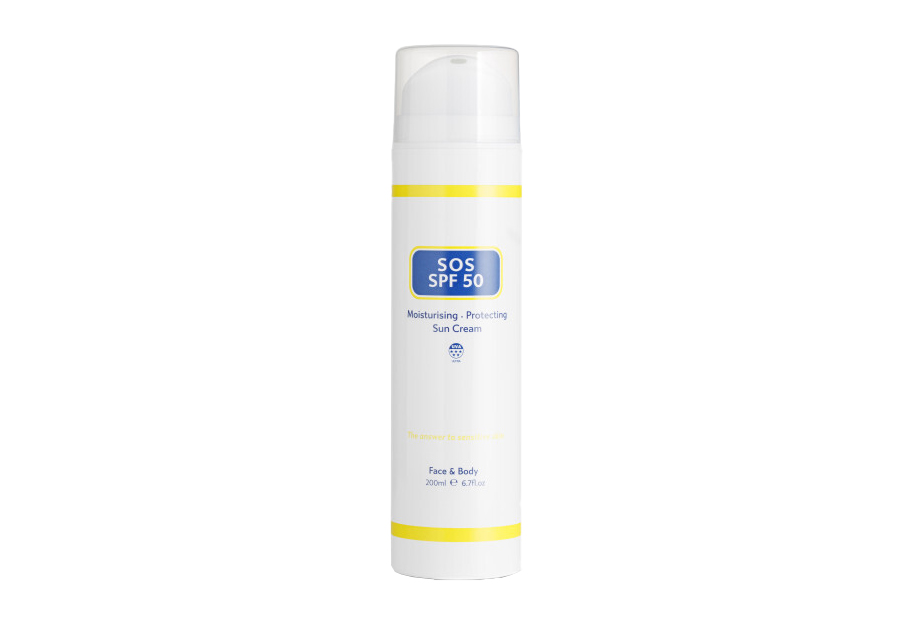
A cool and fresh-feeling, non-sticky unscented cream, this was formulated for sensitive skin and has added antioxidants and plant stem cells to help protect and heal skin besieged by the sun. A pleasure to use. Try this if you suffer from prickly heat or sun allergy.
Buy NowBest body SPF for swimmers:
Coco & Eve Body Sunscreen SPF50+, £27
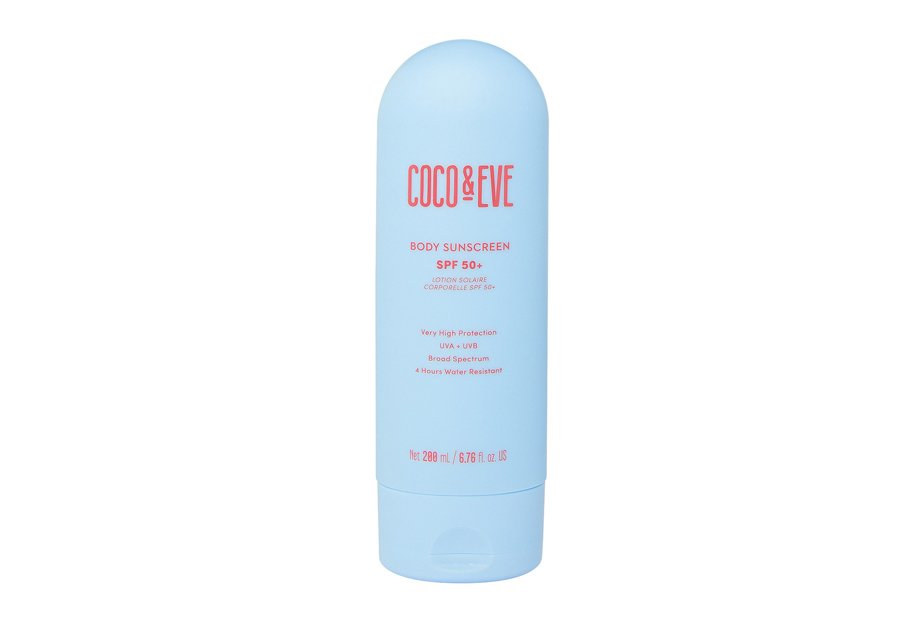
This fast-absorbing, scent-free lotion is water-resistant for up to four hours and looks after skin with loads of soothing aloe vera and vitamin E, plus beeswax and coconut oil to condition and moisturise. Like all our other picks, it is broad-spectrum for effective protection against UVA as well – leave that to the Australians who formulated it.
Buy NowBest tan-activating body SPF:
Lancaster Sun Beauty Sublime Tan Body Milk SPF30, £32
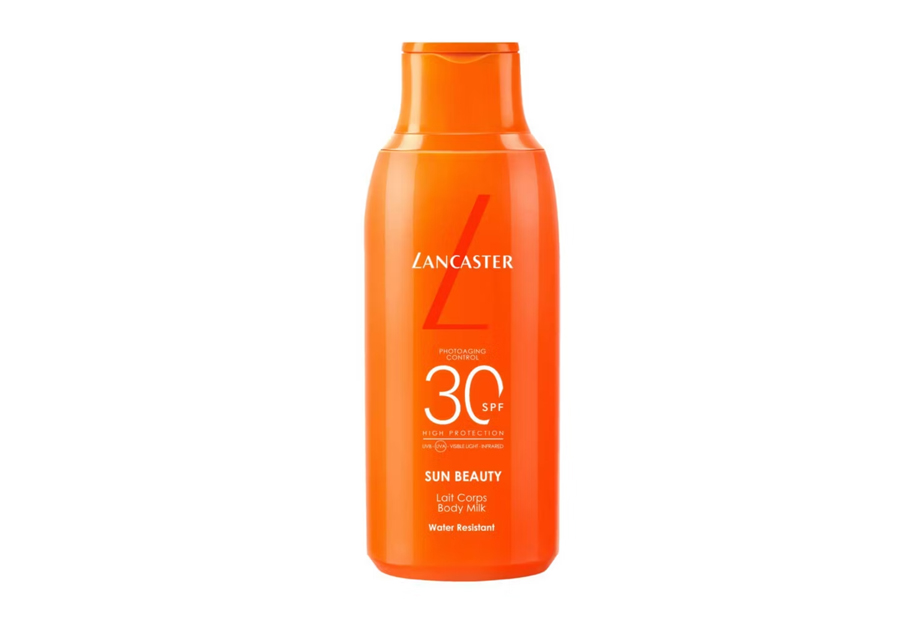
If you grew up in the ’80s or ’90s, you will likely have spent way too much time in the sun and probably smelled this all around you on the beach. A classic of a sunscreen fragrance (the famous Tan Maximiser smells the same), it doesn’t half put you in a holiday mood. The protection, thank God, has moved up a notch from the SPF4 ‘sun tan lotion’ jokes we called ‘high’ back then, plus the texture is indeed sublime (this is an original ‘luxury beauty brand‘ after all) and it has the brand‘s Tan Activator Complex for a more intense golden glow without having to fry.
Buy NowBest ‘free-from’ sunscreen:
Sunbum Original Premium Moisturising Sunscreen Lotion SPF50, £17.99
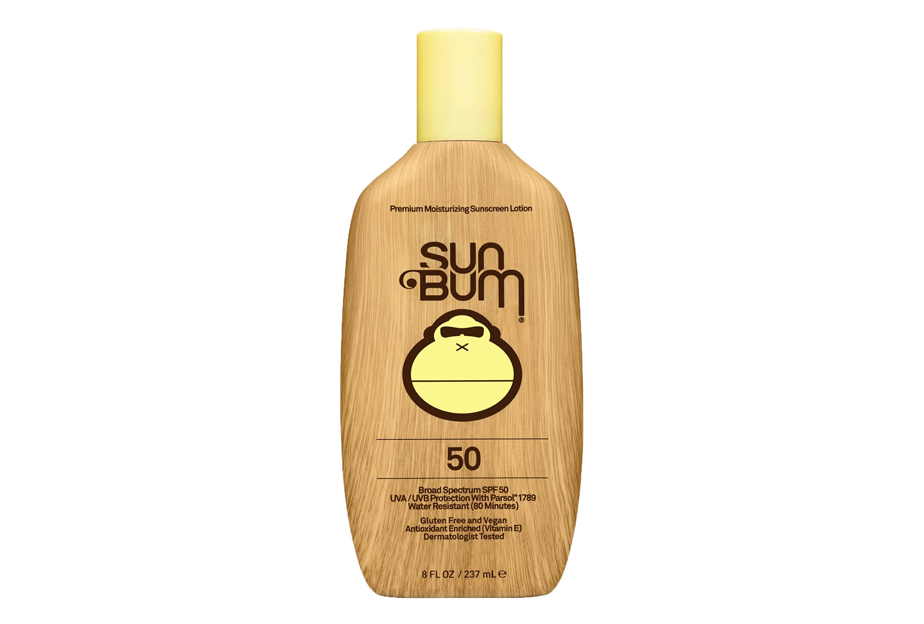
Well, if you really need a gluten-free sunscreen, here is one! More importantly (because we don’t think gluten is a problem for the vast majority of gluten-intolerant people unless you consume it, and also, we don’t think sunscreens as standard contain gluten), it has a high level of broad-spectrum protection and – because it’s made by Californian surfers – will survive a dip in the sea. It’s vegan, cruelty-free, and Hawaii reef-compliant with a rich-ish moisturising texture. It smells of tiare flower/coconut to add a dash of Tropicana to Blackpool beach or wherever you might find yourself, and we like the faux-wood packaging too.
Buy NowBest NHS-endorsed body SPF:
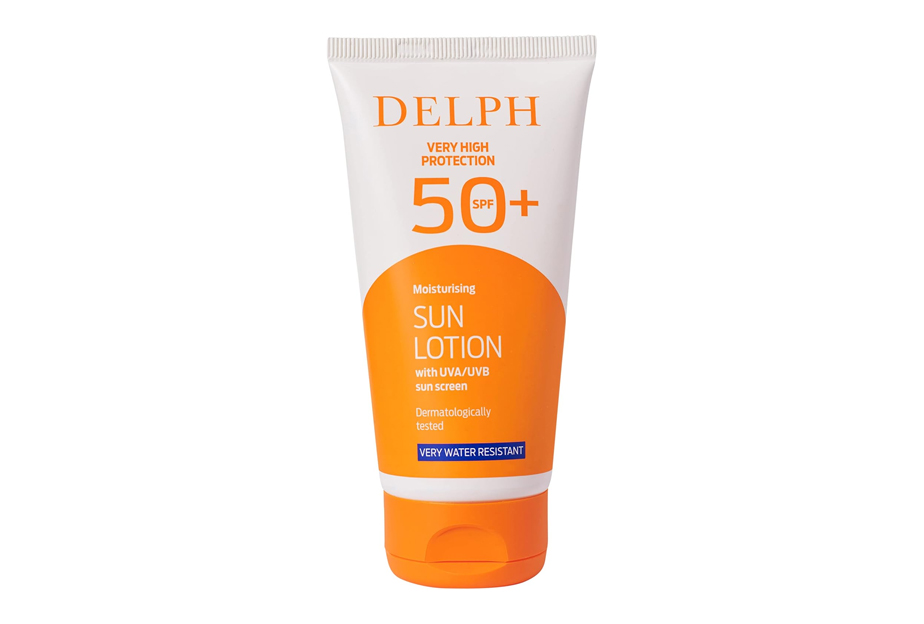
Hurrah to Delph for being on a mission to make sunscreen affordable. This family formula now has 4-star UVA protection on top of its SPF50, meaning it keeps skin as safe as (or even safer than) much pricier formulas. It has increased water resistance as well. Join the NHS and the British military (they are fans) in slapping it on: if they don’t know about protection, nobody does!
Buy NowBest everyday suncream:
Bali Body Hydrating Body Sunscreen SPF 50+, £20
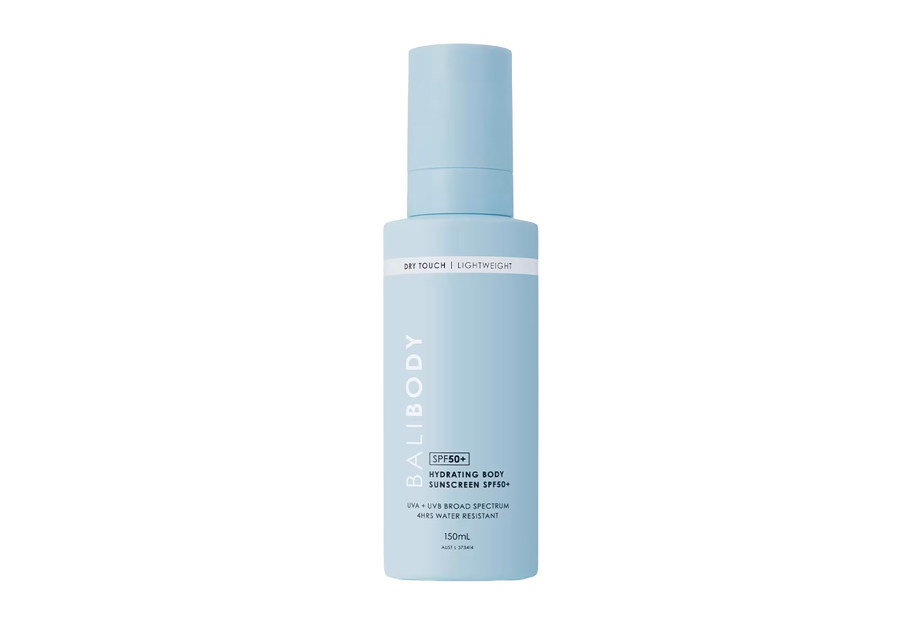
The ultra-chic self-tan brand launched a range of three SPF 50+ products: a spray, face cream and this lightweight water-resistant beauty, which lives up to its promise of being non-greasy, making for everyday lotion that won’t leave your limbs looking white (like most body SPFs, its filters are chemical rather than mineral) or feeling sticky. It’s fragrance-free too.
Buy NowBest mineral body SPF:
Dr Sam’s Flawless Body Mineral UV SPF50, £35
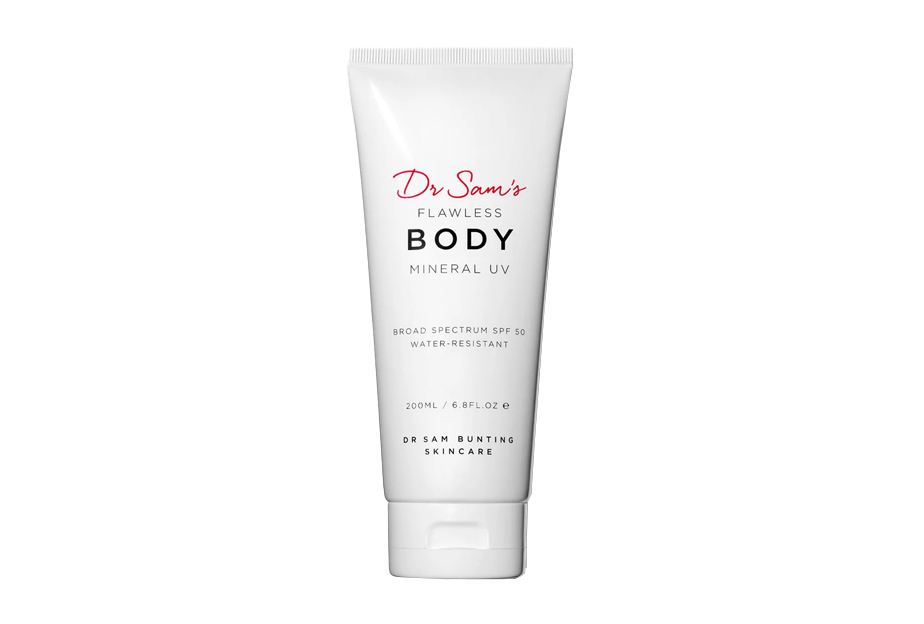
This water-resistant sunscreen proves that 100 per cent mineral formulas have come a looong way since the chalky days. With no white residue (any initial trace of whiteness disappears in minutes) or stickiness, it uses zinc oxide and titanium oxide to protect against UVA and UVB rays, combined with skin nourishers shea butter, squalene, and aloe vera for a luxe skin finish you’d expect from a body lotion. It feels as delicious as your favourite body lotion.
Buy NowBest all-rounder body SPF:
Garnier Ambre Solaire Sensitive Hypoallergenic Sun Protection Cream SPF 50+, £7.99
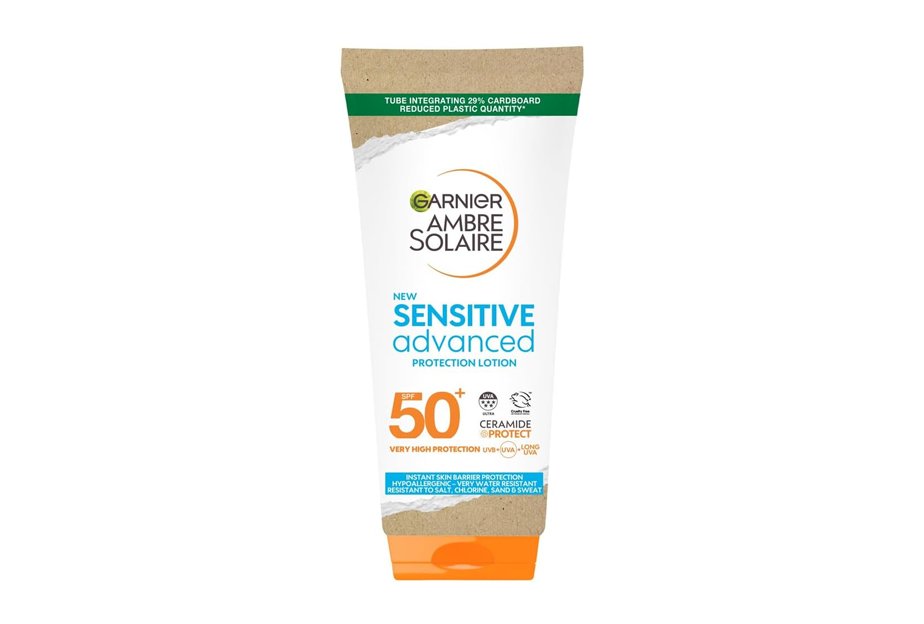
This was our Editorial Director Victoria’s emergency airside purchase in Boots on a recent trip abroad (“I wanted something cheap and unscented”, she says), and it surpassed all expectations. A mixture of mineral and chemical filters, it dries instantly, comes in a part-recycled eco tube and is so easy to reapply in layers because there’s no feeling of heaviness or stickiness and it’s water-resistant too.
Buy NowBest body SPF for prickly heat:
La Roche-Posay Anthelios Sun Protection SPF50+ Hydrating Lotion, £26
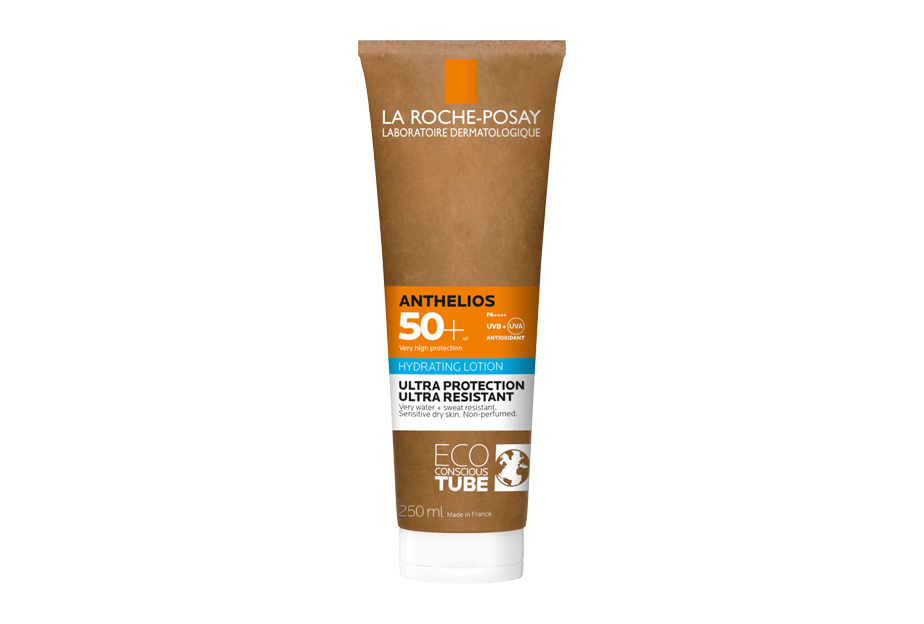
A chemical sunscreen offering extremely high protection against UVA, UVB, and infrared light (with wavelengths longer than visible light). The brand’s patented filtering system actually makes the formulation stricter than European recommendations, so you know your skin’s in good hands this summer. It’s non-greasy, sinks in quickly, and is well suited to those prone to sun intolerance or prickly heat rash.
Buy NowBest body SPF for sensitive skin:
Avène Intense Protect SPF50+ Sun Cream for Very Sensitive Skin, £24
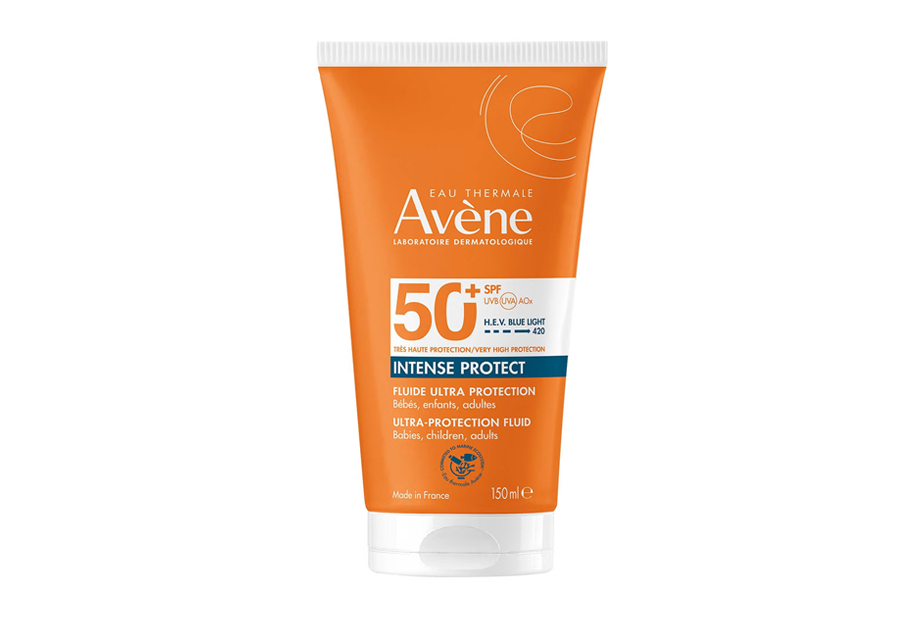
If your skin is on the reactive side (read: gets irritated easily) but can’t find The One in a mineral formulation, this high-protection, thermal-water-laced fluid could be your chemical compromise. With a lovely lightweight texture and water-resistant promise (although we would always recommend reapplying after a swim), it also boasts a potent blend of antioxidants that work against the damage caused by environmental aggressors such as pollution, blue light, and UV rays.
Buy NowBest eco-conscious body SPF:
Green People Scent Free Sun Cream SPF30, £22
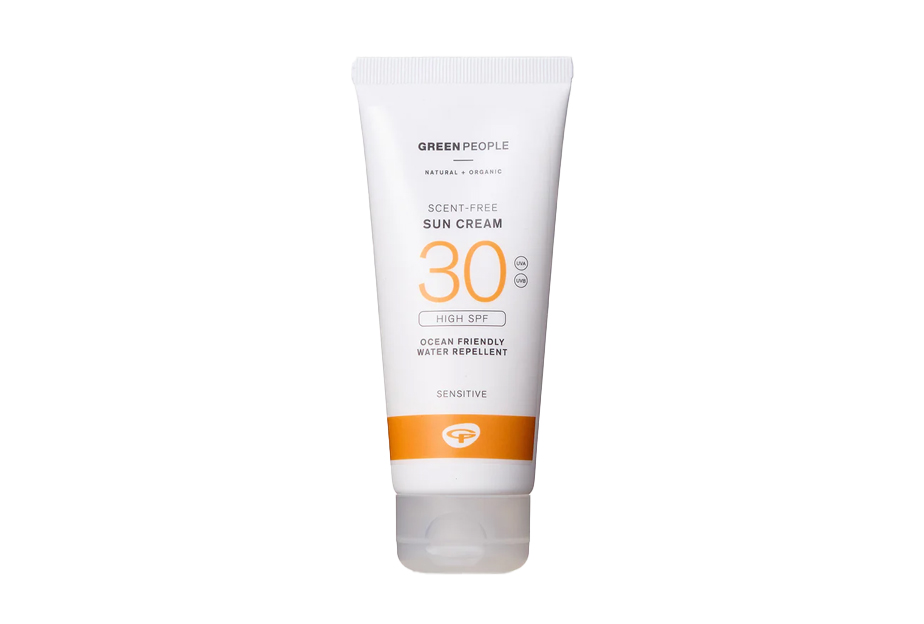
This sun cream may as well come with its own halo: a fragrance-free, broad-spectrum mineral formula containing 84% certified organic agricultural ingredients (including the likes of aloe vera, edelweiss, green tea, and beeswax). What it doesn’t include is any silicones, emulsifiers, or artificial fragrances, making it perfect for those with sensitive skin. And if this SPF wasn’t saintly enough already, the brand gives 20p to the Marine Conservation Society for every bottle sold. Nice.
Buy NowBest body SPF for easy application:
Coola Guava Mango Spray SPF 50, £25
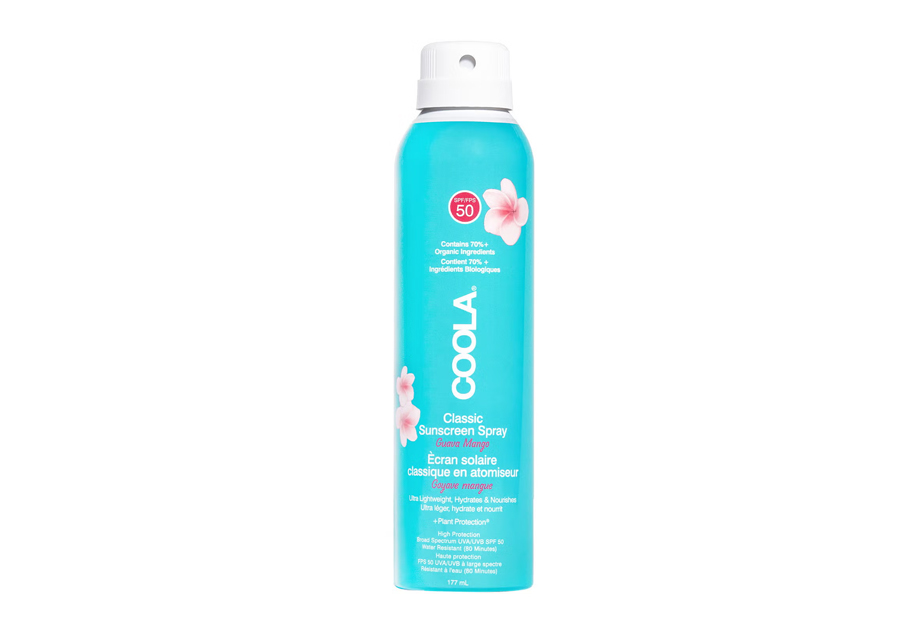
A chemical sunscreen that smells like a tropical paradise (even if you’re in a tiny patch of sunshine on your garden patio). There’s a fragrance-free offering for those with sensitive skin, but both boast 70+ per cent certified organic ingredients in a sweat and water-resistant formula. Trust us: the light mist action makes applying sun protection feel like a pamper session, not a chore. Teens and Gen Z’s tend to love this – worth a shout if you’re constantly nagging them to apply.
Buy NowBest lightweight body SPF:
Vichy Capital Soleil Hydrating Solar Protective Water SPF 50, £22
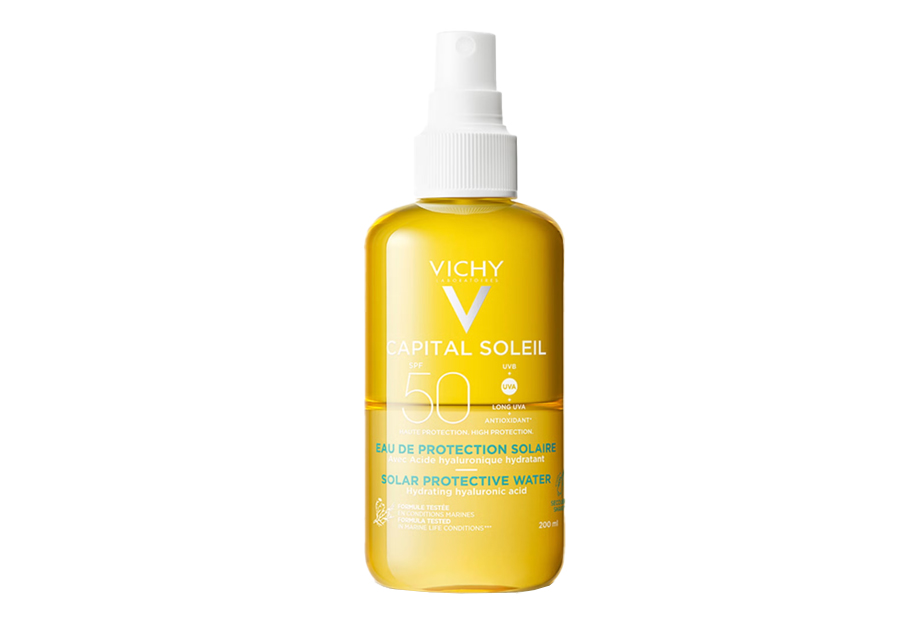
A biphase formula that’s part oil, part water, in an easy-to-apply spray. The oil phase is made up of UV filters, emollients, and Vitamin E, while the water phase contains mineral-rich water, responsible for reviving and hydrating the skin. Just remember to gently shake before you spray and you’ll get a velvety, non-greasy texture that’s a dream to top up throughout the day
Buy Now