11 best new laser and energy treatments to squeeze in before summer

Almost any skin issue can be zapped with a laser or other energy device but timing is key – get it done now before the sun comes out in earnest. Here’s what to book in for asap
There are some beauty treatments that simply don’t mix with summer – dyeing your hair a deep cherry red, for example, right before hitting the sun, sea and chlorine will turn it a washed-out pink faster than you can say, “dos cervezas, por favor”.
By the same token, laser and heat-based energy treatments such as radiofrequency microneedling are best done in the cloudier months to avoid UV-induced reactions post-treatment. Equally, many aren’t safe to have post-holiday when you have a tan (even a fake one).
“October to May is laser season,” says aesthetic physician Dr Ahmed Muntasar. “That’s because lasers and other energy-based devices temporarily sensitise the skin. Additional heat from sunlight can then lead to irritation and inflammation – and where there is inflammation, you can easily set off post-inflammatory hyperpigmentation, leaving brown marks behind”.
Most heat treatments also cause peeling, uncovering ‘virgin’ skin cells that you really don’t want to expose to UV light.
Lasers and their ilk usually require a course of four to six sessions, two-to-four weeks apart. Most doctors advise not to expose skin to the sun at all for a minimum of two weeks after each session.
So you better get your skates on if you want to benefit from the snazziest new laser solutions available right now. Here is our pick of the crop for 11 top skin concerns.
The low-downtime ablative laser for lines, scars and pigmentation
UltraClear, from £1600 for the eye area and £2000 for a full face at Face Restoration
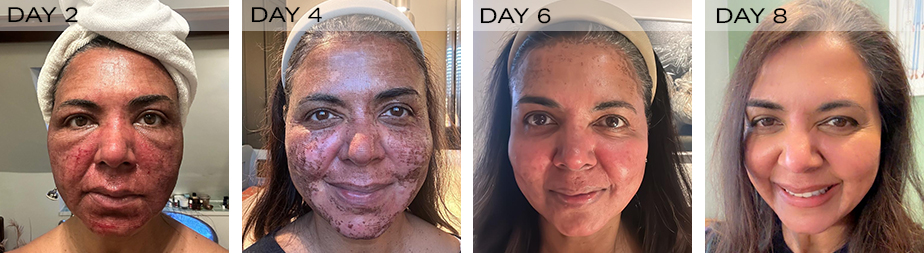
Image: Dr Rachna Murthy pictured after testing the UltraClear ‘laser coring’ mode on days two, four, six and eight
This first-of-its-kind ‘cold fibre’ ablative laser is one that skin doctors are very excited about and like using on themselves for dramatic resurfacing results. UltraClear’s main USP is that the heat it emits to ablate the skin (remove a layer of old, damaged cells) is controlled to such an extent that it can be safely used (provided you get an expert doctor) even for dark skin tones, as well as for rosacea and melasma sufferers.
The secret is in its unique wavelength and ultra-fast pulse technology, which keeps the powerful energy contained to ‘heal while they peel’. This means no damaging ‘bulk’ heating, as is the case with regular ablative CO2 lasers. Without this uncontrolled spread of heat, the risk of injuring too much tissue and risking long-term inflammation is vastly minimised. While the downtime of the most hardcore laxity and deep wrinkle-treating ‘Laser Coring’ mode still looks quite scary, your skin will heal in seven to ten days as opposed to a month or (much) longer.
About three months post-treatment (most people need just one), a plumper, smoother, more even-toned skin canvas will have come to the surface. Dr Rachna Murthy and her surgical partner, Dr Jonathan Roos, at the Face Restoration clinic also use the treatment for under-eye wrinkle-smoothing and de-pigmenting, and say there is proof it can even reduce the risk of non-melanoma skin cancer.
Book now:The painless collagen-banking laser
Harmony Bio-Boost Collagen Facial, from £450 per session at The Aesthetics Doctor clinics
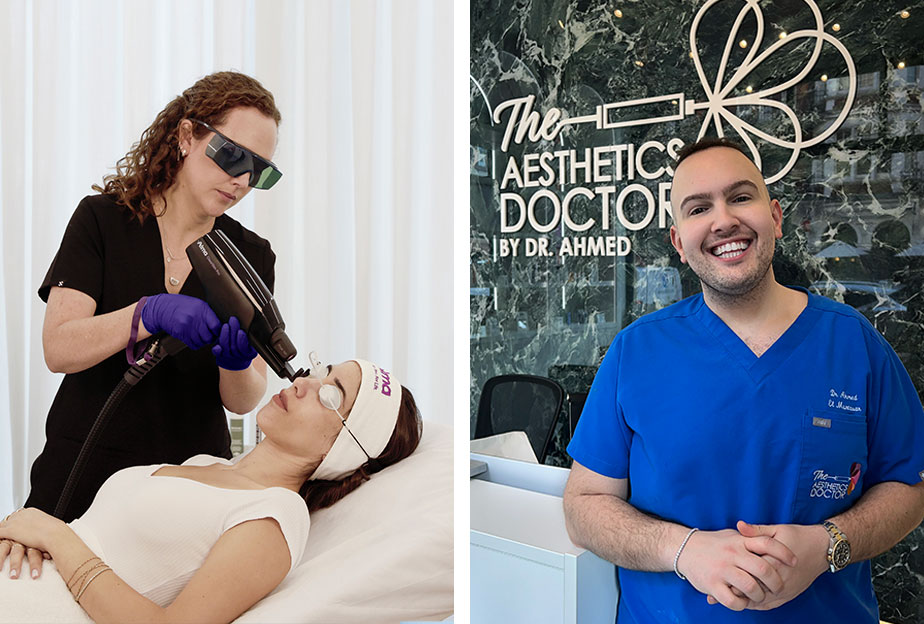
For plumping collagen, tightening elastin and restoring glow to all skin tones, the newest and fastest Alma Harmony Laser, which just debuted at Dr El Muntasar’s London clinic and has now launched nationwide, can have you in, out and glowing in 15 to 30 minutes.
This bio-boosting procedure effectively puts the breaks on the visible ageing process and brings back a level of clarity, luminosity and bounce you may not have enjoyed for years.
Because this machine has ten lasers and IPL technologies, it can address any specific concerns you have, including pigmentation and acne. Factor in 20 minutes for a patch test in your first session and expect some hot zapping, pin-prick sensations and a bit of redness that dissipates after a few hours.
One to six sessions, four weeks apart will get you “great-quality skin from the inside out,” assures Dr Ahmed. “Think of it as an ISA for your skin and collagen stores. You won’t see changes instantly, but wait until you see the results in a few months.”
Book nowFastest for laser hair removal
Deka Again, from £150 per treatment for the bikini line at D.Thomas Clinic
Laser specialist Debbie Thomas’s latest hair removal laser is her most advanced yet. Its dual-laser technology allows for safe, bespoke laser hair removal that’s truly for everyone – all skin tones included. She also loves the speed. “I can treat both legs in 10 to 15 minutes whereas it used to be 45,” she says.
Treatments should be spaced two to four weeks apart, with the last one at least two weeks before sun exposure. Those who naturally get more swelling and redness should wait longer, as “it’s the inflammation cascade that can cause unwanted pigmentation”.
Six to 12 treatments are required to remove 90 per cent of hair, so this is one course to plan ahead with your therapist.
Book nowBest laser for acne
Cutera Aviclear, from £4500 for a course of 3 at Self London
As an acne sufferer herself, consultant dermatologist Anjali Mahto can attest to the transformative power of the Aviclear laser, which is the world’s first FDA-approved laser for treating mild, moderate and even severe acne. It works by targeting the oil glands in the skin, suppressing their activity.
“Other acne-treating lasers attempt to suppress acne temporarily, but the AviClear halts sebum overproduction indefinitely,” says Mahto. There are no drawbacks: skin is zapped with the laser for 30 minutes – you might feel some sharp snaps but that’s it, and skin will only be mildly red afterwards.
Three sessions, spaced a month apart, are required, and 90 per cent of patients see visible improvements six months after the last session – and they get even better over time.
Book nowBest laser for melasma
LaseMD Ultra ‘Babyfacial’, from £345 per 15-minute session with serum at D.Thomas Clinic
Melasma (large pigmented areas, often caused by hormonal fluctuations) is notoriously hard to treat with lasers because of the risk of generating more pigmentation. But this laser, which has become known by its marketing name ‘Babyfacial’ for providing faces like Hailey Bieber’s with texture improvements and a glow (all with minimal discomfort), has settings used specifically for melasma and rosacea.
For melasma, it creates shallow micro-pockets just under the skin surface that allow for increased absorption of powerful pigment-dissolving skincare serums. Normally about five per cent of skincare actives are absorbed. With the LaseMD this increases to 80 per cent.
“We use the laser in combination with tranexamic acid and vitamin A to do the hard melanin-inhibiting work, and also prescribe a vitamin C serum, anti-inflammatory and barrier-repairing products and a broad-spectrum SPF 50 for all-round-brightening and shielding the skin from further discolouration,” says laser specialist Debbie Thomas.
Melasma sufferers know to stay out of the sun, but if you must, you should wait at least two weeks after your last session and always wear a high SPF.
While there is no ‘curing’ melasma (it’s a case of managing it), expect a reduction in the pigmentation after four sessions, three to four weeks apart. “Two further sessions are recommended at six-week intervals to see the full results. It can take four to six months,” says Thomas. After that, a maintenance session every ten to 12 weeks may be required.
BOOK NOWFastest ‘laser’ for body (and facial) pigmentation
BBL Heroic, from £700 per session at the Dr Maryam Zamani Clinic
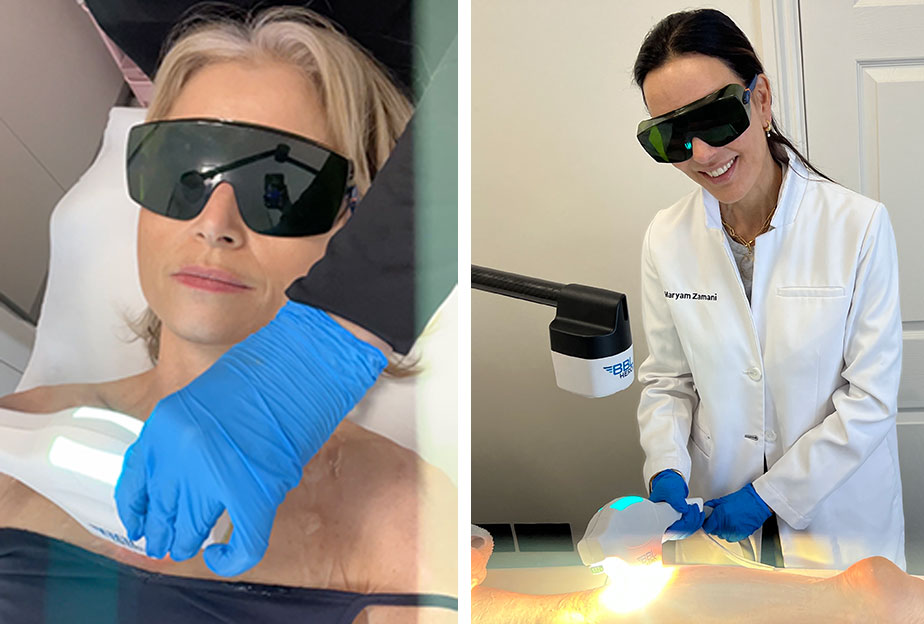
BBL – not the bum implant version but the skin-brightening broadband light – is essentially a “more advanced iteration of intense pulsed light (IPL)” for zapping pigmentation, redness and dilated capillaries, according to Dr Maryam Zamani. It’s faster than IPL and more precise, with better cooling to prevent discomfort, she explains. But because it is attracted to red and brown pigment lesions in the skin, it’s not suitable for very dark skin tones – only those who are I to V on the Fitzpatrick scale can be treated.
If you want even faster treatment, or want large areas of the body such as arms and legs treated, the new BBL Heroic (Zamani was the first UK doctor to have one), is your go-to. It relies on AI to read and treat your skin with continuous pulses of energy as the tool glides over the skin. Previously, the practitioner would have to lift and re-place the BBL head for every pulse. There’s no numbing cream but the ultrasound gel that’s smeared on to conduct the energy helps buffer against the heat. You can feel zaps, but it’s not painful. When we tried it, arms, legs and chest took just 40 minutes.
BBL Heroic can be used anywhere else not just to leave skin more even-toned, but also “to treat textural problems such as fine lines, wrinkles and pores, and improve elasticity,” says Dr Zamani.
To reverse sun damage, you need three to four treatments, four weeks apart with top ups twice a year. “Schedule your BBL treatment at least four weeks prior to a sunny holiday to allow adequate healing time and prevent adverse outcomes,” says Dr Zamani.
Book nowFor smooth ‘glass’ skin
Moxi fractional laser, from £595 at The Cosmetic Skin Clinics
Hollywood’s favourite ‘lunchtime’ laser (if it’s good enough for Sydney Sweeney…) targets water molecules in your skin to create tiny channels or ‘micro-coagulation zones’ just under the surface. This type of controlled damage (you’ll be given numbing cream before treatment), will set off a healing, anti-ageing process. There will be visible redness after a session (you have to wait 24 hours to apply makeup), but over the next week, your skin will peel, pigmented spots may temporarily darken before crumbling off, and reveal less-evident lines, bumps and scars, and a lovely glow will be revealed.
Three to four treatments, four weeks apart, are recommended for optimal results, and you should stay out of the sun for at least two weeks after a session. The Moxi is gentle enough to make it safe for all skin colours.
Book nowBest for rosacea
Sylfirm, from £695 per session at Dr Preema London Clinic
The Sylfirm doesn’t use light energy like laser and BBL, but radiofrequency microneedling. It’s the same principle as Morpheus 8, famed for its ability to smooth skin texture and firm skin. But the Korean Sylfirm technology features a pulsed mode that, uniquely, makes it capable of minimising rosacea, as well as melasma.
“In most cases, using both needles and radiofrequency heat would overstimulate and increase an issue such as rosacea,” says medical aesthetician Jessica Dayal at Dr Preema Clinic. “But the Sylfirm’s pulsed mode enables you to control the high heat at the tip of the needles and apply it at a much lower temperature than usual to the deep skin layer that prevents excess melanin and blood vessels making their way to the skin surface,” she says.
The pulsed heat helps regenerate and re-energise that layer and its function while also targeting and shutting down capillaries, combating redness and discolouration.
“Three to five sessions significantly calm down flushing and melasma, but I can usually see improvements from the first session,” says Dayal. Wear an SPF afterwards and avoid intense sun exposure for at least two weeks.
Book nowBest laser for zapping toenail fungus
Alma ClearLift Nd:YAG, £80 per session at Dr. Medispa
This normally hard-to-treat condition can be successfully zapped with three to four 15-minute sessions of Clearlift Nd:Yag laser spaced two weeks apart. Add two weeks afterwards of not exposing your feet to UV, and that means you can have your feet sandal-ready eight weeks from now.
Cosmetic physician Dr Tino Solomon uses the super-fast pulses of the Nd:Yag’s q-switched mode to create acoustic shockwaves that break up the hard outer shell of the fungus spore. Next, the laser’s long-wave mode heats the area, deactivating the black-nail causing micro-organism. It feels warm, but it’s not painful.
Book nowBest laser for microblading reversal
Semi-Permanent Laser Tattoo/Brow Removal from £300 at Shavata Singh Brows & Lashes
If your microbladed or semi-permanent brows have ‘bled’ or faded over time, left a pink or grey ‘wash’, or you just don’t like the look of them, you can have them removed with laser. “Having seen a huge upsurge in clients seeking help following disastrous microblading results from untrained therapists, I wanted to offer a bespoke laser treatment that could safely undo them and prepare the skin for expertly microbladed brows eight weeks after removal,” says brow expert Shavata Singh.
Choosing the right laser at the right setting for the job is essential because semi-permanent pigments react differently and more unpredictably to some lasers than tattoo inks, says Singh. An experienced laser technician will know how to do this, as well as how to avoid zapping any real brow hairs.
A personal assessment and patch test are important to determine how the pigments and your skin respond to the laser. Very dark skin tones may not always be suitable for treatment, owing to a lack of contrast between the skin and the microblading pigments.
At Singh’s London clinic, a Q-switched Nd:YAG laser is used. PicoSure and PicoWay lasers are also reliable for semi-permanent and tattoo ink-removal, as they all blast the pigments apart using tiny pulses. This can sting as the skin surface does get slightly damaged. At Singh’s clinic, ice is used to numb the sensation.
Post-treatment redness and swelling can last a few days, there may be a few temporary scabs, and post-inflammatory hyperpigmentation is a risk with less-experienced practitioners.
The deeper the original pigment was placed and the longer it has been there, the more removal sessions may be needed. Typically, it’s one to three sessions, six to eight weeks apart. Avoid the sun for four weeks and wait eight weeks if you plan to have your brows re-bladed.
Book nowBest multi-purpose laser for all skin tones
Aerolase Neo Skin Rejuvenation, from £790 per session at Mr Olivier Amar Clinic
Aerolase is a collagen-boosting laser that’s new to the UK. Like similar lasers, it uses Nd:YAG technology to create micro-injuries just under the skin, creating a healing response that results in faded age spots, healed capillaries, and less-visible wrinkles. But this laser’s party trick is that it has ‘650-micro second pulse technology’ which, says Mr Amar, “allows for skin cooling between pulses.”
Not only does this make every 20-40 minute session pretty much painless without numbing cream (GTG’s Victoria Woodhall says she couldn’t feel a thing when she tried it), but it also effectively dampens any inflammation, which makes the laser suitable for even the darkest skins.
Another rarity is that the Aerolase can be used to treat active acne. Tricky inflammatory conditions such as melasma, psoriasis and rosacea can also be successfully tackled, alongside acne scars, strawberry marks, and thread veins – and it does laser hair removal as well.
You can treat multiple issues in a single session; the number of sessions required depends on what you want treated.
Book now