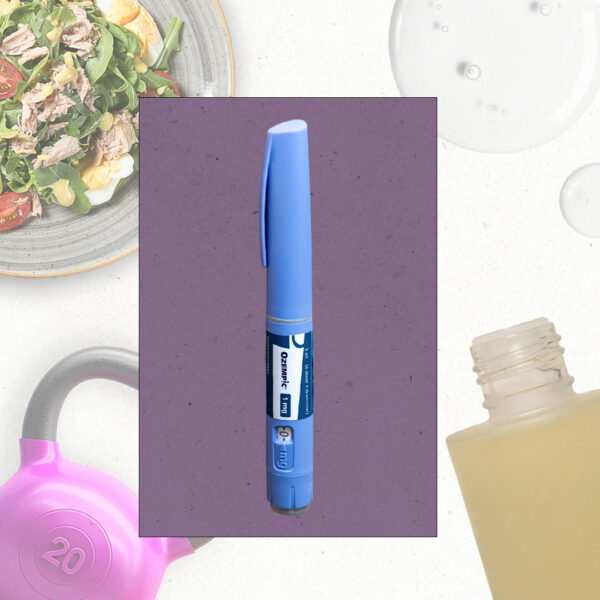
The rise of the Ozempic baby: how weight loss jabs may affect your fertility

There are reports of women falling unexpectedly pregnant while on weight loss jabs. Here’s what you need to know
Weight loss medications such as Ozempic, Wegovy and Mounjaro have become such a part of our health landscape that, if you’re not taking one, you probably know someone who is. But they are starting to be associated with a surprising side effect: pregnancy. Hence the rise of the ‘Ozempic baby’ hashtag on social media.
NHS general surgeon Dr Karan Rajan has shared his concerns, saying that there have been “reports of increased fertility in women who are taking some of these weight loss injections”.
View this post on Instagram
And parenting data economist Professor Emily Oster says, “You will certainly see a lot of discussion on TikTok from people who were taking Ozempic and got pregnant by accident. We’re still working out what’s going on there.”
View this post on Instagram
But while #ozempicbaby has been trending, it’s hard to say how many pregnancies have been a direct result of GLP-1 use, since records are not kept. And of course there is very little evidence, thanks to the age-old problem of fertile women (and certainly pregnant women) being excluded from research. But a connection is “plausible”, according to a 2024 study by multidisciplinary science journal Nature.
So what’s going on here: do these drugs interfere with contraception? Do they make you more fertile? Or is it simply that you’re more likely to get pregnant when you’re reach a healthier weight?
The answer can lie in all of the above reasons, says Dr Tania Adib, consultant gynaecologist at The Lister Hospital in London. “Firstly, it may make oral contraception less effective because it delays the rate at which food travels through the stomach, so you may absorb the contraception less well. Secondly, weight loss generally leads to increased fertility because, if you’re overweight, you’re likely to have insulin resistance, hormone imbalance and less likelihood of ovulation.”
If you’re carrying excess fat, then losing weight will certainly improve your fertility, says Dr Adib. And, by the way, this is true for both men and women, since weight loss in obese men will improve semen concentration and motility.
Dr Fionnuala Barton, a specialist menopause doctor and Gloss Book expert, adds that common side effects of these drugs can include diarrhoea and vomiting. “This may further impact absorption and reduce effectiveness of oral contraception,” she explains. “So it’s recommended to follow the pill manufacturer’s sick day rules, such as adding condoms or considering non-oral contraception. This might mean a LARC [long-acting reversible contraception] like IUD, hormonal implant or Depo-Provera injections, or an Evra patch.”
She stresses that, for those with poor metabolic health (meaning your body’s ability to process fats and sugars), fertility can improve even without weight loss. “Yes, losing weight will have a positive effect on metabolic markers, but it’s not the body weight per se reducing fertility – it’s the metabolic dysfunction,” she explains. “You can improve metabolic health even with a higher BMI.” And being a healthy weight doesn’t necessarily guarantee good metabolic health. You can improve it by eating a nutrient-dense diet, exercising regularly, managing stress and prioritising sleep.
Then there’s a more straightforward (and personal) reason. “Young women that I see who are overweight often don’t want to have sex because they’re not comfortable with their bodies,” explains Dr Adib. “As they lose weight, they often feel more confident and are more likely to have sex. That’s anecdotal, but it’s certainly the case from what women are telling me in clinic.”
However, the biggest issue here is, clearly, that these medications can interfere with oral contraception. An “Ozempic baby” could be a joyful surprise if you’ve been struggling to get pregnant. But for women who are on the pill because they don’t want a child, it could be a disaster. The pill is around 97% effective in preventing an unplanned pregnancy so, if GLP-1s reduce that further (again, we don’t have the data to show by how much) then it’s really important that women are aware of this.
These GLP-1 agonists may work in slightly different ways – Ozempic and Wegovy are semaglutide, while Mounjaro is tirzepatide – but the effects are similar.
Here in the UK, Ozempic is only licensed as a diabetes treatment, so people are more likely to be on Wegovy or Mounjaro for weight loss. Tirzepatide (sold under the brand name Mounjaro in the UK) is the only one that has the concern about oral contraceptive efficacy on the labelling. “It has been shown to impact the bioavailability of oral contraception,” says Dr Barton. “So the advice is to use barrier contraception in addition to hormonal contraception for four weeks after starting medication, and for four weeks after any dose increases.”
In June this year, the MHRA (Medicines and Healthcare products Regulatory Agency) issued its first alert to the UK public regarding contraception and weight-loss medications after it received 40 reports relating to pregnancies while using these drugs, 26 of which were on Mounjaro. But semaglutide drugs like Ozempic and Wegovy have been associated with surprise pregnancies, too.
Paradoxically, there has been some evidence to show that GLP-1s may have a negative impact on a healthy pregnancy, according to a study from earlier this year in the Public Library of Science. While this has only been seen in animal studies, Dr Adib says it’s worth being cautious. “GLP-1s have not been shown to be safe in pregnancy,” she says. “In animal studies, they have been shown to increase the risk of miscarriage, congenital abnormalities, and growth restriction. You can’t necessarily translate animal results to humans, but we don’t have the human data, so for now we say that it’s best not to conceive while on these injections. There have been anecdotal reports of women on these medications who didn’t know they were pregnant, and the babies have been fine, but it’s certainly not recommended.”
Dr Barton says the “wash out” period is the time it takes for these medications to leave your system, and different drugs have different recommendations for how long after discontinuing use it’s safe to try and conceive. “For Mounjaro, they say one month, but Wegovy and Ozempic both say two months,” she explains. “If you have been advised to lose weight to increase your chances of conceiving then look at the lifestyle interventions in addition to medical weight loss options – but ensure the appropriate wash out period has been considered after target weight loss is achieved before stopping contraception.”
Dr Barton is also keen to stress that the relationship between a person’s weight or BMI and their reproductive health is complicated. “Increased weight can have a negative impact on ovarian health and function with changes to cycles and issues such as PCOS (polycystic ovary syndrome),” she says. “But likewise, having a low body weight and low energy availability, such as with an eating disorder, can stop ovulation and may increase risk of hypoestrogenic problems such as osteoporosis, premature ovarian insufficiency and metabolic dysfunction. It sounds boring, but maintaining a healthy body composition is really important for supporting ovarian health and reproduction. It’s unsexy, and involves the dreaded B-word: balance.”
Over time, we’ll learn much more about this. Novo Nordisk, the manufacturer of Ozempic and Wegovy, is currently building a registry of women who took Wegovy while pregnant or breastfeeding to track health data through pregnancy and the first year after delivery. So is Eli Lilly, the maker of Mounjaro and Zepbound.
“In two or three years, we’ll have so much more data, we’ll probably be giving different recommendations,” says Dr Adib. “Science and medicine are always moving forward.”