How to stay healthy on weight loss jabs: nutrition and skin tips from our experts

Ozempic side effects are a hot topic but don’t panic – our experts are here to help. Here’s what to expect and how to navigate any problems
The possible side effects of Ozempic and other appetite-suppressing drugs are a big talking point at the moment. From gaunt ‘Ozempic face’ to issues with excess skin after dramatic weight loss to the potential impact on hormones and pelvic floors, there’s a lot to ponder if you’re using the jabs, or planning to do so.
First things first: Ozempic grabs all the headlines but it is just one option. Mounjaro, Wegovy, and Zepbound are alternative brand names for similar injectable drugs, whose active ingredient, semaglutide, mimics the hunger-busting peptide hormone GLP-1.
We’re not keen on scare stories at Get The Gloss so we asked our trusted experts for the truth about these potential health impacts and for their advice on counteracting any issues. When it comes to doing Ozempic healthily, the main takeaway is this: slow down. “The manic speed with which many people lose weight on GLP-1 is at the heart of most of the side effects you don’t want,” says cosmetic physician Dr Sophie Shotter.
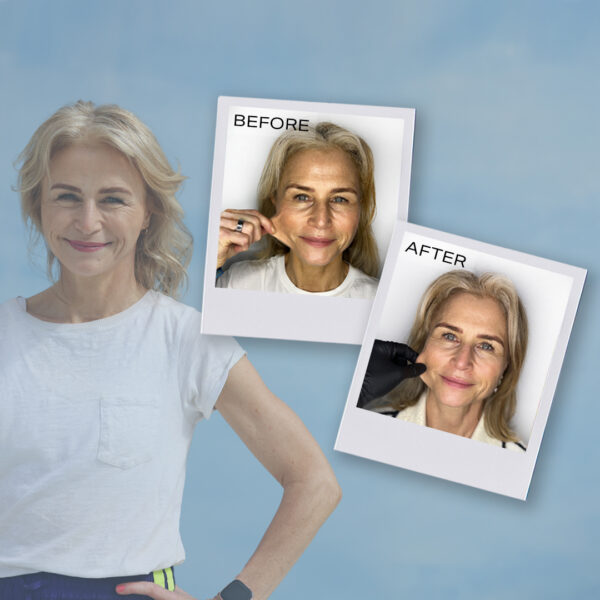
Ozempic-induced weight loss can make the face look gaunt and haggard. “The drug makes you lose body fat and particularly facial fat and volume at speed,” says aesthetic physician Dr Priya Verma. With some of its natural support structures gone and, with age, the skin not being able to ‘snap back’ during to a natural decline of collagen and elastin, “skin will end up saggy and crepey,” she says.
According to Verma, Mounjaro and Zepbound, which target not just GLP-1 receptors but also those of GIP, another hormone involved in losing weight, “may lead to slightly more pronounced weight loss in some patients [than other jabs], which could theoretically translate to more noticeable facial volume loss if not carefully managed”.
Verma recommends several ways to help mitigate the impact of GLP-1-related weight loss on the skin and facial structure:
“Work with your practitioner to ensure the pace of weight loss is steady and sustainable, rather than rapid. This gives the skin more time to adjust.”
“Staying well-hydrated and incorporating collagen-supportive skincare ingredients like peptides, retinoids, and hyaluronic acid can help improve elasticity. Collagen peptides, vitamin A, biotin and skin omegas are a few skin-supportive nutrients that may provide additional support from within.” Getting these from a balanced diet is always better than taking supplements, but Verma is also a fan of the Advanced Nutrition Programme supps.
Some non-surgical, skin-regenerating treatments Verma recommends are volume-restoring dermal fillers, collagen-boosting polynucleotide jabs and collagen-stimulating fillers such as Sculptra and HArmonyCa. She’s also a big fan of laser skin tightening in the shape of Endolift (which uses a laser fibre inserted under the skin to tighten tissues): “It can improve sagging and provide lift, helping immensely with lower face laxity and jowls,” she says.
“These drugs can be game-changing for weight loss and metabolic health, but the reduced desire to eat can mean people run the risk of reducing key nutrients,” says Dr Nikita Grover, head of functional medicine at Lanserhof at The Arts Club in London, who points out that often, those on Ozempic already have a limited or unbalanced diet before starting on the drug.
She says clinical observation and some studies suggest there are some nutrients of which to be particularly mindful. Vitamin B12 and iron absorption can be affected by the use of GLP-1, especially for those who already have a low intake, like vegans, the elderly and those on acid-suppressing medication. Protein and fat-soluble vitamins (A, D, E and K) also easily drop to sub-par levels, threatening your muscle mass, metabolic health and ability to age well. Lastly, magnesium and zinc deficiencies are common when on the jabs.
Grover suggests careful dietary planning, keeping in mind your individual response to the meds, its dosing, and your baseline nutritional status.
“Aim for 1.2 to 1.6 grams per kilogram of bodyweight daily,” she says. That’s about 100g if you weigh 70kg, or three cooked chicken breasts or a lot of tofu, seeds and pulses if you’re vegan – you may have to commit to protein shakes in the latter case.
Grover says fibre-rich foods, particularly seeds and veg, are important too, as GLP-1 causes “slow gastric emptying” which means you’re at risk of constipation, and “make sure you spend time chewing your food and take gentle movement post-meals.” Add a daily high-quality multivitamin and mineral to “help cover common nutritional gaps, especially if your food intake is under 1500 calories a day”.
Lastly, she suggests you have your B12, ferritin, vitamin D and markers of body mass (such as creatine and grip strength) regularly checked.
“We have proof that using GLP-1 can lead to sarcopenia, or muscle wastage,” says Shotter. This is because, says cosmetic physician Dr David Jack, very rapid weight loss can put the body in a catabolic state, where it ‘eats’ lean muscle, including skeletal muscle: “It can lead to decreased muscle tone, strength and flexibility, and in the long run even bone loss.” Given that a lot of GLP-1 users are in an age bracket where they’re already losing muscle and bone density with age and perimenopause, this is worth considering.
Aesthetically, it can mean that your body shape may change significantly, but not always in the way you want. “For example, big muscles like your gluteus maximus can shrink, resulting in a flat bum,” says Shotter. Excess skin on the body can be another unintended result and “there is very little you can do to shift that apart from surgery”.
The truth of this is seemingly borne out by new figures from the British Association of Cosmetic Plastic Surgeons (BAAPS), noting an uptick in thigh lifts (+24 per cent) and arm lifts (+13 per cent).
Shotter recommends you slow down your weight loss as much as possible: “Eat enough, even if you’re not hungry, and maintain a protein intake of one to 1.5 grams per kilo of bodyweight,” she says. She also emphasises the importance of strength training (not just cardio) to maintain muscle mass.
Shotter recommends Murad Retinal Resculpt Body Treatment, £79, for maintaining skin quality, and says a good collagen supplement can help support skin resilience all over: “I like Evernutri Evercol, £62.50, because it has added hydrolysed elastin to help prevent laxity,” she says.
Jack suggests that Saxenda, an Ozempic-like drug that contains not semaglutide but liraglutide is “shorter-acting and may allow for more natural hunger signals between doses, helping you to lose weight more slowly”.
Consultant dermatologist and hair loss specialist Dr Ophelia Veraitch has noted that hair loss is increasingly becoming an issue for patients using GLP-1. “Rapid weight loss can cause telogen effluvium, or shock-induced hair shedding,” she says, adding that patients on the drug present with “some of the trickiest hair loss cases”.
The problem is two-fold: “Many people on these drugs are at an age where they would start to suffer from androgenic (genetic) hair thinning anyway, and the sudden drop in nutrition caused by a curbed appetite doesn’t just exacerbate the problem, it sets it off early.”
So if you’re genetically prone to thinning (for example, if all the males in your family started to thin in their twenties or your mother did so in her thirties), “it will get worse on Ozempic,” says Veraitch.
Going on your Ozempic weight loss journey slowly is key, says Veraitch. She believes you should do it under the specialist guidance of an endocrinologist or at least a GP who can monitor your hormone and nutrient levels and adjust your GLP-1 dosages.
With nutritional deficiencies not a main cause of hair loss in the Western world, she says nutrients alone won’t fix hair loss issues. That said, it’s important to make sure you’re not nutritionally depleted while taking the drug, and suggests her Dr Ophelia Hair Vitamins Advanced, £69, will “bring you up to adequate levels of important hair nutrients such as vitamins D and B12, folate and zinc”.
Real hair loss fixes, however, will require prescription DHT-blockers such as spironolactone, or the topical hair growth drug Minoxidil. Also effective are PRF (platelet-rich fibrin), polynucleotides or mesotherapy, needled into the scalp. None of which come cheap.
With semaglutide mimicking the body’s GLP-1 hormone in order to bring about weight loss, there is no doubt Ozempic affects your hormones. Unfortunately, there are also more sinister way the jabs and hormones are linked, and women on HRT in particular should take heed, says functional hormone nutritionist Pippa Campbell.
“When you look at the possible side effects of GLP-1 drugs listed by the manufacturer, you’ll see that gallbladder disease is among them. I have already seen serious instances of this in my practice,” says Campbell. The function of the gallbladder, she explains, is to, along with the liver, get rid of toxins and excess hormones. Our excess oestrogen, once filtered out by the liver, is carried out in bile and stored in the gallbladder, so bile and gallbladder dysfunction mean bad news for oestrogen detoxification.
“Symptoms of gallbladder and bile dysfunction – which can lead to gallstones – are bloating, pain in the upper right part of your abdomen, nausea, a metallic taste in the mouth, trouble digesting fatty foods, and elevated oestrogen,” says Campbell, who points out that women on HRT are already at increased risk of gallstones.
Conversely, you could end up with too-low oestrogen levels, says Dr Grover: “Because oestrogen is partly produced in fat tissue, its levels can drop when fat stores shrink rapidly and significantly.”. This can lead to irregular or missed periods, she says, and it can affect mood, libido and vaginal dryness.
Some studies, says Grover, suggest people with hypothyroidism may need to slightly increase their thyroid hormone medication when using GLP-1. “This is likely due to shifts in metabolism, absorption and digestion,” she says.
You should get regular oestrogen level checks if you use GLP-1, especially when you’re on HRT. And if you have thyroid disease, monitoring is advised. To support your gallbladder, Campbell suggests limiting saturated and trans fats (fatty meats, fried food and processed snacks), increasing your fibre intake (it supports bile excretion), and taking milk thistle, taurine or ox bile supplements – or her own Pippa Campbell Health Detox, £49.99.
Aesthetic physician Dr Galyna Selezneva is particularly concerned with the potential loss of muscle mass in the pelvic floor “where we have so many intricate and important muscles that keep us stable, mobile and leak-free”. She warns that Ozempic may contribute to stress incontinence. Then there’s the issue of loose skin down there: “The labia are made up of tiny, intricate fat cells that are greatly affected by any weight loss jab,” she says. It can result in the labia looking and feeling “out of proportion”.
“Don’t wait till the weight loss comes to address muscle loss,” says Dr Galyna: “Make sure your diet contains enough proteins.”
She also suggests ‘targeted’ exercise, in the shape of her brand-new Deleo Cristal Revive device. It’s a chair that deploys high intensity electromagnetic muscle stimulation to strengthen and re-educate the pelvic floor muscles.
Similar to the pelvic floor-toning Emsella chair, Galyna says the Cristal Revive has a higher energy output, resulting in deeper penetration and better results. Contractions (you just sit on the chair with your clothes on) are nonetheless ‘softer’ than those of the Emsella, she says, and painless.
She advises combining this with sessions of Emfemme 360, a dildo-shaped device that aims to tighten and plump the vagina, vulva and labia with warm-feeling radiofrequency energy (find out what that’s like here). Alternatively, Galyna can achieve the same with vulva-specific polynucleotide injections (yes, women can get themselves injected ‘down there’) over a number of sessions.