Why I swapped collagen supplements for bone broth powders

Is nutritious, collagen-rich bone broth the next big daily fix for better skin and joints? After struggling with collagen supplements, this beauty editor tried it… and fell in love
Collagen, protein, creatine, electrolyte and mushroom powder: the modern supplement landscape is replete with nutritious dusts, so we shouldn’t be surprised the latest one making a splash is bone broth powder – not just as a savoury Cup-a-Soup style drink, but as a sweet protein-style shake (which sounds implausible, but can be very tasty).
Bone broth powders and shakes are making waves as they naturally contain three of the most popular wellness supplements in one – collagen, protein and electrolytes. They also have amino acids that can help with stress management, and gelatin to support the gut lining, which plays a key role in the immune system (it’s why bone broth itself is traditionally used as a cold remedy). Plus, bone broth powders are less processed than collagen supplements and protein powders; they count as a whole food.
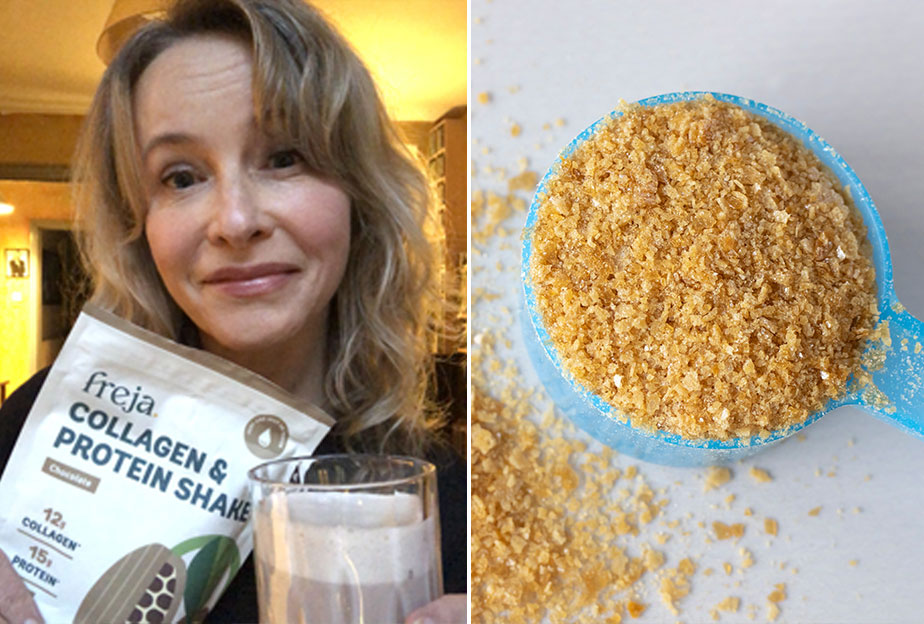
Ingeborg van Lotringen gets her collagen from a chocolate bone broth shake
They caught my attention because while I understand the potential benefits of taking collagen powders and drinks for skin and joints, I just can’t stand their taste or texture (unflavoured collagen tastes snotty to me, while the flavoured powders and (gloopy) drinks set my teeth on edge. And as a midlife woman with increased menopausal protein needs to support my muscles and joints, I’ve yet to find a protein powder that I can stomach. But most bone broth powders, both sweet and savoury, are delicious and taste like food, not supplements.
Vegetarians and pescatarians need not apply. Just like when you make bone broth at home, bones (usually beef) and sometimes cartilage and skin are simmered for up to 24 hours. This is simply dehydrated into a powder with the fat removed: minimal processing that preserves the natural properties of the broth, so the powder can be considered food-equivalent.
Sweet bone broth shakes and hot chocolates may use additives such as synthetic sweeteners; it’s worth checking your brand.
While bone broth provides all of the above, it’s a leap to think it can provide an optimum dose of all three. “As a whole food, liquid bone broth is great, but it’s very hard to know how much of any nutrients are present as it depends on how it’s cooked and what bones are used,” says female hormone nutritionist Pippa Campbell.
Powders will mostly, but not always, list collagen and protein levels on the packet, but check your brand to see if these are properly verified.
Bone broth powders advertise between six and 21 grams of collagen per dose, which amounts to 15-25g of broth powder. For comparison, the clinically recommended daily dose of collagen peptides is 10g, which equates to 10g of powder.
But these are not the same forms of collagen. Collagen supplements use hydrolysed collagen peptides, where the large collagen molecules are broken down into fragments to make them more absorbable. They help stimulate new collagen in the skin, joints, bones and gut lining, says Campbell.
Bone broth powders use the whole collagen molecule. “The collagen in bone broth is a large protein that’s not easily absorbed and used by the body,” confirms Campbell.
However, broth manufacturers argue that because their powders are not hydrolysed, they retain key components such as glycosaminoglycans and collagen-building amino acids glycine and proline, which can be lost in the hydrolysation process. This wholefood format, they say, is optimally metabolised by the body.
In other words, there is no real consensus as to whether collagen peptides or bone broth collagens are more effective as a collagen top-up.
Campbell points to an increasing number of studies that show collagen peptides can support skin elasticity and hydration, joint comfort and soft tissue repair. She considers them a more consistent, concentrated source of collagen-building amino acids than bone broth.
But the evidence for collagen peptides is not uncontested. While many brands have their own clinical trials, they are mostly company-funded and small. They do not (yet) constitute a body of independent clinical proof for consistent and noticeable results.
That said, the available evidence for collagen peptides dwarfs that of the clinical support for bone broth, which has barely been studied as a ‘skincare supplement’.
Collagen peptides come with a standardised, evidence-backed dose of 10g. As for food-based collagen, all we have is that studies show the body absorbs it from food and uses it throughout the body, including the skin – which stands to reason.
We have no idea what the right daily dose of food-based collagen is, but if you wanted to get a daily 10g dose of collagen from bone broth, you’d require 15-25g of bone broth powder, depending on your product. (Again, most powders state the amount of collagen per dose, although it would be worth studying your brand’s website to see if these levels are actually verified).
In short, both options may contribute to improved skin and joints, but collagen peptides can boast more ‘skincare’ evidence and an optimal daily dosage of 10 grams.
Campbell recommends 90g of protein daily for women in menopause and beyond, equating to a chicken breast four to five eggs or 1.5 cups of tofu per meal. As that’s a whopping amount, she considers protein and collagen powders “a very useful” top-up.
A scoop of whey protein powder provides 20-30g of protein and a 10g dose of collagen 9-10g. The protein in a dose of bone broth powder is between about nine and 24g, depending on the brand.
But unlike a whey or well-balanced vegan protein powder, neither collagen nor bone broth powder count as a complete protein, as they don’t contain all nine amino acids. Because they lack the amino acid leucine in particular, “they don’t provide the ‘build and repair’ signal for muscles that you get from whey (or vegan) powders, or meat or eggs,” says Campbell.
While all protein is beneficial, she says, bone broth, like collagen supplements, with its collagen type I and III content, is primarily helpful for skin, hair, nails and joints.
This is good to keep in mind, as some broths, such as Planet Paleo Organic Bone Broth Sport Protein, £23.49, do market themselves as sports protein powders.
While they do contain electrolyte minerals and have a naturally salty taste, they aren’t meant as sports electrolyte supplements. Campbell says that water with electrolytes or sea salt is better to support sweaty workouts.
“Some bone broth powders have been found to contain high levels of lead, as bones can store heavy metals,” says Campbell. Check for independently lab-tested products that are cleared as free of heavy metals (lead, arsenic, cadmium and mercury).
Antibiotics in animals can also be a problem, so she advises seeking out powders sourced from grass-fed cattle. Look for no added salt as well, so as not to blow your recommended daily maximum of six grams.
If you like a cup of warm stock or consommé, you’ll enjoy a savoury bone broth powder – it’s the same thing. In the case of ‘bone broth shake’ flavours such as chocolate and vanilla, you don’t get a weird meaty flavour – the bone broth just contributes a mild saltiness.
Unflavoured collagen powders, on the other hand, to me add that ‘snotty’ flavour when added to drinks in the 10g clinically-backed dose. Flavoured collagen powders and drinks – created to mask the natural taste – are even more offensive to me, but there are plenty for whom this is a great solution.
If it comes down to just matters of taste and therefore consistency of use, I’d take bone broth powder over collagen any day.
While collagen peptides at least have some evidence in terms of skin improvements and dosage, any nutritionist will tell you a food-first approach trumps supplementation, as the body is designed to work with food rather than isolated, processed nutrients.
Their food status has me convinced that I’m doing something nutritious and helpful for my whole body: they help me top up collagen, protein and electrolyte levels in a tasty, easily digestible way.
View this post on Instagram
The hot (or cold) chocolate
Freja Collagen & Protein Shake, £24.99 for 12 x 25g servings
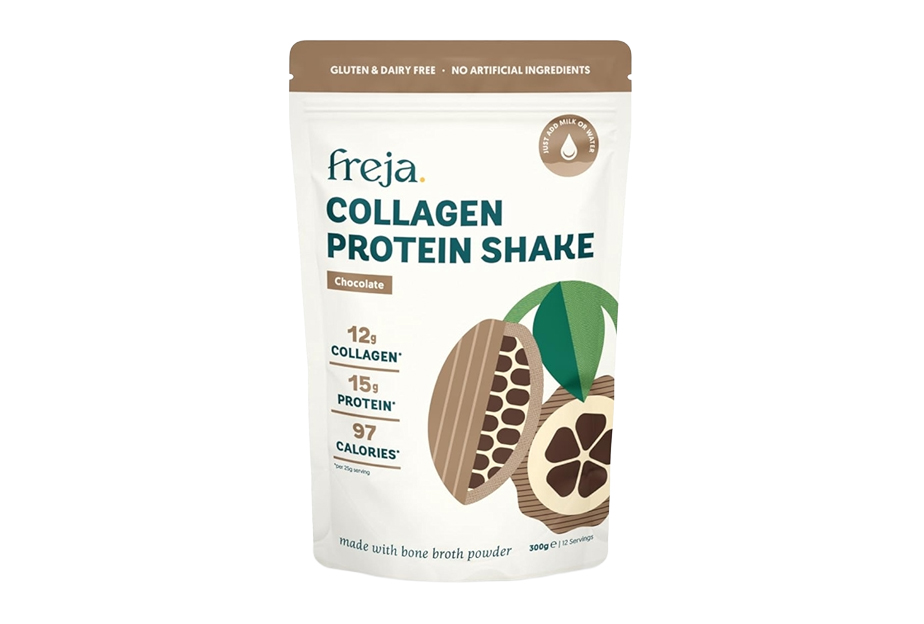
Freja keep ingredients to a bare minimum – this is just grass-fed, pasture-raised Nordic beef bone broth with coconut sugar and cocoa powder and no dairy. There are vanilla and strawberry favours as well. One 25g dose provides 15g protein and 12g collagen (the brand has every batch tested to verify this), is very low in salt and I personally love that it’s not over-sweet and just tastes like a pleasantly milky hot (or cold) chocolate. There are no lumps.
Freja’s unflavoured Beef Bone Broth Protein, £24.99, which has the highest collagen and protein levels (24g protein and 21g collagen) and can be added to soups and sauces, does initially go cloggy before it dissolves – it proves that there are absolutely no additives in the shape of emulsifiers.
Buy nowBest cup-a-soup
Willpowders Tomato Bone Broth Soup, £20 for 10 x 33g servings
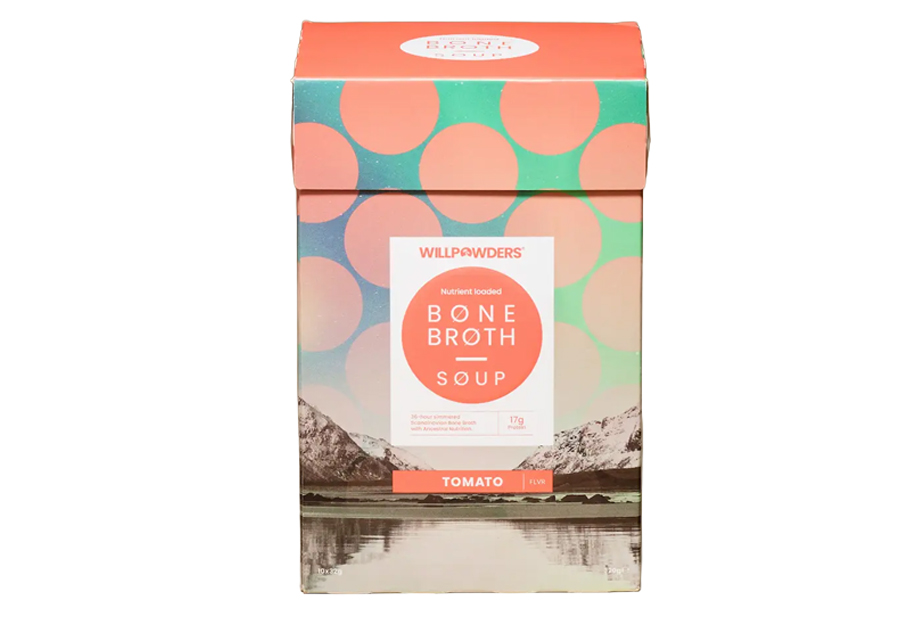
Based on Scandinavian, heavy metal-tested beef bone broth powder, there’s a mushroom and a chicken soup option as well. Just add water to the contents of a sachet for a creamy tomato broth.
Willpowders’ broth powders are the most ‘pimped’ of the lot, with the addition not just of natural flavourings, starch, and 1.5g of salt, but of plant oils, butter and milk (to make the blend more ‘keto’) and two forms of silica (said to promote collagen) as well. Oddly, while the soups are promoted as a source of collagen, no collagen content is mentioned, although the protein level (17g) is.
Buy nowBest winter warmer
Honest + Good Beef Marrow Bone Broth Powder, £24.99 for 15 x 20g servings
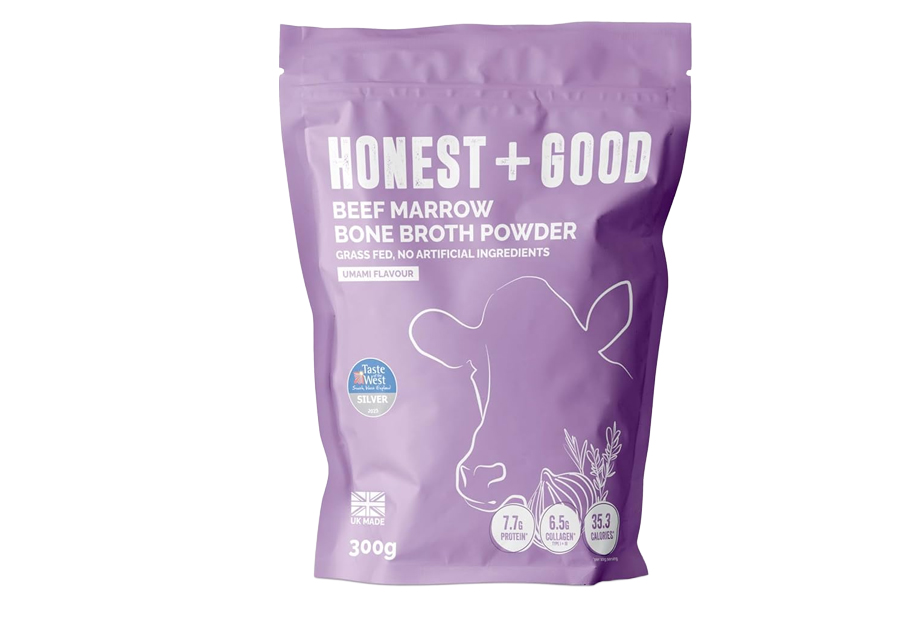
From a small family-run business in Devon, this grass-fed beef broth powder (like Freja’s, it’s diligently checked for heavy metal content) is spiked with herbs, bone marrow and sea salt to make it into a tasty broth in a mug (there’s 15.4g protein, 13g collagen, and 1g of salt per 20g serving). They also make an unflavoured Pure Beef Bone Broth Powder, £24.99, with 9.9g protein and 8.5g collagen per 10g dose (you can add it to soups, sauces and even coffee), which doesn’t clump thanks to the addition of sunflower lecithin, and plant-based emulsifier.
Buy nowThe sweet shake
Willpowders Milk Chocolate Protein Powder, £38 for 20 x 25g servings
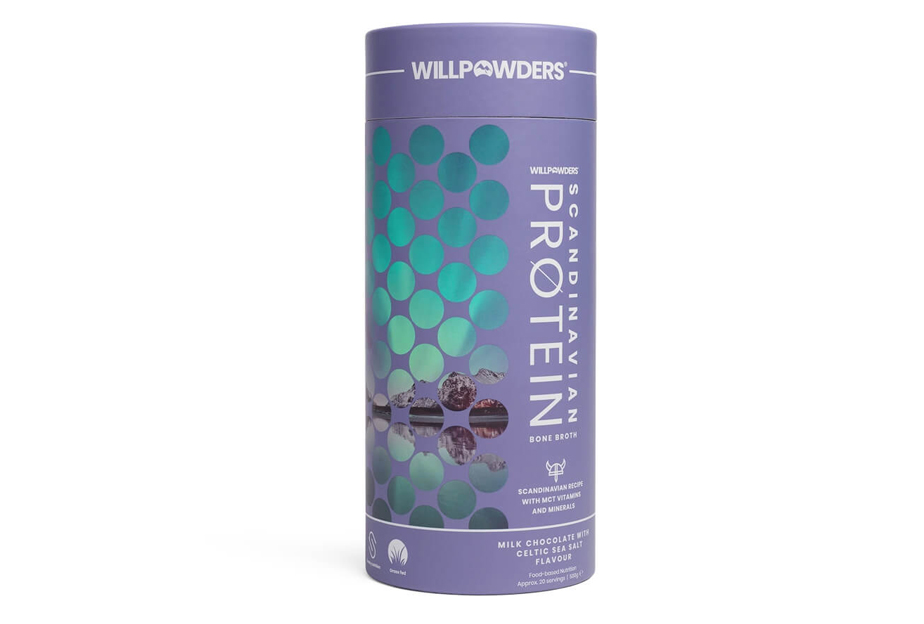
This is a bone broth powder, meaning the ‘protein powder’ in the name is somewhat misleading as it’s not a complete protein. The protein content per 25g serving is 17g, with collagen not stated. With a stevia (a synthetic sweetener)-spiked salted caramel choc flavour, this is perfect if you have a sweet tooth – the vanilla and strawberry favours are just as milkshake-y. There are a number of plant and dairy-based additives to amp up the flavour and make the powder easily dissolvable.
Buy now