Want to get the magic 30g protein into every meal? This is the recipe book you need

Top nutritionist Emma Bardwell’s new eating plan is crammed with recipes that help you easily hit your daily 30g protein and fibre targets. Like this tasty salmon and roasted chickpea dinner
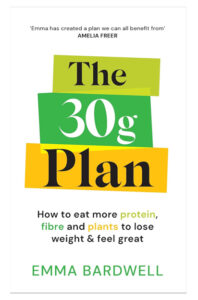
We love nutritionist Emma Bardwell’s no-nonsense, fad-free approach to dietary advice and the subtitle of her new book The 30g Plan (Vermillion, £13.35) is typically crystal clear: “How to eat more protein, fibre and plants to lose weight and feel great”. The book is a response to the question she gets asked over and over by clients at her clinic: “How do I lose weight without dieting?”
The answer is, she says, lies in the following easy-to-remember formula:
Protein, which makes us feel full so can aid with weight loss, helps with muscle growth and repair, hormone production and blood sugar balance, among many other things. And, notes Bardwell, it’s especially important when you’re aged 40+: “Due to lower levels of the enzymes needed to break down protein, we become less efficient at digesting, absorbing and utilising it. So in midlife it’s especially important to be aiming for 30g plus of protein per meal.”
We hear a lot about protein (the PTs at my gym talk about nothing else) but less so about its duller macro cousin, fibre – “the unsung hero of the nutrition world”, as Bardwell puts it. I recently wrote about how most of us aren’t achieving the NHS daily recommended dose of 30g – which is a missed opportunity as this plant-based nutrient, like protein, promotes satiety, as well as helping reduce the risk of biggies such as heart disease, stroke, diabetes and some cancers, plus promoting bowel movements and feeding our good gut bacteria.

Here’s what Bardwell recommends for a quick fix fibre boost:
Hungry now? Bardwell’s book is crammed with tasty and easy recipes – and below is one of them, which is ideal if you’re wondering what to do tonight with that salmon in the fridge . Emma’s harissa chickpeas with pan-fried salmon (or tofu, if you prefer) has 41g of protein and 12.5g fibre, a huge chunk of her daily recommended targets. Oh, and it’s totally delicious.
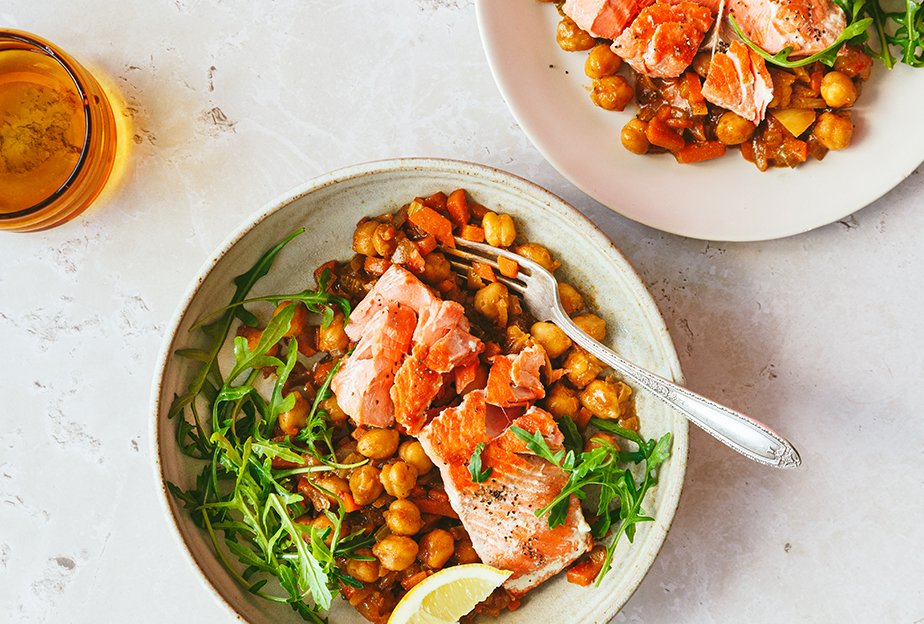
Serves 2 | Total time: 45 – 55 minutes
Your choice of protein:
Heat a few sprays of oil in a medium sized non-stick frying pan and saute the onion, carrot, celery and garlic with a good pinch of salt for 5–10 minutes until starting to soften.
Tip the chickpeas and vegetable stock in and add the harissa paste and 2 tbsp of nutritional yeast (if using). Stir well to combine. Allow to bubble then turn down the heat and simmer for 15–20 minutes until the liquid starts to thicken.
Meanwhile, cook your protein. For the salmon, add a few sprays of oil to a small frying pan on a medium heat. Lightly score the skin of the salmon 3–4 times and lay skin side down in the pan. Cook for 4-5 mins until crisp and golden then flip over and cook until cooked through and the flesh flakes easily.
For the tofu, preheat oven to 200°C (180° fan)/400°F. Lay the tofu on a baking tray covered with parchment paper (or ideally a silicon mat to get them really crisp). Bake on the top shelf for 20 mins, flip the cubes over and bake for another 20 mins.
Turn off the heat. Add in the parmesan (if using) or the final tbsp of nutritional yeast and stir to combine, making a nice cheesy, fairly thick saucy broth. Taste and season as needed before serving with your choice of protein and a generous side of rocket.
Extracted from The 30g Plan (Vermillion, £13.35) by Emma Bardwell