Gloss Boss: Bon Charge’s Katie Mant on her secrets to success — and coming back from burnout

Meet the entrepreneur who founded the best-selling at-home light therapy wellness brand with her husband. She tells us what it really takes to stay well while running a global business
You can’t scroll through Instagram without seeing yet another famous face radiating red light from an LED therapy mask. But when Katie and Andy Mant, both 40, founded their home wellness tech business Bon Charge back in 2017, red light therapy was far from the beauty and wellness phenomenon it is now.
The British couple were working in recruitment and living Perth, Australia. Prepping for their wedding that June, they went on a joint health kick. “We weren’t exactly poster people for balance,” says Katie, “unless you count balancing long commutes to the city with takeaways and wine! Think corporate city office, long hours sitting at a desk, back-to-back calls, targets and lots of coffees.”
“We were both definitely in glow-up mode — I took ‘bridal bootcamp’ very seriously,” she remembers. Andy had experienced weight gain and chronic fatigue and was on his own health journey. After overhauling their diet and exercise routine, they still felt like something was missing, especially when it came to sleep, which was a challenge given their intense work schedules. This led them to research biohacking and to the discovery that sleep could be optimised, and the body’s sleep-wake ‘circadian’ rhythm supported, with blue light-blocking glasses that reduced evening exposure to artificial blue light from smartphones and TVs.
The specs already on the market were clunky and ugly. “Andy ordered what I can only describe as the most hideous orange safety goggles to wear in the evening to try to block the blue light from the TV, smartphone etc,” says Katie. “He looked absolutely ridiculous.”
They decided to make their own in their garage at home in Perth, where they still live, experimenting with finding the exact blue light blocking tint. Just a few months after their wedding in Paris, they launched two blue light-blocking glasses for evening screen use — under the name of Blueblox (they changed their name to Bon Charge, meaning ‘good energy’, in 2022).
By the following year, they had 24 frame designs. Three years in, they quit their jobs, taking a massive salary drop, to run the business full-time. Soon, they were making a wide range of circadian-friendly biohacking light and energy devices, harnessing the power of red light therapy for wellness and beauty, near-infrared for healing, as well as heat and PEMF (pulsed electromagnetic field) energy.
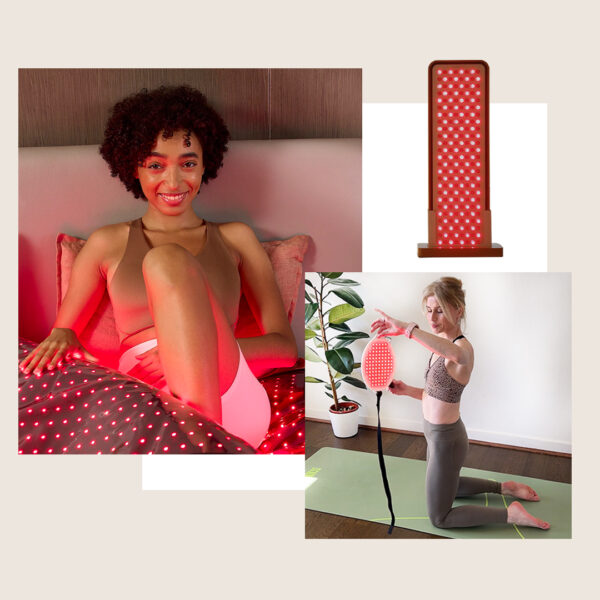
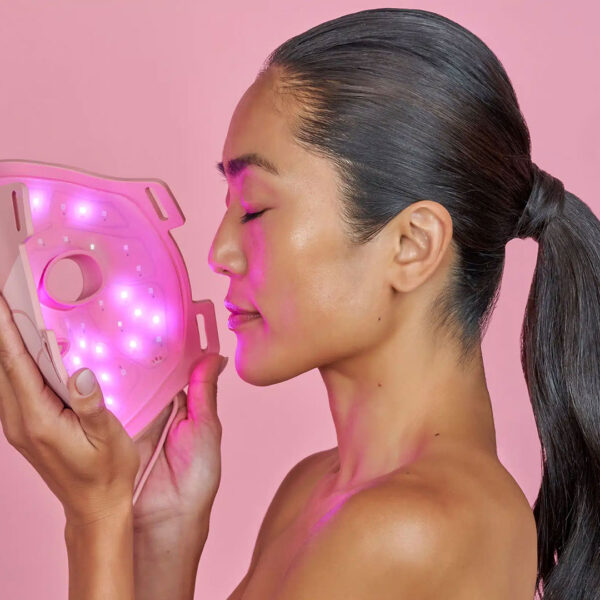
From the beautifying Red Light Face Wand, which targets fine lines and wrinkles, to the best-selling Red Light Face Mask, the relaxing infrared Sauna Blanket and Red Light Therapy Blanket – like a giant LED sleeping bag – Katie and Andy test all the devices out themselves, to ensure they really deliver. You’ll often find Katie taking a recharge break on her PEMF Mat Max.
“Our personal experience gave us real insight into how many people crave support, convenience, and calm in their daily lives,” says Katie. “That disconnect between how we were living and how we wanted to look and feel, planted the earliest seeds of the business”. The original Blue Light Blocking Glasses, from £99.95 are still one of their best-sellers.

From left to right: Katie Mant with the Bon Charge Red Light Face Mask (Instagram @katiemant_); Katie with GTG Editor Victoria Woodhall, testing out the Bon Charge Red Light Therapy Blanket.
Now, Bon Charge sells in 137 countries and the power couple were celebrated as part of on Forbes magazine’s 40 Under 40 Awards UK list of influential young business leaders in 2024— at a time when the US light therapy market is predicted to grow to $449 million by 2030 according to Grand View Research.

From left to right: Katie Mant’s commute via helicopter. Reading The Financial Times (Instagram @katiemant)
But after three intense years, Katie found herself with burnout and took a pause in 2024. “It’s been a long road to recovery, but you can’t pour from an empty cup, and mine was bone dry. As a founder, you don’t have the luxury of taking time off because who covers a founder in their absence?”
Here, she tells us how she navigated that challenge, the secrets of building a global wellness brand, her tips for overcoming perfectionism, procrastination and navigating stress spirals and what it’s like being married to your co-founder.
“The idea was born in that beautifully chaotic bubble of wedding planning — where one minute you’re debating napkin colours, and the next, you’re contemplating your entire wellness regime. It was the start of my health and wellness journey. I went full ‘keto queen’ for a while. I got a personal trainer, and I actually started liking squats. Who even was I? I had more energy, and honestly felt stronger, and more confident walking down the aisle – and in my honeymoon bikini, let’s be real.
“We were juggling full-time work, wedding spreadsheets, and trying to look and feel our best without burning out and started to explore how we could improve our sleep so that we could perform at our best. Through endless research, we discovered how artificial blue light — after dark — hugely impacts sleep. We learnt that blue light blocking glasses could help. But after ordering some online, we both agreed they were not for wearing out in public and definitely not stylish, and they did help a little with his sleep, but not fully. We learnt that there is a very specific wavelength of blue and green light, which you have to block to optimise sleep, and these glasses didn’t block it.

From left to right: Katie and Andy Mant on their wedding day in Paris, 2017; and Katie wearing Bon Charge Blue Light Blocking Glasses at her PC (Images: Instagram @katiemant_)
“We hunted high and low for ones that did, and actually looked stylish, but couldn’t find them. That’s when it hit us—if we can’t find it, let’s create it ourselves. Funny story – we tried tinting the lenses ourselves in our garage to begin with and quickly realised this was not scalable. Each lens took about two and a half hours, which we were doing in the evenings after work. We begged an optometrist to take a chance on our bold red lens idea and tint the glasses for us. They thought we were crazy, but agreed to it. We are now one of their largest clients.
“After three years, we quit our full-time jobs to focus on the business. We took a huge pay cut and only a very modest salary. Why? Because we wanted to build something sustainable, not just something that looked good on Instagram. Even now, our salaries are small compared to what we could be taking. In fact, a lot of our team earn more than we do. And we love that. We’re obsessed with remaining privately owned. For us, it’s never been about short-term gains; it’s about building something meaningful and impactful that lasts.”
“Running a business with your partner is like building Ikea furniture together, equal parts magic and madness. We’re lucky because we’ve always worked together, so we came into this already knowing how the other operates. We naturally fall into our roles: Andy handles the finances, operations, and anything involving numbers or structure (he loves data), and I lead on branding, PR, customer experience and creative direction – I am the vision.
“We try to stay in our lanes where possible, and trust each other to lead in those areas, but we’re also not afraid to challenge each other, which has definitely made us stronger. It’s made us closer, more aligned, and more intentional about how we live and work, but we also have to be conscious to switch off and not let ‘quick work chats’ creep into dinner every night. We’re still figuring out the balance, but we wouldn’t have it any other way.”

Katie Mant and her co-founder and husband Andy Mant (Instagram @katiemant_)
“Setbacks and challenges are inevitable — I consider them stepping-stones to success. The most recent has to be my own health. I built a business I loved, pouring my everything into it, but in 2024, I reached burnout. I was exhausted, lacking passion for what I did anymore and working around the clock. I reached the point where I couldn’t give much at all, and when you are the founder, that is critical.
“I didn’t fully step away, even though my body was screaming for it. Instead of pushing through, I paused. I looked at what was draining me and what truly lit me up. I hired brilliant people to alleviate the pressure and workload, delegated more boldly to the wider team, and reconnected with why I started in the first place. I was able to step back into the areas of the business I enjoyed most with a strong, supportive team around me.
My advice to anyone is that success at the expense of your health or joy isn’t real success. If something feels off, trust that. Realign before you’re forced to.”
“I’m a big believer in Parkinson’s Law: the idea that work expands to fill the time you give it. So if you give yourself a week to write something, it’ll take a week. If you give yourself 90 minutes with a deadline and a good playlist? It gets done. I live by that.
“Another mindset that changed everything for me is: ‘get it out, refine later.’ I used to get stuck trying to make things perfect before I’d even started. Now I just dump the messy version out of my brain and shape it once it exists. Whether it’s writing copy, planning a launch or coming up with ideas, I always say: done is better than perfect (and no one ever sees draft one anyway). Together, those two ideas have helped me stop overthinking and start finishing, which is where the real momentum comes from.”
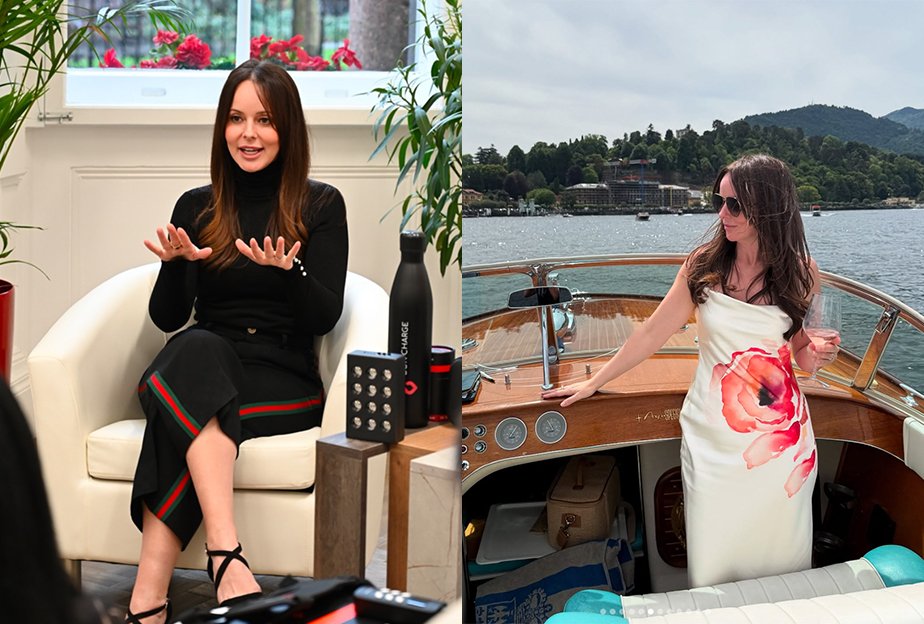
From left to right: Katie Mant at a talk in London, and relaxing in Lake Como (Image: Instagram @katiemant_)
“Honestly, I haven’t really experienced a lot of doubt from others or from myself. That might sound bold, but I’ve always had a strong sense of what I want to create, and I trust myself to figure things out as I go. It doesn’t mean everything’s perfect or easy, just that I don’t waste energy second-guessing what I know I’m here to do.
“Of course, challenges come up (hi, startup life!), but I tend to respond with ‘OK, what’s the next right step?’ rather than spiralling into self-doubt. I don’t romanticise struggle. I’d rather stay focused, move forward, and prove the vision by doing. So when something is challenging, I remind myself that I am the one in control. I write the outcome of my life, and that drives me to keep doing things.”
“Staying sane is a full-time job, but I’ve built little rituals into my day that make a huge difference. Mornings are sacred. I always get outside within the first few minutes of waking. Natural light first thing before any screens or artificial light helps regulate my circadian rhythm (and mood). No phones for the first 30 minutes of the day (unless I slip, I am human). I’d like that to be longer, but the reality is I run a global business and my mornings are peak time for other regions I need to connect with.
“I try to work out four times a week. Usually resistance training a couple of hours after waking, once my brain and body have both caught up with the idea. It sets the tone for the day and helps me feel strong and steady before I dive into work. Sometimes I throw in a bit of solo reformer Pilates too, but I’ll be honest, I’m not a class girl. I like to move at my own pace, with no one telling me to ‘pulse for 10 more seconds’ while pretending it’s fun.
“If I skip it, I feel sluggish and weirdly disconnected all day. I finish my session with red light therapy back at home because of the endless benefits it has for skin, recovery and wellbeing.”

Katie Mant with the Bon Charge Red Light Mask at reformer pilates (Image: Instagram @katiemant_)
“The office environment is when my stress levels really rise, and so this is where I need to check in with myself the most. I get outside in the sunshine when things start to get too much, getting away from screens and artificial light and taking in vitamin D. I lock myself in a meeting room to breathe, meditate or have a PEMF session for 10-15 mins and then get back to business.
“When I get home, I try to come down from the day and reset my nervous system by going for a sunset walk. This clears my mind and allows me to walk back into the house, having left the office day behind. Andy and I cook a nutritious, healthy meal and then we settle down to some music or TV with our Blue Light Blocking Glasses on with circadian-friendly lighting and wind down for sleep. Work talks stop at dinner (mostly) and we have a few hours of normality, not founders.
“But most importantly, I try to notice when I’m veering off balance or when I’m skipping rituals, eating badly or going too fast and gently course-correct. It’s never about being perfect, just consistent enough to stay connected to myself.”
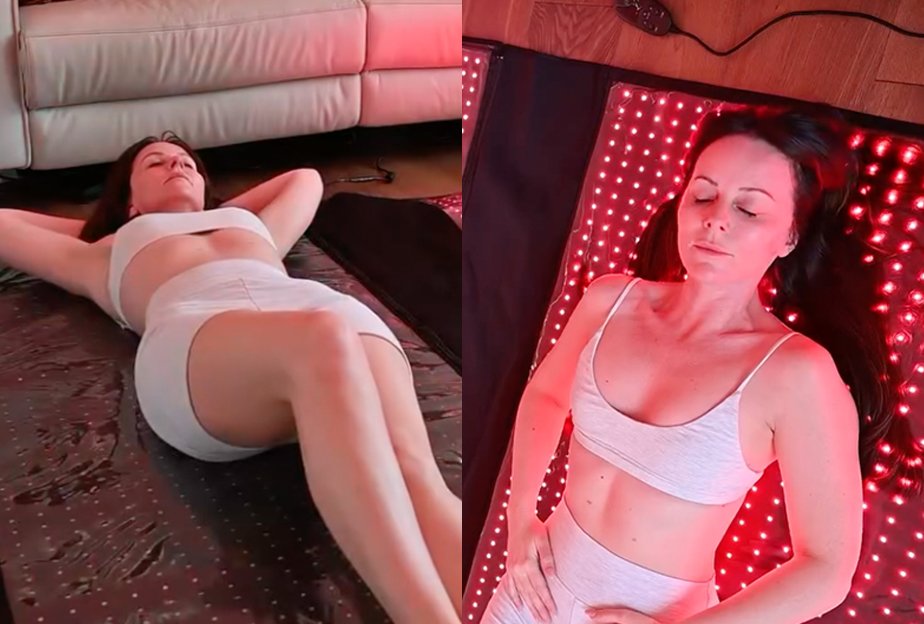
Katie Mant Relaxing with the Bon Charge PEMF Mat Max (Image: Instagram @katiemant_)
“My absolute favourite is the Yuka app. It allows you to scan your cosmetic products and tells you if they are good or bad. I have been on a huge mission to remove toxins from my life and Yuka has been gold. Honestly, I have made some shocking discoveries of products I was using, which I have now replaced with safer options.
“I use Spotify all the time. Music has a profound impact on how you feel and I use Spotify to control my mood almost every day. More and more studies are coming out about how certain music can really impact your wellbeing and I am fascinated with this right now.
“I cannot sleep without my Bedtime Fan app to play white noise. I lie awake, unable to fall asleep if there isn’t the sound of a fan. At home, we have a real fan, but when I am travelling or staying anywhere other than home, I always use the app.”
“Hands down, I am a lark. I naturally wake up early, usually around 5:30 or 6am without an alarm because I have trained my circadian rhythm to do so. My morning routine is pretty consistent: natural light before screens, hydration before coffee (though I only drink decaf), no emails for 30 mins. I usually have a nourishing breakfast, and I take a few minutes to plan my key tasks so I can focus clearly.
“I’m most productive between about 7 am and noon. After that, my energy dips, so I try to schedule meetings or less demanding tasks for the afternoon.
“My nighttime routine helps me get to bed by around 9pm. Blue light blocking glasses on after sunset, circadian-friendly lighting and chamomile tea with glycine 1-2 hours before bed. I’ve started having two kiwis before bed too as studies have shown how this can help with sleep.”
“I have cried a lot recently as I lost my dad, unexpectedly a few days ago at the young age of 75.”
“A bottle of water (because I only drink glass bottled water, not tap water), my prized Louis Vuitton Agenda that Andy bought me recently (love a written note) and my Red Light Face Wand, £99.99 for a quick glow up whenever I need it.”

Katie’s desk essentials: a bottle of water, Louis Vuitton Agenda, and her Bon Charge Red Light Face Wand
“As a founder, boundaries can be a bit blurry. If I don’t intentionally carve out space for personal time, burnout creeps in quickly.
“We’re not super rigid about weekly date nights, but we do check in regularly and make plans just for us, whether it’s a walk, a shared workout, or an early night with a good series and no interruptions. It’s less about big gestures and more about protecting small, consistent pockets of connection. Truthfully, I’m still learning how to honour those boundaries as I have blurred them too much these past few years and burnt out, but having shared expectations, even simple ones, makes a huge difference.”
“Protect your energy like it’s your most valuable currency, because it is. Not everything deserves your time, attention, or reaction. Learn to say no without guilt, and yes only when it feels aligned. And sometimes no reaction is fine.”
“I predict that it’s about to go from niche to mainstream, fast. We’ve already seen it break into skincare and recovery, but the next big steps will be more personalised protocols based on individual biology, and integration into everyday environments like homes, offices, and even wearables.
“I think we’ll also see a shift from it being a luxury to a daily essential. The science is catching up with the hype, and as more clinical evidence supports benefits for mood, recovery, wellbeing and longevity, it’s going to become a foundational part of many people’s wellness routines, not just a ‘nice-to-have.'”