Exomind: ‘Can this brain-zapping treatment clear my cluttered mind?’

Our frazzled – and brave – editor tried this new electromagnetic headband, loved by Gwyneth Paltrow and Serena Williams. Will it help improve her focus? And is it worth the £500 cost?
You could have all the beauty treatments in the world, but if you’re struggling to regulate your mood, to focus on your work or to get to sleep, there’s a limit to how good any laser, Botox or skin booster can make you feel.
Now there’s a new treatment that’s suddenly everywhere in aesthetics and longevity clinics that aims to bridge the gap between how we look and our emotional wellbeing. It’s called Exomind and delivers 24.5 minutes’ worth of tingly electromagnetic pulses to your brain, in an experience that feels spa-like and relaxing. But this isn’t just some glorified powernap. The effects on mood, sleep, focus and concentration can be life-changing, say users.
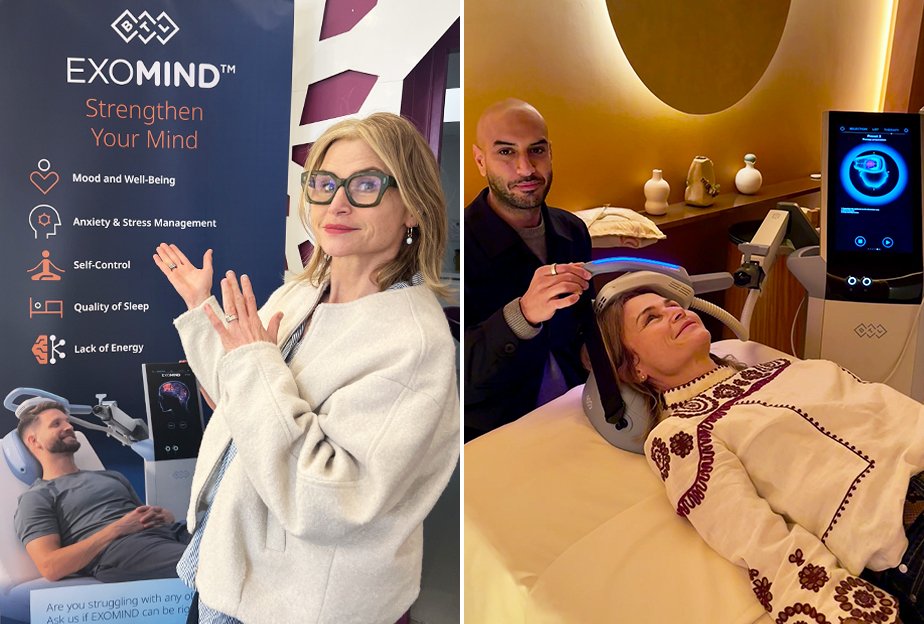
Victoria Woodhall discovers Exomind. Right with Dr Mark Mikhail at Surenne in London
This was the case for my friend and journalist colleague, Beatrice Aidin. Six, twice-weekly sessions of Exomind helped significantly manage her ADHD symptoms, bringing clarity and focus where medication had failed. “When it comes to work, I always have so many ideas crowding my brain that I feel overwhelmed and beat myself up when I can’t execute them. After using Exomind, I’m more decisive,” she wrote in The Times.
It has allowed her to be more structured about her work, she says. But the biggest change has been in her confidence around having ADHD. “I feel less shame, realising that it’s not owing to weakness on my part,“ she says.
She had her treatment at the clinic of Mayfair aesthetic doctor and GP Dr Preema Vig, who has seen a significant uptake of Exomind. She is one of a growing number of aesthetic practitioners offering a “whole patient” approach, as she calls it.
Celebrities, of course, are on to it too. Serena Williams has used it for wellbeing (her treatment included the ab-toning Emscuplt by the same manufacturer). “I feel like I just had the best nap,” she posted on Instagram. Gwyneth Paltrow had the identical treatment also for perimenopausal brain fog, praising Exomind as a “beautiful neuromodulation experience that helps calm the mind, restore clarity, and reconnect with yourself on a deeper level.” (I did notice that both A-listers used the same hashtag #emsculptpartner, suggesting that this was a prearranged collab, not something they had discovered organically).
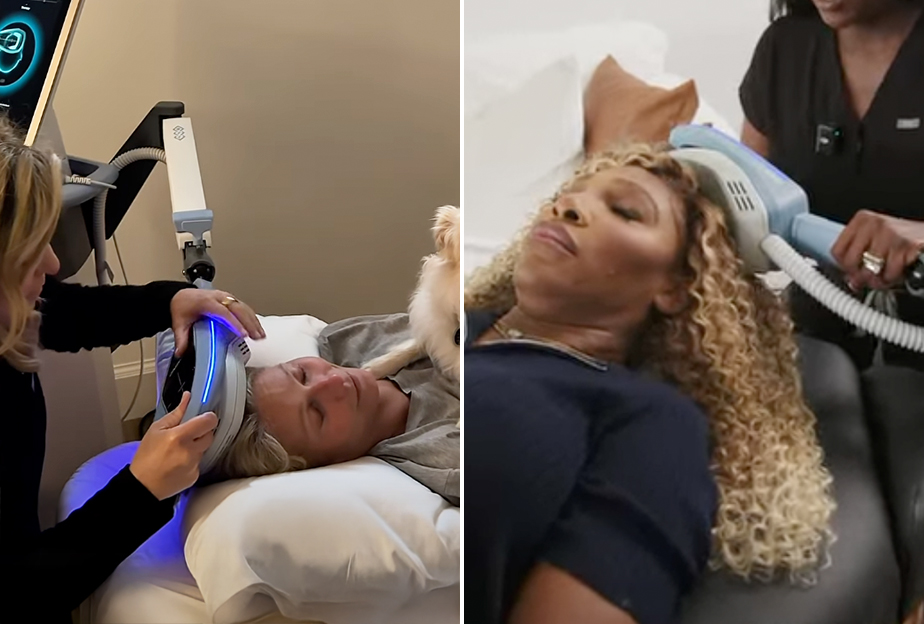
Left: Instagram @gwynethpaltrow. Right: Instagram @serenawilliams.
While there are no studies or official licenses yet for using Exomind to treat ADHD (it’s currently licensed by the American Food and Drug Administration, the FDA, for treatment-resistant depression, OCD and binge eating), the anecdotal reports are compelling. Another eminent Mayfair doctor told me that Exomind had been “brilliant” for her own ADHD.
Longevity specialist and surgeon Dr Mark Mikhail explains that the reported results for ADHD are likely down to the improvement in mental clarity that can be seen from as little as one treatment. “We all have 1000 tabs open in our brains. It’s the equivalent of switching them off, apart from perhaps two or three.” I’m definitely down for that.
As someone who always has multiple projects on the go and who struggles to switch off, I’m a prime candidate for Exomind, as Dr Mikhail explains when I visit him at Surrenne longevity clinic in London for a trial session. “What we would be expecting after one session would be some real clarity of thought,” he says.
The effects could potentially last a day or two, he says, but you’d need four or five sessions, a few days apart, to see longer-term results (ie months), according to the research.
Aidin noticed that two months after treatments, she started to feel less balanced and more anxious. So she had another session, “and the reset was instant”.
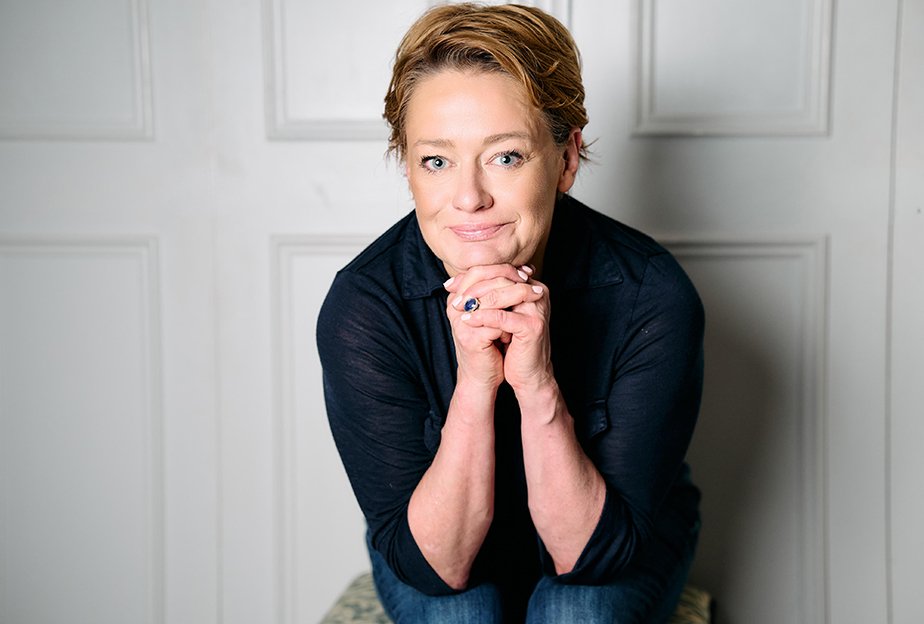
Beatrice Aidin who had six sessions of Exomind for ADHD. Image: Ki Price
I was sceptical about Exomind, because it’s made by a company (BTL) better known for electromagnetic body/beauty devices: the Emsella pelvic floor toning chair (although fixing your leaks is anything but vanity), Emface ‘needle-free facelift’ treatment, Emfemme vaginal rejuvenation and the Emsculpt Neo ab toner that Paltrow and Williams tried.
“I know that people think it sounds a little bit odd, because this is a beauty brand, but actually, their research for decades has been about electromagnetic coils, often used in cardiac surgery,” says Dr Mikhail.
The technology – transcranial electromagnetic stimulation – has historically been used medically to treat depression, he says, and now it’s been adapted for the clinic market.
The NHS describes transcranial magnetic stimulation as “a safe and effective treatment option for various mental health conditions, including depression, anxiety, and certain neurological disorders”. At-home headset devices using this tech are also now appearing on the market – indeed, six NHS Trusts are currently using Flow, £399, on patients and staff alike. (I’ve just acquired one to try, so will report back.)
Exomind delivers electromagnetic current, via a headset containing a coil that sits just above your hairline, to the dorsolateral prefrontal cortex. It’s a part of the brain responsible for high-level executive functions, including working memory, task switching, planning, and decision-making as well as self-perception, mood regulation and sleep – i.e., “multiple things that can impact how you feel and how you live,” says Dr Mikhail. “In many of us these days, this area is hypoactive [underactive],” he says. Depression can affect its functioning too.
Exomind is said to give the brain a refresh by “replenishing synaptic connectivity” – the way your neurons communicate. “It also stimulates something called brain-derived neurotrophic factor release, which stimulates the regeneration of neurons,” says Dr Mikhail, who has a number of Parkinson’s patients using it for mood and to treat symptoms.
The machine has two official presets, one for treatment-resistant depression, the other a catch-all wellbeing mode. It’s the setting he uses for me and for issues such as perimenopausal brain fog. He tells me that he can adjust it slightly for people with, say, ADHD or migraines, which makes me realise you really need to go to someone who understands the technology – it’s your brain after all.
Its licensed treatment for OCD is more specialist and intense, and “should only really be done in a healthcare setting or by a psychiatrist,” says Dr Mikhail.
Exomind targets one area of the brain, the dorsolateral prefrontal cortex, the most common protocol for treating mood. There are more personalised technologies that deliver a ‘whole brain’ approach, favoured by Viviana Botoaca, founder of Geneviv biohacking and longevity clinic in London, who offers ‘advanced brain mapping’ using an EEG (a diagnostic brainwave scanner) and photobiomodulation (lightwaves that penetrate the brain) at a similar price to Exomind.
“Advanced brain mapping can also help identify patterns that research associates with HRV [heart rate variability], inflammation and potentially increased neurodegenerative risk, allowing earlier monitoring and preventive holistic strategy planning,” says Botoaca, who is establishing a Brain Health Room at Geneviv, such is the interest.
When I visited, a psychologist seated me beneath an EEG helmet by Imedisync, which painlessly mapped my brainwaves. From the readings, she was able to tell me what kind of brain I had, and how that might create behaviours such as, in my case, snap decision-making or zoning out. It felt eerily like a mind reading, but with hard facts. The readings are then used to programme a course of photobiomodulation treatments (another painless helmet using light) to iron out imbalances, keep the brain healthy and act preventatively.
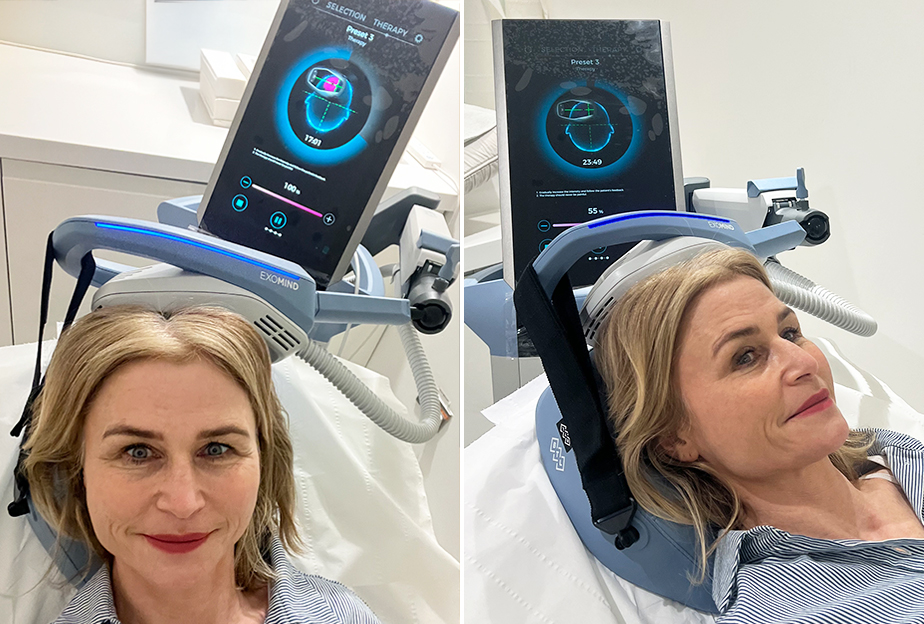
Victoria Woodhall tried Exomind, which delivers pulses of electromagnetic energy to the brain
I feel a pleasant tingling sensation in my scalp. Many people fall asleep. If nothing else, it’s 24 minutes of phone-free time, lying down in a softly lit room. I can’t say I notice anything specific for the next 24 hours, but my deadline-filled day goes smoothly and I don’t seem to be as touched by stress as I might have been.
Would this be a good treatment to have if, say, you had a difficult conversation coming up and needed to be at the top of your game? Dr Mikhail reminds me that Exomind can help with self-perception, and says, “You might find that you don’t actually want to have that conversation after all!”
He is considering running a trial, where people considering an aesthetic or plastic surgery have an Exomind treatment after their first consultation or in the two-week cooling-off period, “to see whether that changed what they were desiring from their surgeon or aesthetician, because of that self-perception improvement.” They, too, might find that they didn’t need that conversation either.
At around £500 per session, it’s a considerable outlay. If you don’t have a mood disorder that affects your quality of life, there are of course, many ways – such as breathwork, nurturing your social connections and walks in nature – that can help clear your mind and banish overwhelm.
But Aidin says that it’s given her hope that there are other ways of managing ADHD when medication doesn’t work. And given the boom in diagnoses of those kinds of conditions, it feels like Exomind could be a useful alternative for many people.