Teoxane Babyglow: we tried the 15-minute ‘glass skin’ tweakment to see if it’s worth the hype

The ‘injectable highlighter’ radiance jab is backed by youthful celebs and influencers – but what does our beauty editor, who has tried everything, think?
If you needed proof that, for better or for worse, cosmetic injectables are becoming increasingly normalised, look no further than the skin booster jab Babyglow. It’s booming thanks to celebrity-heavy social media campaign and the fact that it claims to be a painless, 15-minute route to ‘glass skin’ radiance.
Judging from the slightly kitsch name and the age of its celebrity fans, it’s clear that this radiance-giving jab (made by leading injectable brand Teoxane) is targeting a younger market – although anyone of any age (that includes me at 55 years old) can benefit. Influencer Lottie Tomlinson, 27, credits her Babyglow session with Dr Bibi Ghalai with improving her “rough skin and spots”.
View this post on Instagram
Former Made in Chelsea star Olivia Bentley, 30, has had two sessions to top up her glow with Dr Pamela Benito and says she noticed the difference very quickly, whereas she didn’t when she tried polynucleotides.
View this post on Instagram
Having tried one session of the jab a month ago, do I feel we’re looking at the next game-changing tweakment? And exactly what can you expect if you take the plunge?
Seizing on the craze for Korean glass skin and our current fascination with skin health and longevity, Teoxane has re-nosed one of its long-standing skin booster injectables, Teosyal Redensity-1, changing the name and the injection protocol. The idea is to make it attractive for a market seeking that oh-so-desirable ‘healthy glow without a filler effect or downtime.’
Teosyal Redensity-1 skin booster is a fluid hyaluronic acid (‘uncrosslinked’, so without any volumising effect) combined with a host of amino acids, peptides and antioxidants. Think of it like injectable mesotherapy or an injectable serum. Injected into the deeper layers of the skin, it’s much more effective and long-lasting than topical skincare, which mostly remains on the skin surface.
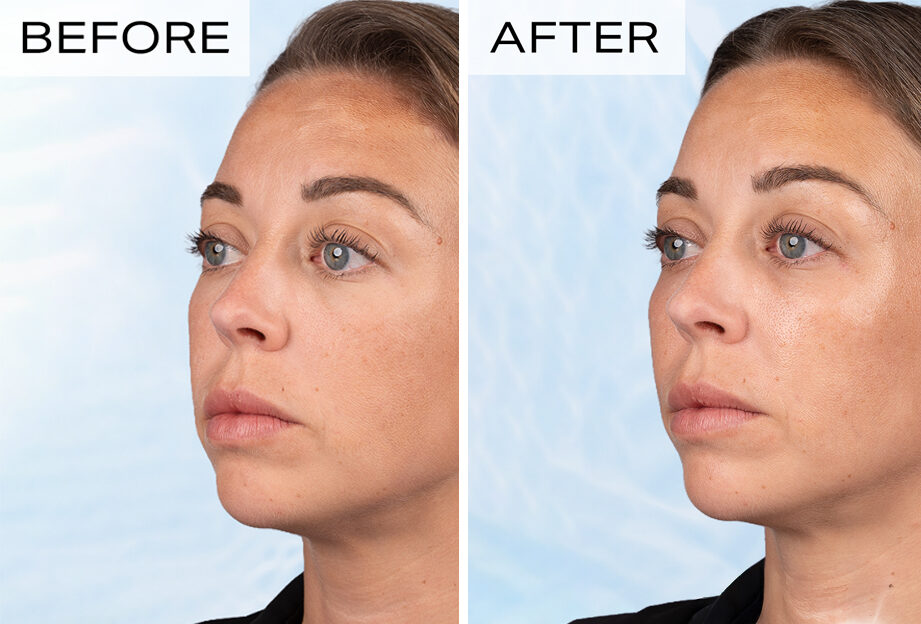
Image: Before and after Baby Glow by Teoxane. Procedure by Dr Silvia Caboni
The original Teosyal Redensity-1 treatment, which I had years ago, involved more than 100 small jabs all over the face and around the lips, leaving a ‘wasp attack’ effect that could take days to settle. Babyglow, in contrast, requires just 16 or so injections (eight on each side of the face) administered in such a way that the product spreads easily under the skin for maximum ‘highlighted skin’ payoff.
The injections are concentrated around the mid-face and the high points of the face, so all the extra moisture and glow-giving active ingredients work to give juicy radiance just where you would normally fake it with your highlighting powder or fluid. It’s a clever, quick fix if you want a noticeable glow that lasts.
Although it’s sold as a ‘no-bleb’ procedure, the jabs still do leave very visible lumps, which I was warned could take 24 hours to settle for some people. Mine were gone and an hour or two later, which was nice. This is indeed a very low-downtime tweakment.
The injections don’t really hurt, so usually no numbing cream is used. Your doctor draws a grid in white crayon on your face to pinpoint the exact injection sites (this may cause some hilarity for those of us with keen memories of early-1980s pop bands). The most peculiar site is under the tail of each eyebrow. Cosmetic physician Wassim Taktouk, who did my treatment, suspects many doctors will customise the protocol for their patients as they become more familiar with the procedure.
The whole thing was over in minutes. I found it entirely painless despite a few drops of blood being drawn. After a quick bit of massage to help the lumps settle, I was on my way. As said, the blebs were gone hours after, and I had no bruises.
Watch how quick my session was – and how amusing
View this post on Instagram
A “brighter, fresher-looking complexion that reflects light more evenly” is promised – one that “softens shadows and gives a well-rested glow.”
My skin already had a decent glow, so the one treatment I’ve had so far didn’t make that much of a difference. Perhaps I’ll get that ‘highlighted’ effect after two sessions – or three as are advised for those my age.
As with all hydrating skin boosters or injectable moisturisers (Profhilo, Skinvive and Restylane Skinboosters are others), which deeply hydrate and condition skin, the results are most noticeable if your skin is a bit parched.
Because the hyaluronic acid is not crosslinked (Skinvive, a direct competitor for Babyglow, is), there is no plumping effect and the results will last weeks, rather than months. But Babyglow has the added benefit of protective and glow-giving antioxidants and amino acids, which improve skin health.
Two to three sessions are recommended, spaced three to four weeks apart, with top-ups suggested every four months or so. Treatments start at £300 nationwide.
Babyglow is very different from Julaine, another much-hyped new injectable. Julaine is a biostimulator (you might even call it a biostimulating filler) that generates fresh collagen and elastin to gradually plump out the skin, lasting up to 18 months and costing from around £3,000 for the required three sessions. The additional collagen also has a hydrating effect.
Babyglow does claim ‘biostimulating’ benefits, because the amino acids and peptides support healthy skin function. But it doesn’t significantly boost collagen and its hydrating benefits require topping up every few months. Expect to pay around £1200 per year for two treatments and two top-ups.
If you’ve been wanting to try one of these new ‘glow-giving’ injectables but are a bit scared, Babyglow is a great entry-level product that will give your skin a boost without any chance of you being emotionally scarred for life by the experience. For those who can afford it, having jabs like these four times a year will contribute to overall skin health and a slowing down of the ageing process. But if you were looking for a ground-breaking new injectable with previously unseen benefits, Babyglow isn’t it.
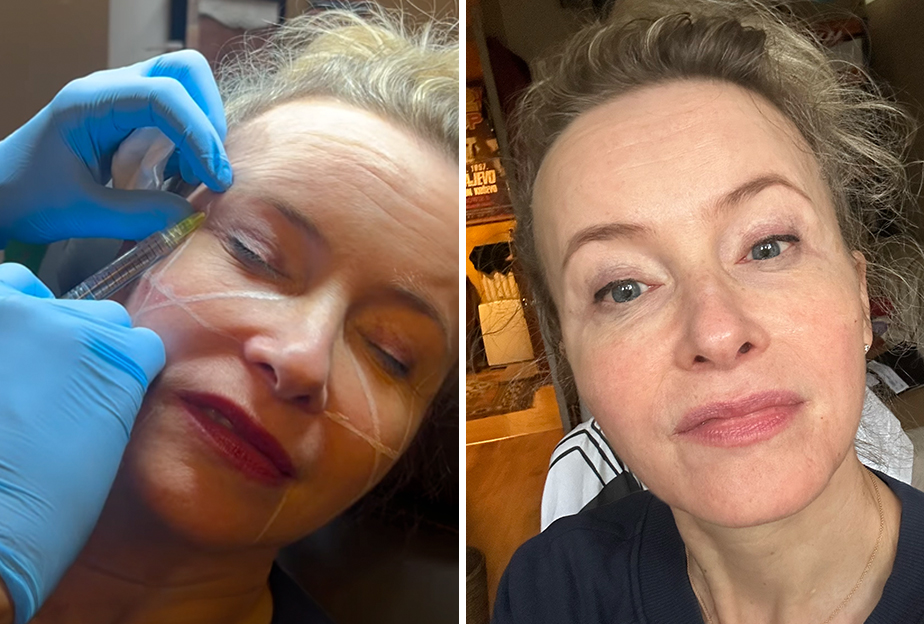
Ingeborg van Lotringen during treatment at the Taktouk Clinic. Right: Same evening after – no lumps!
Babyglow with Dr Wassim Taktouk at The Taktouk Clinic, London costs £550 per session.

