Can you get clinic results at home with a gadget? We test the best beauty tech devices for lifting, firming and smoothing

Laser, radiofrequency, microcurrent: at-home beauty tech has come a long way, but how close does it get to in-clinic results? We put them to the test
Face tech has officially moved out of the clinic and into our homes – and it isn’t just LED face masks anymore. Between radiofrequency wands promising sculpted jawlines, microcurrent devices offering a ‘workout for the face’ and at-home lasers that claim to make light work of fine lines and wrinkles, there’s now a gadget for almost every skin goal – and seemingly every price point too, from around £100 for Magnitone’s multi-tasking FaceRocket to nearly £2,000 for the Lyma Laser.
But here’s where it gets confusing. All these devices are grouped together into one big ‘face tech’ category, and often the technologies sound interchangeable. Yet, really, they work differently and can solve different skin concerns as a result. So, buying the wrong one could be a costly mistake.
“The confusion I see most is someone buying a lifting gadget and expecting it to erase wrinkles, which is asking a muscle tool to do a collagen job,” warns the aesthetic doctor Dr Maude Calveley. Add in the fact that some devices need conductive gel to work, most demand near-daily commitment, and a five-in-one gadget can cost less than a single technology but it actually has to work to be true value for money – and it’s no wonder shoppers are confused.
So, we asked some of our favourite tech-obsessed experts what we actually need to know about at-home face tech, including their buying guide to help you find the right face tech for you. Plus, how close you can actually get to in-clinic results…
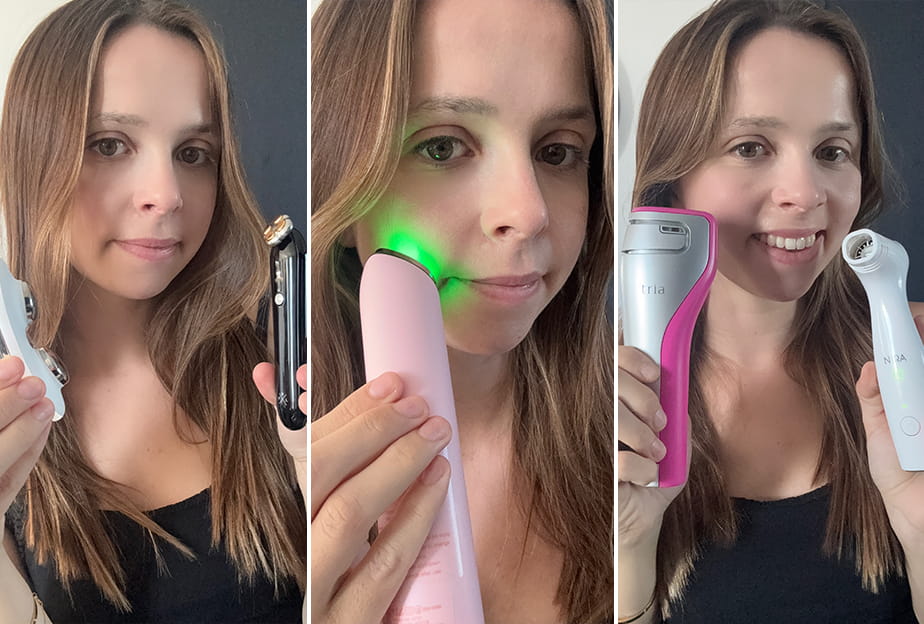
Tooled up: Becki Murray tests the tech
We’re focusing on energy-based devices: at-home tools that use light, heat or electrical current to change how your skin looks and behaves.
We’ve already got a round-up of the best LED masks for face and hair, so we’ll be focusing on the non-LED categories. Notably, laser, radiofrequency (RF), microcurrent, nanocurrent and electrical muscle stimulation (EMS).
We’re also keeping a close eye on an emerging category: contrast therapy face tech. These are devices that use temperature (aka both warming and chilling your skin) to depuff, soothe and contour. Top of our current trial list is Shark’s DePuffi Contrast Therapy Sculpting Tool, so watch this space.
Identify what your skin goals actually are, because that’s the main thing that should dictate what technology to choose.
“Laser is mainly used to target fine lines and improve skin texture, while radiofrequency is better suited to firmness and mild skin laxity,” says GP and aesthetic doctor Dr Ahmed El Muntasar. “Microcurrent and EMS, meanwhile, are typically used for temporary lifting, contouring and muscle definition, with nanocurrent generally included for its proposed skin-conditioning benefits.”
“Think about which layer of the face you’re treating,” advises Dr Calveley. Put simply, at-home lasers work predominantly on the skin, which is why they suit lines and texture. Microcurrent works on the superficial tissues and muscles, so you get a little lift and less puffiness, and RF reaches the deeper tissue, which is where firming happens.
That’s not to say that the technologies cannot overlap: “RF may also improve fine lines, and a microcurrent device may make the skin look smoother because the face appears more lifted,” explains Dr El Muntasar, but you’ll get the best results by tailoring your purchase to your main need.
Best for: for fine lines and skin texture, as it works just below the skin surface.
How does it work: A laser produces a very specific wavelength of concentrated light, and different wavelengths are absorbed by different targets in the skin, so ‘laser’ isn’t actually one single technology. “Home facial lasers for rejuvenation tend to use relatively low-energy, non-ablative wavelengths, creating controlled heating without removing the skin’s surface. The aim is to stimulate a gradual repair response and support new collagen production,” says Dr El Muntasar. Fractional lasers treat tiny, targeted areas of the skin to trigger renewal, while non-fractional lasers heat the skin more uniformly to stimulate collagen deep within your dermis.
What you’ll notice: Gradual improvements to fine lines and texture rather than an overnight lift.
Good to know: Don’t conflate a home laser with the powerful resurfacing lasers used in clinics. Those can deliver much more energy and may deliberately remove the surface of the skin, while home devices are designed to work more gently beneath it. Also, genuine laser technology shouldn’t be confused with “LED or other light-based devices being marketed under the broader ‘laser’ umbrella,” warns the nurse practitioner Emma Wedgwood.
How to use a laser device: On dry, clean skin. Unlike electrical devices, it doesn’t need a conductive gel to carry current between the device and the skin. Nira uses a 1450nm non-ablative diode laser and has FDA clearance for wrinkle reduction; Tria is the only FDA-cleared at-home fractional laser, focusing on improvements in skin tone and texture, as well as fine lines.
Best for: Firmness and mild skin laxity, as it works in the deeper layers of the skin.
How does it work: Radiofrequency (RF) uses electrical energy to generate controlled heat within the deeper layers of your skin. That heat stimulates collagen contraction and longer-term remodelling.
What you’ll notice: A gradual improvement in firmness and definition. “RF is the at-home tech most associated with collagen-based skin tightening,” says Dr El Muntasar, although he notes that the published evidence for home RF, while positive, tends to come from small studies.
Good to know: Because RF doesn’t rely on light absorption by pigment, Dr Calveley considers it “the kinder option across deeper skin tones” for skin rejuvenation. That said, it’s not risk-free. Heat of any sort can leave a mark if a device burns, and anyone with melasma should take extra care, as warmth alone can be enough to stir up pigmentation.
How to use a radiofrequency device: Use conductive gel to ensure good contact between the device and your skin. Glide the device continuously in slow, upward motions or small circles without lingering in one spot. The Skinvity TriPollar Aura and CurrentBody’s dedicated RF device lead the category, with Magnitone’s FaceRocket at the budget end.
Best for: Temporary lifting, contouring and de-puffing, as it works on superficial tissues and facial muscles.
How does it work: Microcurrent delivers a very low-level electrical current across your face. It’s usually too gentle to feel unless until you hit a more sensitive spot and is designed to interact with the facial muscles and surrounding tissues, creating a temporarily more lifted and defined appearance.
What you’ll notice: Think temporary sculpting rather than permanent tightening. “People often describe it as a ‘workout for the face’,” says Dr El Muntasar, but he notes the most noticeable effect is “improved facial definition and reduced puffiness rather than genuine tightening of loose skin.”
Dr Calveley also points out that some of the claims around “toning” lean on research involving stronger, muscle-contracting currents rather than the gentler current used by many at-home microcurrent devices.
How to use a microcurrent device: Always use the conductive gel or serum recommended by the brand. The current needs a conductive medium to travel comfortably and evenly between the electrodes. NuFACE Trinity+ is the category’s cult classic, with Ziip Halo among the best-known alternatives loved and used by celebs and beauty editors.
Best for: Skin-conditioning benefits alongside microcurrent.
How does it work: Nanocurrent uses an even weaker electrical current than microcurrent. It’s generally marketed as working more at the skin-cell level, influencing cellular activity rather than producing the more obvious muscle stimulation.
What you’ll notice: This is the tech where the marketing arguably gets ahead of the evidence. There is some lab-based evidence that very low electrical currents may influence cellular activity, but the independent clinical evidence for nanocurrent facial devices is much thinner than the marketing can suggest, explains El Muntasar.
How to use a nanocurrent device: Like microcurrent, it relies on electrical conduction, so use the conductive gel recommended. If a gadget combines microcurrent and nanocurrent, like Ziip, buy it primarily for the microcurrent lifting and contouring benefits and treat the nanocurrent as an additional feature.
Best for: Lifting, sculpting and definition as it works in the facial muscles.
How does it work: EMS, or electrical muscle stimulation, is “microcurrent’s stronger cousin,” explains Dr Calveley. “It deliberately creates a more obvious muscular contraction, so you can feel it working.”
What you’ll notice: A more immediately visible, yet still temporary sculpted effect –particularly in the lower face. Think of it as the more superficial, at-home version of the EMFACE in-clinic treatment.
How to use an EMS device: Good electrode-to-skin contact is essential, so conductive gels or pads are generally required. FaceGym’s Pro is the best-known. It is designed to create visible muscular contractions that mirror the brand’s in-clinic treatments.
You’ll see 43°C touted by many brands, including Skinvity and Nira, as an “optimum” temperature for collagen remodelling. “There is evidence that heating the dermis to around 42–43°C can stimulate collagen,” says Wedgwood, “but depth, duration and evenness of heating matter just as much as the headline temperature.”
“A very brief reading of 43°C at the surface is not necessarily equivalent to maintaining a therapeutic temperature throughout the deeper dermis,” agrees Dr El Muntasar. So your skin can feel warm without the deeper tissue necessarily receiving the right dose. In other words: 43°C can be a useful benchmark, but it isn’t a guarantee of results.
The takeaway? Don’t chase the biggest – or a specific – number that you may find in the marketing. Look for evidence of the right energy, delivered to the right depth, for the right amount of time, with enough safety engineering to control it.
To be realistic, no — but they’re less powerful by design, and your skin will probably thank you for it. “Home devices are deliberately capped to limit what can go wrong in untrained hands,” says Dr Calveley.
That doesn’t make them pointless though. As Wedgwood puts it, home devices “are better thought of as maintenance or supportive devices rather than a replacement for clinic treatments.” They can be the ‘homework’ between your appointments to stretch out the time (and money) between top-ups.
Multi-modality devices look like great value — and they can be useful if you want an “all-rounder” to address more than one concern, says Wedgwood.
But there’s a catch. “Within a safety-capped energy budget, a device doing five things tends to do each of them more gently,” says Dr Calveley, so your results are likely to be more subtle and emerge more slowly. That’s why she recommends, “if you have one clear priority, to buy the device that does that one thing properly.”
The only real exception to this rule is quite simple: buy the device you’ll actually use! “An all-in-one earns its place only if convenience is what will actually keep you using it — because consistency is what delivers with home tech,” caveats Dr Calveley.
Expensive doesn’t necessarily mean better. “You are sometimes paying for branding, design, packaging, an app or celebrity endorsement rather than a meaningful technological advantage,” says Dr El Muntasar. “Equally, I would be cautious of a very cheap device claiming to deliver multiple medical-grade technologies — safe and consistent RF or laser energy requires good-quality components.”
As a broad UK price guide, consider simpler microcurrent devices as your cheaper entry point, with gadgets starting around £100–£200. Premium or combined-current devices tend to be around £300–£500, home RF around £300–£600 and home lasers the most expensive, ranging from roughly £400 to £1,000-plus.
Don’t forget running costs either, warns Wedgwood. “Conductive gels, replacement heads and app subscriptions can quickly add up.”
Follow the instructions for your tool, but consistency is the common thread. Dr Calveley describes microcurrent as “a gym membership: excellent if you go, an expensive drawer ornament if you don’t.” Its effects can fade within days of stopping. “Laser and RF are more forgiving, since collagen built over a course doesn’t vanish overnight, but still need keeping up over months.”
Most at-home devices are FDA cleared, not FDA approved – and the difference matters. Clearance means a device has been shown to be safe and is equivalent to something already on the market; it is not the same as the FDA independently verifying dramatic results. As Dr Calveley puts it: “FDA clearance, and a CE or UKCA mark, mean a device is safe and legal to sell, not that it has been proven to work well.” However, safety does matter, of course, and among popular devices Nira, NuFace, Ziip and TriPollar are all FDA-cleared.
These devices may be lower-powered than their in-clinic counterparts, but they’re not risk-free. Never use an electrical device of any kind if you have a pacemaker or any implanted device. Skip them all in pregnancy, too, unless your doctor can advise you otherwise, and pause them close to having tweakments, such as toxin and filler, to avoid compromising your results. Never treat broken skin, an infection, sunburn, or a fresh tan either, and for eye-area gadgets, treat your crow’s feet and the bony rim only, never the eyelid. Finally, daily SPF, as always, is non-negotiable. It protects both your results and your skin.
The bottom line? The best home gadget isn’t necessarily the most expensive or the one with the most functions. It’s the one that matches your concern, has credible evidence behind it, is safe for you to use – and, crucially, is one you’ll actually keep using.
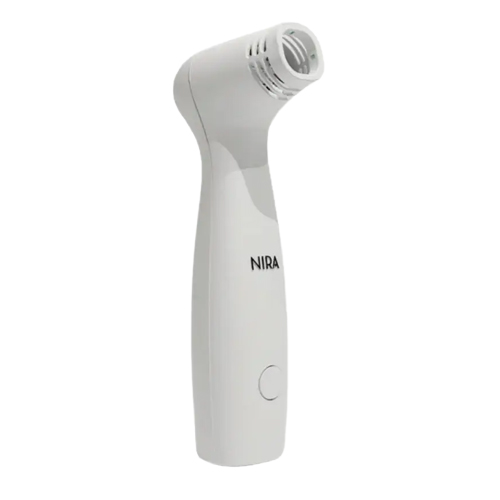
The wrinkle reducer
It might look like the hand-held temperature checkers used during the pandemic, but this packs a real punch. Focusing on smoothing the appearance of wrinkles, it uses a clinically proven 1450nm wavelength to nudge your skin’s collagen production into action (without disturbing your skin’s surface), promising visible results after 90 days, with a money-back guarantee. There’s no real sting as you use it, just a warmth that’s closer to a hot stone massage, and it’s very easy to get to grips with. You choose from nine intensity levels and place the device’s head onto cleansed skin. The laser will fire on its own (beeping almost immediately when it’s time to move to the next spot). You use it two minutes a day for 90 days, then regularly for maintenance.
Buy now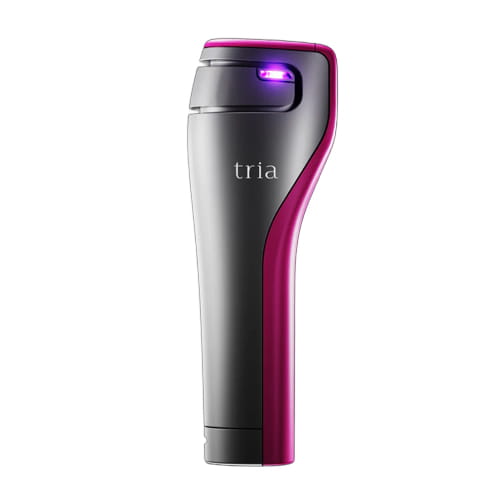
For uneven tone and texture
Tria FRX Skin Rejuvenating Fractional Laser, £599.99
Best for improving dark spots and uneven texture (with the independent clinical trial data to back it up), Tria FRX is currently the only FDA-cleared at-home fractional laser, and it’s suitable for all skin tones. With each pulse, it delivers laser energy (at a 1440nm wavelength) in tiny, targeted treatment zones (unlike non-fractional lasers, which heat the skin more uniformly). This creates controlled micro-injuries under your skin’s surface encouraging skin repair, and collagen and elastin production. You use it five times a week for 12 weeks.
Buy now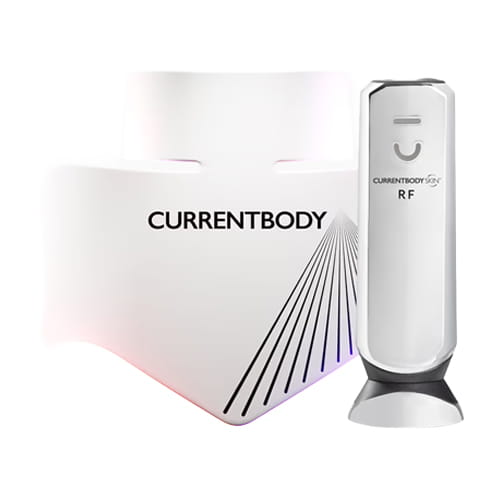
Makes skin tightening easy
Currentbody RF Radio Frequency Skin Tightening Device, £299.99
Currentbody is a brand trusted by many beauty editors because it tends to make at-home face tech easy to use. After applying the conductive gel (included in the box), you simply turn it on, use the same button to choose between three intensity settings, and go. It’s a device we trust for safety too. It contains built-in technology that continuously measures your skin temperature and adjusts itself to keep to its marketed 43°C. Use it once a week for eight weeks, then treatments can be topped every 4-8 weeks to maintain long-term results.
Buy now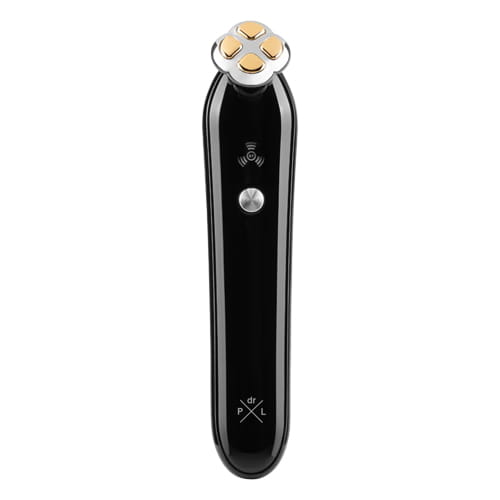
For your eye area
Crepiness and fine lines must be approached with care to avoid damaging your eyes. We like how small and precise this contouring tool is (and it’s great for around your mouth too). It combines radiofrequency with EMS in three straightforward intensity settings, for a dual-approach to improving skin firmness and smoothing fine lines. That’s also why you feel a mild warmth and a slight twitching sensation as you massage the device over your skin. You need to use it with a conductive water-based product to make it work (something that’s not always included in the box). The brand recommends its own, very refreshing, Freezing Anti-Fatigue Mask, but at £69 it does add to the cost. Use 3-5 times a week, focusing on each treatment area for up to five minutes.
Buy now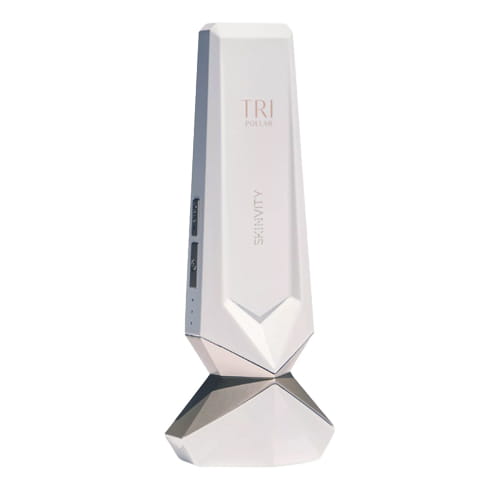
For fast results
Skinvivity Tri Pollar Aura, £869.99
Claiming to be the only gadget that can act on all layers of the skin’s dermis, due to its use of six simultaneous RF frequencies, the other key USP of this device is its focus on getting you results fast. With gold-plated electrodes to improve conductivity while delivering the RF energy evenly into your skin, it aims to reach 43°C in just 18 seconds. It also combines radiofrequency with muscle activation and red LED light for a little extra boost. Those results are supported by (rather small) independent third-party testing. Use 2-3 times per week for eight weeks, leaving one day of rest between sessions. Then, maintain your results with one session per week ongoing.
Buy now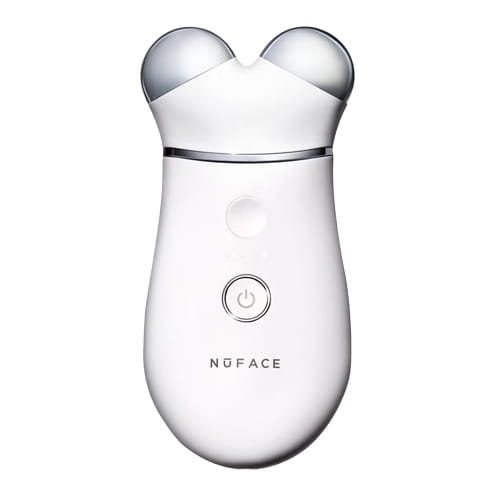
The doctor-recommended one
Nuface Trinity+ Starter Kit, £385
If Dr Calveley’s experience is anything to go by, the Nuface Trinity+ is one of the more powerful microcurrent devices on the market, especially when you use it on ‘Boost’. “It visibly pulled the corner of my mouth to one side, so it’s doing more than the ‘too gentle to feel’ marketing suggests,” she says. She uses it before an event because it can give you an almost instant “fresher, slightly lifted look”, but as with many microcurrent devices, that “lasts a day or so and needs keeping up several times a week.” Anyone seeing the first signs of a less toned jawline may be interested in this one: in an – albeit brand-sponsored – trial of 56 people, 95% saw visible benefits for sagging skin on their neck. Use five minutes a day, five days a week, for 60 days to see the best results.
Buy now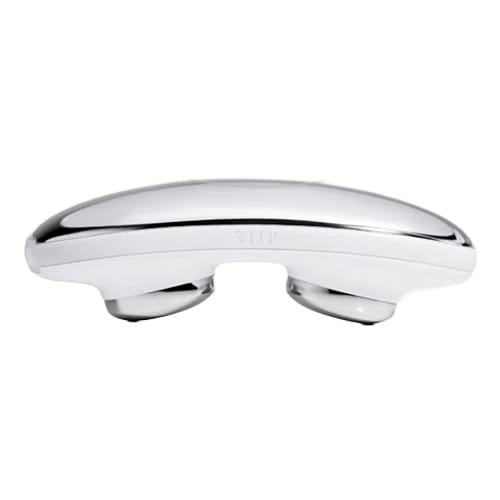
The celebrity favourite
Ziip Halo Microcurrent Facial Device, £379.99
Ziip has years’ worth of rave reviews from verified buyers and plenty of celebrity fans too, including Margot Robbie and Jennifer Aniston, who creit the combined microcurrent and nanocurrent device for sculpting their faces before hitting the red carpet. Fast and fuss-free, you can technically benefit from the palm-sized tool by simply turning it on, applying the conductive gel, and using it for a built-in four-minute mini lifting session. However, for the best results, download the free app, where you’ll find 17 tailored facial ‘workouts’, designed to depuff and sculpt your skin. Use 3-5 times per week, with a maximum of six times per week.
Buy now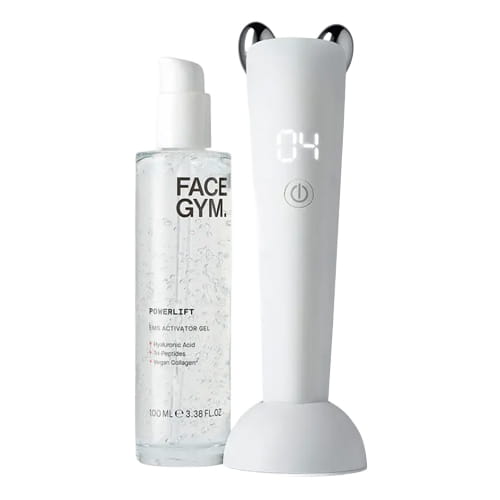
For sagging jawlines
Facegym Pro is the same tool that the company uses in its in-clinic treatments, so it’s like having a little facialist on hand to give you daily face-sculpting massages. (The fact that the price tag is the equivalent of about five in-house treatments may help you contend with the initial £500 investment too!) The device combines low, medium and high frequencies of EMS to directly target your facial muscles, and you can really see it working on your face, with plenty of involuntary but not painful twitching. It’s a bit weird, but you get used to it. For 2026, it’s now new, improved, and supported by more (if still small sample-sized) clinical evidence, including 100% of participants reporting an instant lift and a 50% improvement in jawline sagging. Use 3–5 times per week for 10 minutes per session.
Buy now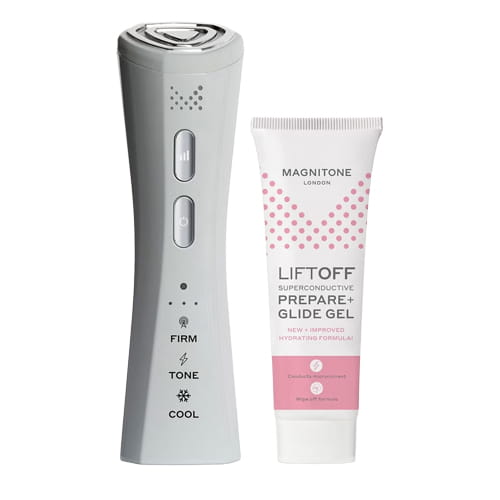
Budget buy
Magnitone FaceRocket 5-IN-1 LED Facial Firming and Toning Device, £119.99
A finalist in the Get The Gloss Beauty Awards 2024, this is a great option for anyone who hasn’t tried at-home face tech before. It’s an introduction to some of the industry’s most clinically backed technologies, with three easy-to-use modes. There’s Firm for radiofrequency and red LED; Tone for microcurrent and red LED; and Cool for cryotherapy, green LED and sonic massage. With daily use, the brand reports improvements in firmness and wrinkles in just four weeks, which certainly sounds impressive at this price point, although these are manufacturer-provided results. We’d buy it more for boosting your overall skin condition. Follow the 28 Day Face Programme to get started, with daily treatments mapped out.
Buy now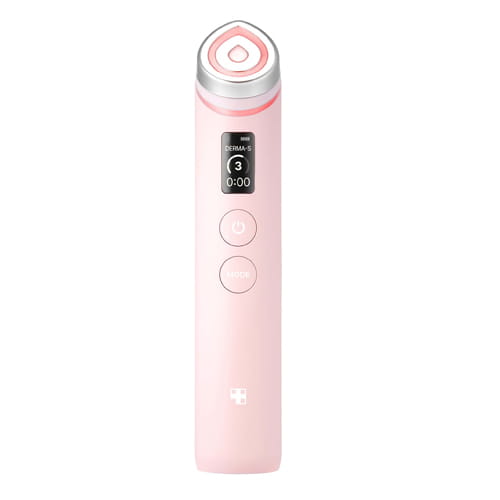
The trending K-beauty one
Medicube Age-R Booster Pro, £289
We’re intrigued by Korean skincare brand Medicube’s entry into the at-home tech category, with this multi-tasking, glow-boosting device. The gadget combines six technologies into four modes, including Microcurrent (MC mode), EMS (Derma Shot mode), and electroporation (using brief, controlled electrical pulses to help skincare penetration into your skin). We suspect that all these modes deliver much less power than the more tailored devices on this list, but what we like most is how user-friendly (and inclusive) the gadget is. All modes can be used daily, aside from Air Shot, which is recommended 2-3 times a week.
Buy now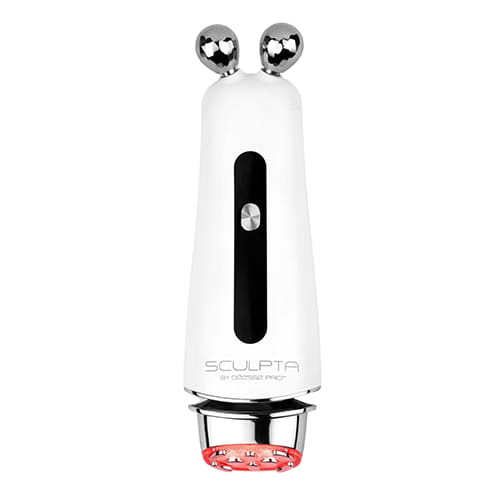
The multi-tasker
The clever dual-ended design makes it feel like you have two targeted facial treatments in one, rather than simply a gadget that tries to do a bit of everything at once. The larger, smooth Massage Head combines red LED, radiofrequency and EMS for overall skin rejuvenation. Then, flip the device around, and there’s the 3D Roller Head. This is the end dedicated to sculpting, and it uses EMS to lift, define your jawline, enhance cheekbones and sculpt the brow area. Use 2–3 times a week for around 12 minutes, following the guided facial movements, with each area treated for roughly three minutes. The 3D Roller Head can be used more frequently.
Buy now